

More news on this day
Riyadh Air has officially opened its Hafawa Lounge at King Khalid International Airport, unveiling a flagship premium space that the Saudi start-up carrier says will anchor a new era of luxury travel as it prepares for commercial operations in 2026 and positions Riyadh as a global super-hub for routes linking the Americas, Europe, Asia and Africa.
A Strategic Flagship for a New Global Hub
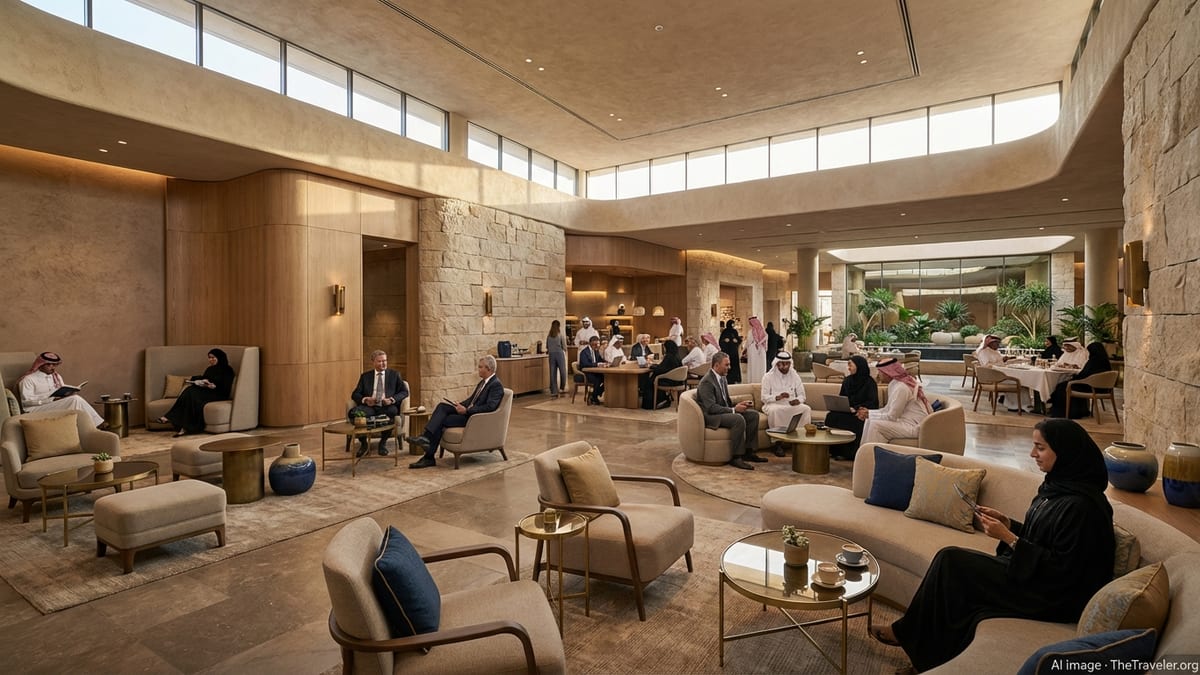
The Hafawa Lounge, located between Terminals 1 and 2 at Riyadh’s King Khalid International Airport, is Riyadh Air’s first premium ground product and a central pillar of its strategy to compete head-to-head with Gulf heavyweights in the high-yield premium market. Spanning almost 2,000 square metres and seating around 370 guests, the lounge is being used during the airline’s operational trial phase to refine service standards before full-scale public launch.
The airline, backed by Saudi Arabia’s Public Investment Fund and aligned with the Vision 2030 diversification agenda, aims to transform Riyadh into a global aviation crossroads. Executives have been explicit that premium lounges, rather than being an afterthought, are integral to this ambition. Hafawa is framed as the first physical expression of Riyadh Air’s brand promise: a blend of Saudi hospitality, digital-first technology and design-forward comfort calibrated for long-haul travelers, including those flying to and from North and South America via Riyadh.
While initial traffic will focus on key regional and European gateways, senior figures have flagged future long-haul routes to US and Latin American cities as part of a phased network rollout. For these travelers, Hafawa is intended to serve not just as a layover space but as the signature touchpoint that defines Riyadh Air’s premium proposition against competitors in Doha, Dubai and Abu Dhabi.
In practice, that means the lounge is designed as a fully fledged first- and business-class environment, with private zones, bespoke dining and advanced digital infrastructure explicitly conceived to support the expectations of high-spend corporate and leisure passengers accustomed to the best lounges in the Gulf, Europe and North America.
Design Language Rooted in Saudi Landscapes
The lounge’s design has been entrusted to globally renowned studio Yabu Pushelberg, whose portfolio includes some of the world’s most recognisable luxury hotels and retail spaces. For Hafawa, the firm has leaned into a material palette of limestone, oak, bronze accents and textured plaster, echoing the sculpted forms and muted tones of Saudi Arabia’s desert landscapes.
Organic curves and wind-sculpted contours guide passengers through the space, with ceilings, walls and partitions shaped to suggest dunes and canyon walls rather than hard-edged terminal architecture. The aim is to balance monumentality with intimacy, so that even at peak capacity the lounge feels like a sequence of calm, human-scaled environments rather than a single vast hall.
Lighting has been tuned to avoid the flat glare typical of airports. Instead, warmer indirect light washes over stone and timber surfaces, with carefully placed feature lamps and spotlights highlighting key focal points such as the café counter, buffet stations and art pieces inspired by Saudi motifs. The result is a lounge that feels closer to a boutique hotel lobby or private members’ club than an airline waiting area.
Acoustic treatments and soft furnishings have also been specified with long-haul travelers in mind. Thick carpets, upholstered seating and acoustic panels are designed to absorb noise from conversations and trolleys, an important consideration as Riyadh Air targets connecting flows between North America, Europe and Asia where passengers may be recovering from or preparing for ultra-long sectors.
Zones Tailored to Every Stage of the Journey
Hafawa is laid out as a collection of distinct yet visually connected zones, a design approach that mirrors best-in-class lounges in the Gulf and Europe. Quiet areas are dedicated to rest, featuring reclined seating, subdued lighting and minimal foot traffic, appealing to travelers arriving from or departing on overnight flights across the Atlantic or to Asia.
For passengers who need to work or network, there are social and co-working spaces with a more energetic ambiance. These sections offer clusters of lounge chairs, communal tables and individual workstations with access to power, fast Wi-Fi and privacy dividers, making them particularly useful for business travelers connecting between the Americas and the Middle East or South Asia.
Families and VIPs are catered for with bookable private rooms and suites, giving them controlled environments away from the main lounge floor. These spaces are expected to be especially attractive to premium customers making long connections, as well as to high-profile guests for whom discretion is paramount.
An immersive digital room, part of the airline’s broader digital-first strategy, offers interactive experiences that blend entertainment and brand storytelling. Riyadh Air positions this not as a gimmick but as a way to keep younger travelers engaged and to demonstrate the airline’s technology credentials, which will eventually extend from the lounge to cabin connectivity and in-flight personalization.
A Culinary Concept Without Alcohol but Not Without Ambition
The food and beverage offering at Hafawa is deliberately multi-layered. At its heart is an Executive Dining room providing à la carte service, with large windows looking out onto a landscaped garden that introduces greenery and natural light into the otherwise interior setting. This restaurant-style space is intended to appeal to travelers looking to enjoy a proper sit-down meal timed to long-haul departures.
Complementing this are buffet and social dining areas where guests can opt for faster, self-service options. These zones are configured to allow passengers with short connections to eat quickly without compromising on presentation or ingredient quality, a key consideration for hub operations where minimum connection times can be tight.
The café serves barista-made coffee and pastries from an in-house bakery, functioning as an anchor point for the lounge. In line with Saudi regulations, all beverages are non-alcoholic, but Riyadh Air has leaned into this constraint by promoting a Beverage Corner centred on premium juices, specialty soft drinks and crafted mocktails that echo mixology techniques without the spirits.
On arrival, guests are welcomed with traditional Saudi coffee and high-grade dates, a ritual that has been deliberately woven into the service choreography to underscore cultural authenticity. The airline sees these seemingly small gestures as crucial differentiators in a global market where many premium lounges risk feeling interchangeable.
Digital-First Ground Experience to Match the Cabin
Riyadh Air is marketing itself as a digital-first airline, and Hafawa serves as an early test bed for that ambition. The lounge incorporates barrier-free access and smart digital wayfinding, helping passengers navigate different zones intuitively without relying solely on staff or static signage. Screens and subtle lighting cues guide guests towards rest, dining or work areas according to their needs and available time.
Interactive touchpoints within the lounge allow travelers to access flight information, adjust personal preferences and explore Sfeer loyalty benefits, reflecting the airline’s broader push toward personalization. The digital systems are designed to integrate with Riyadh Air’s app and back-end platforms so that, over time, the lounge experience can be tailored based on passenger profiles and travel histories.
This approach dovetails with the airline’s Sfeer loyalty program, positioned as a community-focused, gamified ecosystem rather than a purely transactional points scheme. While Sfeer is still being rolled out in phases ahead of Riyadh Air’s full launch, the lounge is expected to become a key arena where elite status and tailored benefits are made tangible, from priority seating in certain zones to bespoke dining and wellness offerings.
For frequent travelers shuttling between North America, Europe and Asia via Riyadh, this continuity between app, lounge and cabin is pitched as a core advantage: a seamless digital layer that simplifies connections, keeps them informed and minimizes friction throughout their journey.
Reframing First-Class Comfort for Long-Haul Passengers
Although Riyadh Air’s first commercial flights are still on the horizon, the Hafawa Lounge provides a strong preview of how the airline intends to redefine first and business class for the long-haul market, including premium routes to and from the Americas. The spatial generosity, elevated design and curated amenities are clearly targeted at travelers who are accustomed to the flagship lounges of other Gulf and European carriers.
Private suites and family rooms respond to a growing demand for personal space at major hubs, particularly from passengers on ultra-long sectors who want to rest, refresh or work away from crowds. The presence of multiple distinct lounge zones means that a first-class traveler can move from a quiet relaxation area to an à la carte dining room and then to a more social space, all within a single, coherent environment.
In tandem with lie-flat seats and large-format entertainment screens planned for Riyadh Air’s premium cabins, Hafawa is positioned as the ground-based counterpart that completes the door-to-door experience. The airline is betting that this integrated approach can persuade high-value corporate accounts and affluent leisure travelers to route their journeys through Riyadh, even when one-stop alternatives exist via established hubs elsewhere in the Gulf.
Beyond comfort, there is a subtle emphasis on wellbeing: daylight access where possible, quieter acoustics, hydration stations and healthier menu options are being presented as components of a more restorative transit stop, aimed squarely at passengers emerging from red-eye flights across the Atlantic or facing similar journeys onward to Asia-Pacific.
Implications for Travelers from the Americas and Beyond
For travelers originating in or bound for the Americas, the opening of the Hafawa Lounge signals Riyadh Air’s long-term ambitions as much as its immediate capabilities. While the airline’s initial network will prioritise regional and European connections, its planners have been clear that non-stop links to major US and potentially Latin American gateways are in the pipeline as the fleet and regulatory approvals mature.
When those routes come online, premium passengers can expect Riyadh to function as a fully fledged transfer hub, with Hafawa serving as the primary ground haven between long-haul sectors. The scale of the lounge and its emphasis on privacy, tailored service and digital integration are all designed around the needs of travelers undertaking journeys of 10 hours or more in each direction.
Even before broader transatlantic and transcontinental expansion, however, the lounge enhances Riyadh’s appeal as a destination in its own right. For business travelers heading to Saudi Arabia for meetings, events or to explore investment opportunities tied to Vision 2030, Hafawa sets the tone from the moment they land, presenting an image of a country seeking to compete at the very top of the global hospitality and aviation ladder.
For leisure visitors, especially those combining Saudi stays with wider itineraries across the Middle East, Africa or Asia, the lounge adds a layer of reassurance: that the long trips involved in such multi-stop journeys can be punctuated by a reliably high standard of comfort and service during layovers in the Saudi capital.
A Showcase for Vision 2030 in the Terminal
Riyadh Air itself was conceived as a flagship investment under Saudi Arabia’s Vision 2030 plan, which aims to diversify the economy, grow tourism and make the Kingdom a major transit and tourism player. In that context, Hafawa is more than a lounge; it is a highly visible showroom for the country’s new narrative, located at a key international gateway.
The name “Hafawa,” drawn from an Arabic term associated with warmth and hospitality, encapsulates this positioning. The space is deliberately steeped in local cultural references, from the welcome coffee and dates to art and textures inspired by desert landscapes, even as it adheres to global standards of comfort and technology. It is designed so that first impressions for arriving visitors, especially those in premium cabins, are shaped as much by Saudi traditions as by sleek contemporary design.
This careful calibration reflects a broader shift in how Gulf carriers are presenting themselves: less as anonymous global brands and more as ambassadors for their home countries. For Riyadh Air and its stakeholders, Hafawa must therefore deliver on multiple fronts. It must satisfy demanding frequent flyers, differentiate the brand in a crowded premium market and carry the weight of a national transformation story playing out in real time.
As the airline progresses toward its commercial debut and begins adding long-haul routes that connect Riyadh to major cities across the Americas and beyond, the Hafawa Lounge will be scrutinised by industry watchers and travelers alike as an early test of whether Saudi Arabia’s aviation ambitions can match, and potentially reshape, the benchmarks that have defined luxury air travel for the past two decades.