

More news on this day
Numerous flights at King Khalid International Airport in Riyadh have been cancelled or heavily delayed amid regional airspace restrictions linked to escalating tensions, leaving many passengers stranded in terminals and struggling to rebook their journeys.
Get the latest news straight to your inbox!
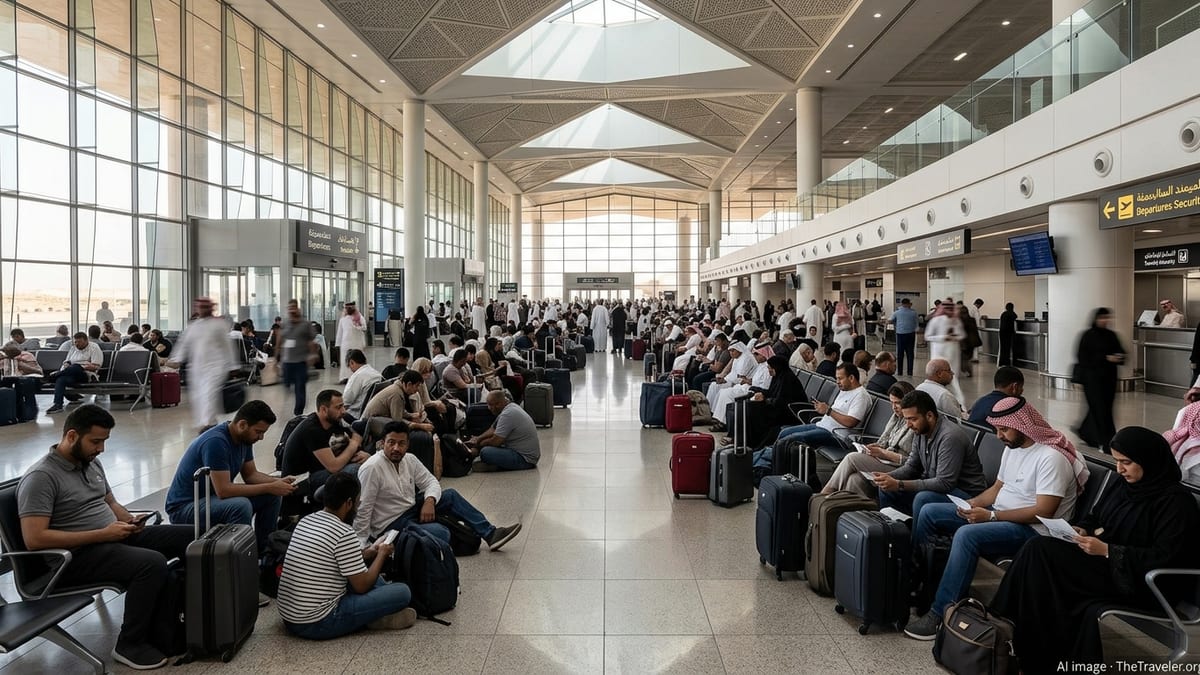
What is happening at Riyadh’s main airport
King Khalid International Airport, the main gateway to the Saudi capital, has faced rolling disruption in recent weeks, with reports indicating waves of cancellations, diversions and lengthy delays on selected routes. While the airport remains technically open, the schedule has been repeatedly thinned and adjusted as airlines respond to changing airspace conditions across the wider Middle East.
Travel advisories current in March describe limited flights, reduced frequencies and irregular operations at King Khalid International, stressing that services are subject to sudden change as regional air corridors are opened or closed. The most affected services are typically those crossing higher risk airspace or connecting to nearby hubs already dealing with heavy congestion.
The pattern of disruption has not been uniform. Some days see mostly on time departures, while others bring clusters of short notice cancellations or reroutings. This stop start picture has made it difficult for travelers to predict whether their flight will operate until relatively close to departure time.
Regional tensions and airspace restrictions behind the delays
The current disruption in Riyadh is closely tied to a broader security crisis affecting multiple countries in the region. Publicly available information shows that missile and drone activity, as well as precautionary military measures, have led to temporary closures of certain air corridors and tight restrictions over others.
Travel risk bulletins describe a patchwork of partially open and periodically closed air routes stretching over the Gulf and neighboring states. When specific flight paths are restricted or entirely shut, airlines are forced either to re route aircraft along longer, more fuel intensive tracks or to cancel departures altogether if safe alternatives are not available or economically viable.
As a result, carriers operating to and from Riyadh have been adjusting timetables day by day. Aircraft and crew placements have been disrupted, connections at busy hubs have been missed, and turnaround times have lengthened, all of which contributes to knock on delays throughout the network.
How passengers are being affected on the ground
For travelers, the operational complexity translates into very personal inconvenience. Social media posts and traveler forums in March describe passengers stuck airside for hours as departure boards cycle through new timings, only for flights to be cancelled or diverted at late notice. Some domestic services have been delayed or rerouted, while international passengers have reported missed onward connections and unexpected overnight stays.
Reports indicate that rebooking options can be limited during peak disruption, as alternative flights fill quickly and aircraft availability is constrained. Travelers with time sensitive commitments, such as business meetings, religious trips or university schedules, have expressed concern about not knowing until the last moment whether they will depart as planned.
A further complication has been information lag. Airport websites and third party tracking services do not always refresh as quickly as events unfold, meaning that some passengers only learn of changes once they reach the terminal or receive a notification directly from their airline. This uncertainty has encouraged many travelers still planning to fly through Riyadh to build extra flexibility into their itineraries.
What to do if your flight from Riyadh is cancelled
Publicly available guidance from travel advisories and airline notices emphasizes that anyone due to depart from King Khalid International should monitor their booking closely in the days and hours before travel. Airline apps and official channels generally update more quickly than generic flight information boards, and they remain the primary source for rebooking, refunds or travel credits if a service is cancelled.
Where flights are grounded because of airspace closures or security concerns, many carriers are offering limited change fee waivers or the option to reroute via alternative hubs once seats open up. However, these policies can vary by airline and may change with little notice, so passengers are encouraged to review the latest conditions attached to their specific ticket type.
Travel risk consultants also suggest allowing additional time at the airport in case of extended security checks, last minute gate changes or longer queues at service desks. Travelers whose plans are highly time sensitive may wish to consider backup options, such as flexible return dates or alternative departure points within Saudi Arabia, although availability there can also be affected by the same regional dynamics.
Outlook for flights at King Khalid International
Forecasts from aviation analysts and security briefings suggest that schedules at King Khalid International are likely to remain unstable in the near term. As long as regional tensions persist and certain airspace segments are subject to rapid restriction, airlines will continue to reassess routes and frequencies serving Riyadh.
Some carriers may gradually restore more regular operations if conditions allow, but observers note that any escalation in the wider security environment could quickly reverse such improvements. Travelers planning to transit through Riyadh in the coming weeks should be prepared for potential last minute changes, even if flights appear confirmed at the time of booking.
For now, the most practical approach for passengers is to remain closely informed, keep documentation and contact details up to date with their airline, and maintain as much flexibility as possible around travel dates. While many flights are still operating to and from Riyadh, the experience of recent weeks has shown how quickly the situation can shift, leaving even well prepared travelers temporarily stranded.