

More news on this day
Hundreds of passengers were left stranded at Riyadh’s King Khalid International Airport on March 20 as publicly available flight information showed at least 17 cancellations and 11 significant delays affecting services across the Gulf, Asia and North Africa.
Get the latest news straight to your inbox!
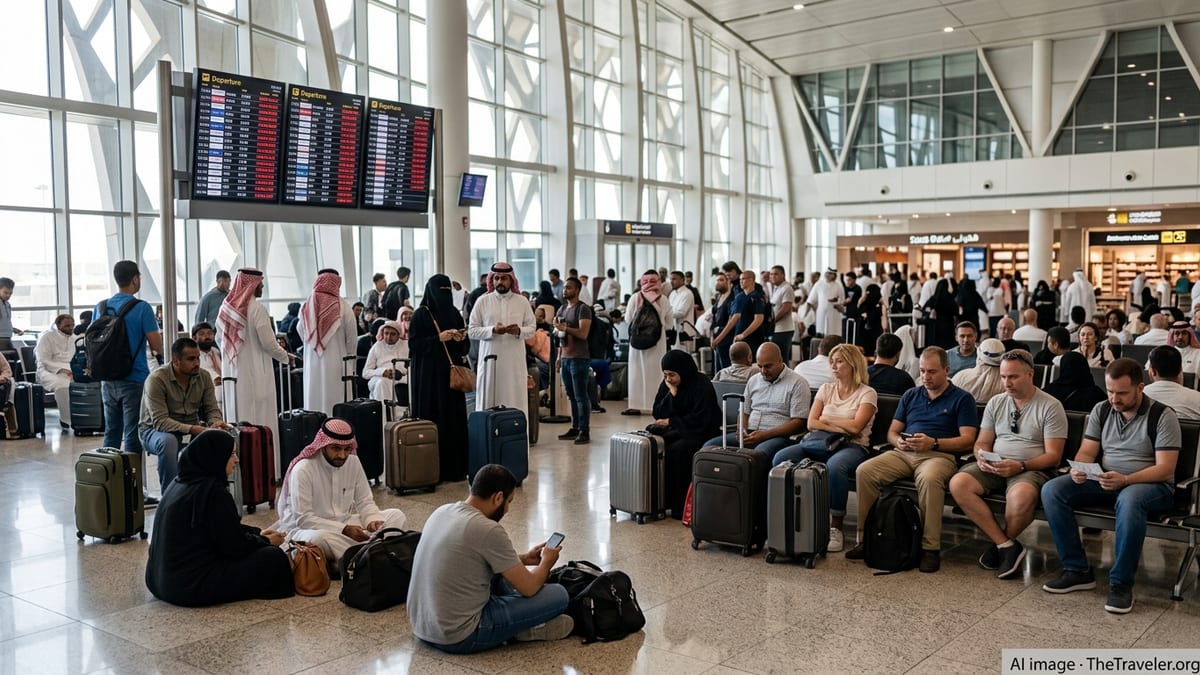
Major Disruption at Saudi Arabia’s Primary Gateway
King Khalid International Airport in Riyadh, one of Saudi Arabia’s key international hubs, experienced a sharp spike in disruptions today, with real-time flight tracking boards indicating a cluster of cancellations and extended delays affecting both regional and long-haul routes. While the airport has seen intermittent disruption in recent weeks, today’s pattern was notable for the number of affected airlines and the geographic spread of destinations.
Available flight-status data and live tracking platforms showed at least 17 flights listed as cancelled and a further 11 delayed for several hours. The disrupted services involved major regional and international carriers including Gulf Air, Etihad Airways, Emirates, Saudia, Flynas and Flyadeal, impacting journeys to and from key cities such as Dammam, Dubai, Kabul, Shanghai, Alexandria and Amman.
The disruption appears to build on earlier advisories this month that pointed to limited operations and intermittent cancellations at Riyadh’s main airport. Travel advisories issued in early March had already warned of potential delays and short-notice schedule changes affecting flights into and out of Saudi Arabia and neighboring Gulf states.
Passengers attempting to transit through Riyadh reported via public forums and social channels that they encountered last-minute changes to departure times, aircraft rotations and, in some cases, complete removal of their flights from airline booking systems, leaving them scrambling to rebook or reroute through alternative hubs.
Gulf Carriers and Low-Cost Airlines Hit Simultaneously
Today’s disruption was unusual in that it affected a broad cross-section of airlines that normally compete rather than overlap in schedules. Regional full-service carriers such as Gulf Air, Etihad and Emirates were listed alongside Saudi operators Saudia, Flynas and Flyadeal among the flights delayed or cancelled from King Khalid International.
Gulf Air services connecting Riyadh with Bahrain and onward destinations saw particular strain, with travellers sharing accounts of repeated cancellations on Bahrain-linked itineraries in recent days. Public posts from affected passengers described having to discard multi-city plans and secure new tickets on different airlines at short notice when successive Gulf Air flights dropped from departure boards.
Etihad flights linking Riyadh and Dammam with Abu Dhabi also appeared under pressure. Travellers reported finding no near-term availability on some Etihad routes out of eastern Saudi Arabia, with previously confirmed departures withdrawn from sale until later dates. The tightening of options at short notice has increased demand on remaining seats with other carriers operating via Riyadh.
Emirates, which normally operates a high-frequency schedule through its Dubai hub, showed a mixed picture. While some long-haul services continued operating, travellers recounted recent cancellations on specific Middle East sectors, with today’s Riyadh disruption adding connection risks for passengers attempting to reach Dubai before continuing to onward destinations in Asia and Europe.
Key Routes Affected: Dammam, Dubai, Kabul, Shanghai, Alexandria and Amman
The cancellations and delays recorded at King Khalid International today had a pronounced impact on several critical regional and intercontinental routes. Services between Riyadh and Dammam in Saudi Arabia’s Eastern Province, a vital corridor for business and oil sector travel, saw interruptions that forced some passengers to seek last-minute overland alternatives or regional connections through other Gulf airports.
Flights between Riyadh and Dubai were also disrupted, compounding an already volatile situation for travellers relying on the Emirati hub as a gateway to onward destinations. In recent weeks, reports have indicated a patchwork pattern of schedule changes across Gulf corridors, with some Dubai-bound flights operating while others are adjusted or cancelled close to departure, creating uncertainty for passengers planning tight connections.
Further afield, connections from Riyadh toward Kabul and Shanghai were part of today’s disrupted schedule. Publicly available flight histories show that some routes to East Asia, including Shanghai, have continued to operate but with extended delays of several hours, while individual departures to Afghanistan have been more vulnerable to cancellation or re-timing. For travellers trying to exit the wider region via large Asian gateways, these irregularities have added complexity to itinerary planning.
North African and Levant destinations such as Alexandria in Egypt and Amman in Jordan were also affected. Recent travel-planning documents and airline schedules highlight these routes as important links between Saudi Arabia and wider Middle East and North Africa networks. Disruptions on these sectors today left many passengers temporarily blocked from reaching family visits, business meetings and connecting flights onward to Europe.
Travellers Struggle With Limited Information and Rebooking Options
For those caught in today’s disruption at King Khalid International, one of the most common frustrations was the lack of timely, clear information about whether flights would operate. Accounts shared in online travel communities described passengers arriving at the airport to find departure boards rapidly updating as flights to various Gulf and regional hubs changed from scheduled to delayed, then to cancelled.
In several cases, travellers recounted being notified of cancellations only when already en route to the airport or after passing security. Some reported that airline customer-service channels were overwhelmed, with call centers and chat systems experiencing long wait times. Others said they were advised through automated messages or app notifications to monitor flight status rather than receiving firm rebooking instructions.
Rebooking has been complicated by the fact that multiple carriers serving similar routes are experiencing pressure simultaneously. With Etihad, Gulf Air, Saudia and low-cost operators such as Flynas and Flyadeal all navigating schedule adjustments, the pool of available seats on alternative flights has shrunk quickly. Public comments from stranded travellers describe the cost of last-minute replacement tickets rising steeply as they tried to secure routes via secondary hubs or entirely different regions.
Some passengers have opted to reroute via less affected cities, using flights from Riyadh to long-haul destinations such as Shanghai that appear to be operating with substantial but manageable delays, then continuing onward with separate tickets. This strategy, however, carries the risk of missed onward connections if departure times shift again.
What Passengers Can Do If Their Flight Is Affected
Travel industry advisories issued this month consistently encourage passengers flying through Riyadh and other regional hubs to verify their flight status repeatedly on the day of travel, rather than relying solely on original booking confirmations. Many airlines update their mobile applications and websites ahead of public airport displays, so checking directly with the carrier remains the most reliable way to see if a flight is still operating.
Passengers whose flights are cancelled or subject to long delays are generally advised to document all notifications and receipts associated with disruption, including messages from airlines and any expenses incurred for accommodation, meals or alternative transport. This documentation can be essential when seeking refunds, vouchers or reimbursement later under the airline’s conditions of carriage or applicable consumer-protection rules.
Given the regional nature of current disruptions, some travel commentators recommend building extra buffers into itineraries that rely on connections through hubs such as Dubai, Abu Dhabi, Bahrain or Istanbul. Longer layovers reduce the risk of missed onward flights when departure times from Riyadh or Dammam change at short notice and may provide more flexibility for rebooking if initial sectors are cancelled.
For future trips, travellers are also being urged to consider flexible or refundable fares where possible, and to review travel insurance policies carefully to understand how trip interruption and delay benefits apply in cases of widespread operational disruption. With flight schedules in the Gulf and wider Middle East remaining fluid, especially on certain corridors, planning for contingencies has become an increasingly important part of flying through King Khalid International Airport and the surrounding region.