

More news on this day
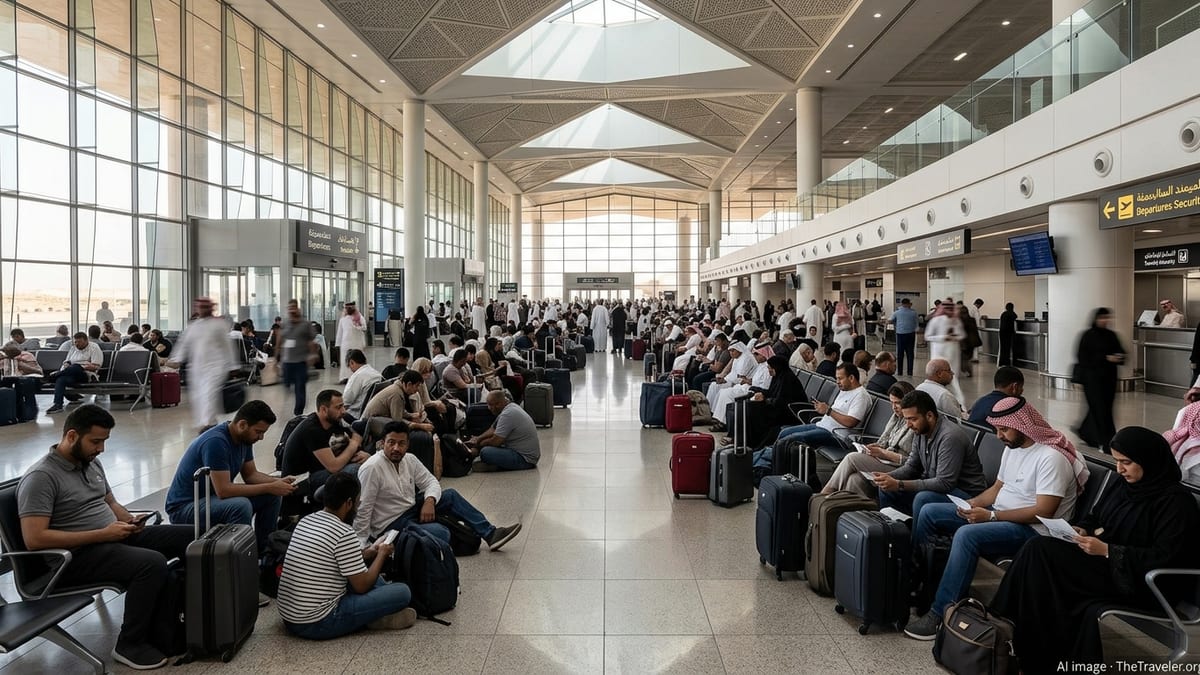
Hundreds of travelers have been stranded at King Khalid International Airport in Riyadh after waves of flight cancellations and schedule changes linked to wider Middle East airspace restrictions, creating hours-long queues, limited rebooking options, and uncertainty for passengers trying to leave or transit through Saudi Arabia.
Get the latest news straight to your inbox!
What Triggered the Flight Disruptions in Riyadh
Recent regional tensions and associated airspace restrictions have disrupted normal flight patterns across the Gulf, and publicly available aviation advisories indicate that King Khalid International Airport has been operating with limited flights, intermittent delays, and cancellations. Reports describe Saudi airspace as one of the few major east–west corridors still open, putting additional pressure on Riyadh as carriers reroute around closed skies elsewhere in the region.
Industry risk bulletins and travel advisories issued in early March 2026 note that air traffic control capacity in Saudi airspace has been stretched by rerouted long-haul services, with knock-on effects for departure and arrival slots at King Khalid International Airport. This congestion has contributed to last-minute schedule changes, holding patterns for arriving aircraft, and ground delays for departing flights.
Coverage of the broader regional aviation situation also highlights ripple effects from large numbers of cancellations at major hubs such as Dubai, Abu Dhabi, and Doha. As airlines adjust routings to avoid affected airspace, some services to and from Riyadh have been retimed, consolidated, or cancelled altogether, stranding travelers who were depending on Riyadh as either a point of departure or a transit stop.
Scale of the Cancellations and Who Is Affected
While precise, real-time numbers fluctuate, published travel industry analysis describes “massive global cancellations” during the first half of March 2026, with thousands of flights across the Middle East either grounded or rerouted. Within that broader disruption, King Khalid International Airport has seen numerous short-notice cancellations affecting both regional and long-haul itineraries, leaving passengers stuck in terminals or forced to seek last-minute accommodation in Riyadh.
Travel advisories and passenger accounts point to particular difficulties for travelers on multi-leg journeys who expected to connect through Riyadh to Europe, Asia, or other Gulf destinations. With onward flights canceled or suspended, these passengers have been forced into extended layovers while they wait for seats on limited replacement services or explore alternative routes via other Saudi or Omani airports.
Tourists, foreign workers returning home, and Saudi residents alike are affected. Some travelers reportedly reached Riyadh by road from other Gulf states where airports were closed or heavily disrupted, only to encounter fresh uncertainty as congestion in Saudi airspace limited the number of flights that carriers could operate from King Khalid International Airport.
Current Situation at King Khalid International Airport
As of late March 2026, publicly available information indicates that King Khalid International Airport remains open, but operations are not yet fully back to ordinary levels. Travel security bulletins continue to reference limited flights and a heightened risk of delays and cancellations due to continuing congestion in Saudi airspace and evolving regional security conditions.
Passenger reports from recent days describe crowded departure halls, long queues at airline service counters, and difficulty obtaining clear rebooking information. With aircraft and crews out of position across multiple continents, some airlines have limited flexibility to add extra services out of Riyadh at short notice, prolonging waiting times for stranded passengers.
At the same time, flight tracking data and schedule information show that many domestic and selected international routes are still operating, albeit sometimes on modified timings. This means that conditions can vary sharply by airline, destination, and time of day, making it essential for travelers to verify the exact status of their flight before heading to the airport.
What Airlines and Travel Advisories Recommend for Passengers
Airlines serving King Khalid International Airport have introduced a range of temporary measures in response to the disruption, according to publicly available policy updates. These typically include waivers for change fees, options to rebook on alternative dates without penalties, and in some cases the possibility of rerouting via different hubs where seats are available.
Travel advisories urge passengers with upcoming departures from Riyadh to monitor their booking closely through airline apps or reservation systems and to sign up for notifications on schedule changes. Advisory documents emphasize that travelers should avoid going to the airport until their flight is shown as confirmed and operating, given the potential for late cancellations or gate changes caused by airspace restrictions and air traffic control constraints.
Industry guidance also stresses the importance of allowing additional time for check-in and security, as higher passenger volumes and staffing pressures can lengthen processing times. Travelers are encouraged to keep essential items, medication, and a change of clothes in their carry-on bags in case of unexpected overnight stays due to further disruptions.
Practical Tips for Travelers Currently Stranded in Riyadh
For those already stuck at King Khalid International Airport, publicly available passenger guidance suggests several practical steps. Travelers are advised to stay in frequent contact with their airline via digital channels and chat services rather than relying solely on airport counters, which can be overwhelmed during peak disruption periods.
Where financially and logistically feasible, some passengers may consider asking airlines about rerouting options through other Saudi airports or via alternative corridors that remain open. In some cases, carriers have been able to move travelers onto indirect routings that combine shorter regional hops with longer-haul sectors operated by partner airlines or alliance members.
Stranded travelers are also encouraged to keep all documentation, boarding passes, and receipts related to meals, transport, and accommodation. Depending on the airline’s contract of carriage and local consumer regulations, these records may be relevant later if passengers seek reimbursements or travel insurance claims for additional expenses incurred during the disruption.
Given the evolving regional security environment, travel experts recommend that passengers maintain flexibility in their plans and be prepared for further changes even after rebooking. While reports indicate gradual stabilization compared with the most acute days of disruption in early March, King Khalid International Airport and the wider Gulf aviation network continue to operate under unusual strain, and conditions can shift with little warning.