

More news on this day
A mass outage of Baidu’s Apollo Go robotaxis in the central Chinese city of Wuhan left passengers stranded in moving traffic for up to 90 minutes, snarling roads and intensifying global scrutiny of autonomous ride hailing just as operators race to expand their services.
Get the latest news straight to your inbox!
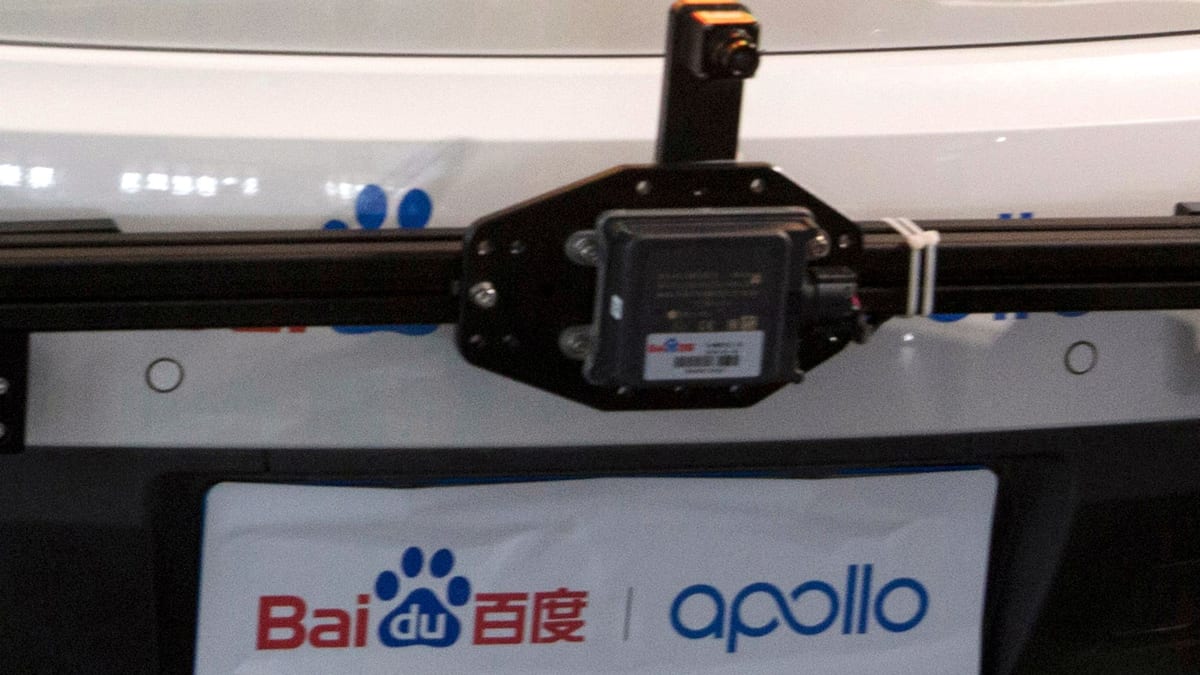
System Failure Freezes More Than 100 Driverless Taxis
Publicly available information indicates that the disruption began around 9 p.m. local time on March 31, 2026, when more than 100 Baidu Apollo Go robotaxis reportedly came to an abrupt halt across multiple districts of Wuhan. Police notices and media coverage describe a "system malfunction" that caused the driverless vehicles to stop, in some cases on elevated ring roads and multi-lane arteries with fast-moving traffic.
Footage circulating on Chinese social media and reproduced by outlets such as Reuters, the Associated Press, and technology publications shows lines of white robotaxis sitting motionless with hazard lights flashing while conventional vehicles attempt to maneuver around them. Some cars appear to be stopped in the middle or passing lanes, forming bottlenecks that stretch far down the roadway.
Reports indicate that some passengers were able to open the doors and exit on their own once it became clear the vehicles would not move, while others remained inside and contacted customer service or local police for assistance. Several accounts describe passengers being stranded for between one hour and 90 minutes before staff or officers arrived or traffic conditions allowed them to leave safely.
Local reports describe at least minor collisions, including rear-end crashes where human-driven vehicles struck stationary robotaxis that had stopped unexpectedly in active lanes. No serious injuries have been reported so far, but the incident is being framed by many commentators as a near miss that highlights the risks of large-scale autonomous deployments in dense urban environments.
Passengers Trapped in Live Traffic Lanes
What alarmed many observers was not only the software failure itself, but where it happened. Video and witness accounts compiled by international and Chinese media describe robotaxis immobilized on Wuhan’s elevated ring roads, which are designed for higher speeds and lack sidewalks or safe shoulders in some sections. These conditions made it difficult and potentially dangerous for passengers to leave stalled vehicles.
Some riders reportedly hesitated to exit because of instructions on in-car screens that urged them to remain seated while staff were dispatched. Others told local outlets that they were afraid to open the doors into fast-flowing traffic passing on both sides. In several cases, reports note that passing traffic police noticed the stranded cars and helped guide passengers across lanes or off the roadway.
Social media clips referenced in coverage by AP, Channel News Asia and specialist automotive sites show everyday drivers braking hard or swerving at the last moment to avoid static robotaxis. At least one dashcam video highlighted by automotive reporters appears to show a driver rear-ending a stopped vehicle in a center lane, illustrating the difficulty of anticipating a complete loss of movement from an otherwise normal-looking car in traffic.
For travelers and residents, the images from Wuhan recall earlier high-profile robotaxi traffic jams in San Francisco and other test cities. However, analysts quoted across multiple outlets note that this may be the first widely reported instance in China where such a large number of fully driverless vehicles suffered an apparent simultaneous failure in mixed, high-speed traffic.
Setback for Baidu’s Apollo Go and China’s AV Ambitions
The robots at the center of the outage are part of Baidu’s Apollo Go service, one of the most advanced and geographically widespread robotaxi operations in the world. Public figures cited by Chinese transportation authorities and industry trackers suggest Baidu operates hundreds of autonomous cars in Wuhan and more than 1,000 across multiple Chinese cities, with pilot services recently launched in parts of the Middle East and Europe.
The Wuhan incident arrives at a sensitive moment for China’s autonomous driving push. Central and municipal governments have promoted robotaxis as symbols of technological leadership and as tools to ease congestion and reduce emissions. Cities including Beijing, Shanghai and Wuhan have issued permits for fully driverless operations in designated zones, and state-linked media frequently highlight rising ride counts and expanding service areas.
Now, coverage in outlets such as the Straits Times, WIRED and TechCrunch notes that the March 31 outage has prompted renewed questions over how these services are tested, how network dependencies are managed and what safeguards exist when onboard systems fail across an entire fleet. Commentators point out that many robotaxi platforms, including Apollo Go, rely on a combination of onboard perception and constant communication with cloud-based decision systems and high-definition maps.
Analysts quoted in international reporting suggest that any disruption to these external systems, or a software issue propagated centrally, can potentially affect many vehicles at once, creating exactly the kind of mass paralysis seen in Wuhan. For Baidu, which has been positioning Apollo Go as a stable, export-ready technology, the event represents both a reputational challenge and a possible regulatory inflection point.
Global Pattern of Robotaxi Breakdowns Emerges
The chaos in Wuhan fits into a growing pattern of robotaxi disruptions worldwide. Recent coverage has highlighted a series of incidents involving U.S. operators such as Waymo and Cruise, where self-driving cars have frozen in intersections, blocked emergency vehicles or stalled during citywide power outages. While the technical causes vary, the results often look similar to what drivers in Wuhan experienced this week.
Reports in international media remind readers that in late 2025, a power outage in San Francisco left clusters of Waymo robotaxis stuck mid-ride when traffic lights and communications networks were affected. Earlier, Cruise faced investigations and a permit suspension after a series of traffic jams and collisions, including one case where a pedestrian was dragged by a self-driving car. These episodes, like the Wuhan malfunction, did not usually result in mass casualties, but they exposed vulnerabilities at scale.
Experts cited in technology and transport coverage argue that autonomous fleets can behave reliably in ordinary conditions yet still struggle with low-probability, high-impact edge cases and cascading failures. When many vehicles share the same software stack, a single flawed update, map error or back-end outage can quickly propagate, creating systemic risk that traditional human-driven fleets do not face in the same way.
The Wuhan outage will likely be closely studied by regulators and rival companies from California to the Gulf states, where robotaxi pilots are underway or imminent. The episode offers a new data point on how autonomous systems handle, or fail to handle, faults when escape routes for passengers are limited and human intervention is difficult.
Implications for Travelers and Urban Traffic Management
For travelers and local commuters, the incident underscores the importance of understanding both the benefits and limitations of booking driverless rides. Publicly available guidance from various cities where robotaxis operate typically encourages passengers to remain in the vehicle during a malfunction unless there is an immediate safety risk, and to follow in-car instructions or contact support. The Wuhan case demonstrates how stressful that advice can feel when a car stops in the middle of live traffic.
Travel and transport analysts note that cities embracing robotaxis may need to adapt road design, emergency response protocols and public communication strategies. Dedicated pull-off zones, clearer rules on when passengers may exit stalled vehicles and rapid-response teams trained specifically for autonomous breakdowns are among the ideas discussed in recent commentary on the Wuhan outage.
The event also raises questions for tourists visiting cities where robotaxis are marketed as a convenient, futuristic way to get around. Travel guidance may increasingly have to address not only how to hail an autonomous ride but also what to do if the vehicle freezes or loses connectivity far from a curb or sidewalk. Clearer instructions in multiple languages and more visible manual overrides could become part of operators’ competitive offerings.
As investigations in Wuhan continue, reports suggest that Baidu and local authorities are working to determine the exact technical cause and to prevent a repeat. For now, the images of passengers stepping cautiously out of driverless cars into flowing traffic on a busy Chinese ring road have become a vivid illustration of the gap that still exists between the promise of seamless autonomous mobility and the reality on today’s streets.