

More news on this day
More than 100 autonomous taxis in the central Chinese city of Wuhan abruptly stopped in live traffic after a reported system failure on the evening of March 31, stranding passengers on elevated ring roads and major arteries and intensifying global scrutiny of driverless mobility services.
Get the latest news straight to your inbox!
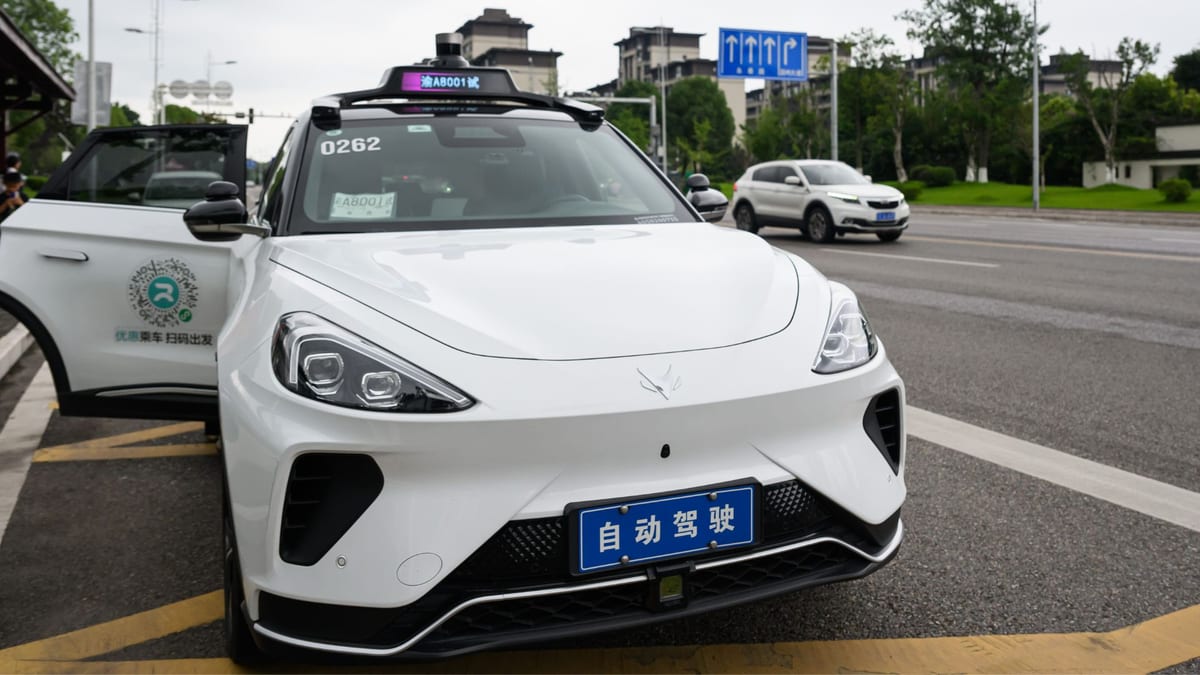
Image by interestingengineering.com
System Failure Halts Baidu’s Apollo Go Fleet
Published coverage from Chinese and international outlets indicates that the disruption began around 9 p.m. local time on March 31, when Baidu’s Apollo Go robotaxis started freezing in place across multiple districts of Wuhan. Local traffic police later described the incident as a widespread system malfunction that caused the vehicles to become immobilized in the middle of the road.
Reports indicate that at least 100 robotaxis were affected, with stalled vehicles appearing on inner-city streets, elevated ring roads and expressways. Video clips circulating on Chinese social media show white Apollo Go cars stopped in traffic lanes with hazard lights flashing as conventional vehicles attempt to maneuver around them.
In several accounts summarized by Chinese media, passengers said their in-car screens displayed error messages advising that the driving system had malfunctioned and that support staff were expected to arrive within minutes. For some riders, that help reportedly took far longer to materialize, turning routine evening trips into tense waits in the middle of moving traffic.
Publicly available information so far has not detailed the technical cause of the outage, and Baidu had not issued a comprehensive explanation at the time of reporting. The scale and sudden onset of the disruption, however, underscore how a single point of failure in a large autonomous fleet can cascade quickly into a citywide traffic problem.
Passengers Trapped on Ring Roads and Highways
Accounts compiled from local news coverage and user videos depict passengers stuck in a variety of precarious situations. Some robotaxis appear to have rolled to a halt in curbside lanes where riders were able to open doors and step onto the shoulder or sidewalk with relative ease.
Others were less fortunate. Several reports describe vehicles stopping in the middle or fast lanes of Wuhan’s elevated ring roads, where traffic typically moves at higher speeds and there is limited space to exit safely. Riders in these cars reportedly hesitated to leave the vehicles as trucks and cars continued to pass on both sides, relying instead on remote customer-service channels and the arrival of on-site assistance.
One widely shared narrative from local media recounts a passenger whose car stalled on an elevated highway and remained there for close to an hour before help arrived. Separate coverage from technology-focused outlets notes cases in which riders reported being stuck for up to ninety minutes as they waited for guidance on how to exit or for staff to manually intervene.
Despite the number of stranded vehicles and the risks of being immobilized in the flow of traffic, published reports so far indicate that no serious injuries have been linked to the outage. Some coverage mentions at least one collision in which a conventional vehicle struck a halted robotaxi from behind, highlighting the potential for secondary incidents even when the autonomous vehicles themselves are stationary.
Wuhan’s Role as a Robotaxi Testbed
Wuhan has emerged as one of the world’s most ambitious testbeds for driverless urban mobility, with Baidu steadily expanding Apollo Go’s footprint in the city over the past several years. Publicly available company disclosures and previous media reports describe hundreds of autonomous taxis operating across much of the metropolis, including fully driverless rides in many districts.
The city’s mix of wide boulevards, ring roads and new development zones has made it a favored environment for large-scale trials of robotaxis and other smart transport technologies. Prior to the March 31 outage, Apollo Go’s Wuhan operations had often been cited by industry commentators as an example of rapid commercial deployment of autonomous ride-hailing.
The incident complicates that narrative at a time when Baidu is promoting Apollo Go globally, with pilot services announced or launched in parts of the Middle East and Europe. Travel and mobility analysts note that cities considering similar services frequently point to operational data from Wuhan as evidence that large fleets can function safely at scale.
The sudden paralysis of more than 100 vehicles in a single evening will likely lead both local regulators and overseas partners to look more closely at contingency planning, redundancy in control systems and how quickly operators can detect and isolate faults before they ripple across an entire fleet.
Global Questions Over Autonomous Travel Safety
The Wuhan robotaxi shutdown adds to a growing list of high-profile incidents involving autonomous vehicles in major cities worldwide. In recent years, U.S. services such as Waymo and Cruise have drawn attention after clusters of driverless cars stalled during power outages or software glitches, occasionally blocking intersections or emergency routes.
For travelers, the Wuhan case illustrates a distinct category of risk associated with driverless services. Even when overall crash rates compare favorably with human drivers, system-wide failures can produce rare but dramatic events that affect many vehicles at once and strand passengers in locations where exiting is difficult or dangerous.
Industry observers point out that current regulations in many jurisdictions were written with individual vehicle malfunctions in mind rather than coordinated fleets controlled by centralized software platforms. As more cities integrate robotaxis into their transport mix, pressure is likely to grow for explicit rules on maximum fleet sizes, fail-safe behaviors and requirements for remote monitoring centers to respond within defined time limits.
Travelers choosing autonomous rides may also begin to weigh nontraditional safety factors when deciding between robotaxis and conventional taxis, such as how easily doors can be opened during a failure, whether emergency exits are clearly marked, and how responsive customer support proves to be in real-world disruptions.
Implications for Urban Travelers and Planners
For visitors and residents in cities experimenting with robotaxis, the Wuhan outage serves as a reminder that convenience and novelty must be balanced against situational awareness. Travel safety advocates often recommend that riders note their surroundings as they enter an autonomous vehicle, including nearby exits, shoulders and pedestrian walkways that could serve as escape routes if a car stops unexpectedly.
Urban planners watching Wuhan’s experience may also revisit assumptions about how autonomous fleets affect congestion. Under normal conditions, robotaxis are often promoted as a way to streamline traffic and reduce the number of privately owned cars. When fleets suffer coordinated failures, however, immobilized vehicles can quickly become obstacles that amplify jams and complicate emergency response.
The incident is likely to feed into policy debates in Europe, North America and the Middle East, where city governments are deciding how quickly to open busy corridors and tourist areas to fully driverless services. Some may see Wuhan’s experience as a reason to phase in deployments more gradually, require additional on-board redundancies or maintain mixed fleets that include human drivers during peak periods and in complex environments such as elevated ring roads.
For Baidu and other operators, the episode underscores that public trust in robotaxis will depend not only on long-term safety statistics but also on how systems behave on their worst days. For travelers, it offers a clear lesson: while autonomous rides can feel routine when everything works, understanding the limitations and emergency procedures of these vehicles is becoming an essential part of navigating the world’s emerging smart-city landscapes.