

More news on this day
A mass outage of Baidu’s Apollo Go robotaxi fleet in Wuhan has left passengers describing harrowing scenes of being trapped in driverless cars amid fast-moving traffic on elevated ring roads and city arterials, intensifying scrutiny of how large autonomous fleets behave when things go wrong.
Get the latest news straight to your inbox!
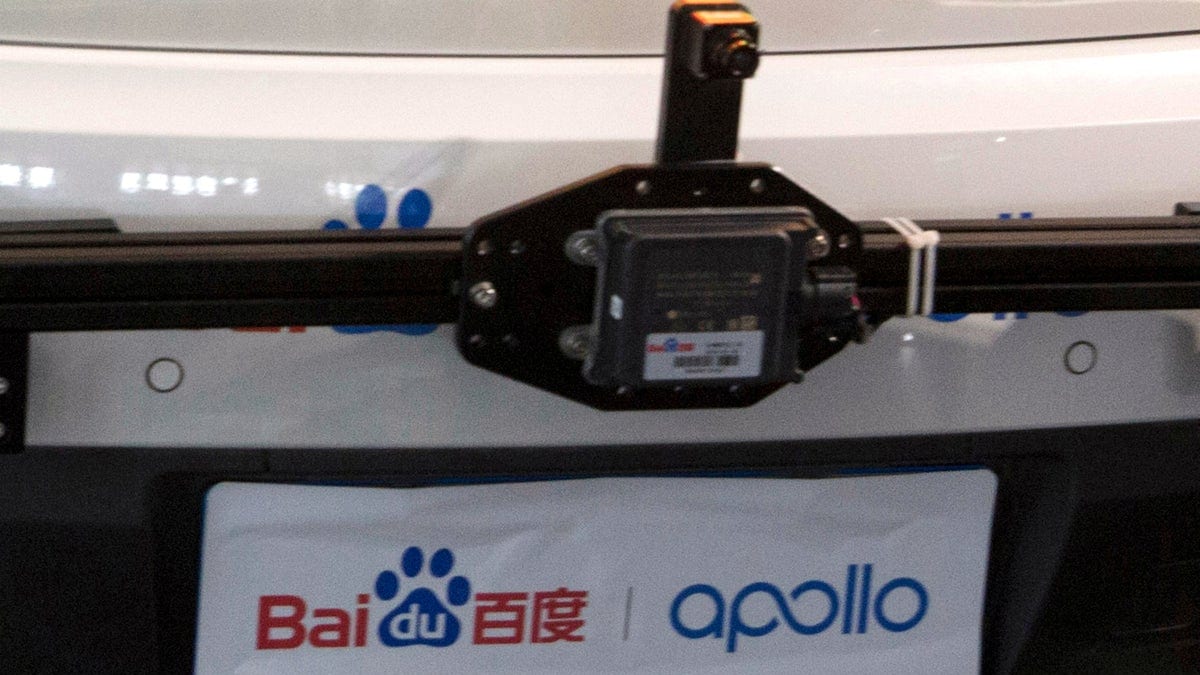
System failure halts more than 100 driverless cabs
Publicly available information from Chinese media, technology outlets and international news services indicates that the disruption unfolded on the evening of March 31, 2026, in the central Chinese city of Wuhan. Local police statements cited in that coverage describe a system malfunction that caused more than 100 Baidu Apollo Go robotaxis to suddenly stop where they were, from multi-lane ring roads to busy surface streets.
Reports indicate that the vehicles did not lose power entirely but instead shifted into a fault state, with in-car screens displaying messages referring to a driving system malfunction and instructing riders to remain seated while staff were dispatched. In many cases, the cars came to rest in live traffic, including middle lanes and elevated sections of roadway designed for fast-moving flows.
Accounts compiled by outlets such as the Associated Press, TechCrunch and specialist automotive sites describe Wuhan traffic police receiving a wave of calls from riders and other drivers around 9 p.m. as robotaxis stalled across the city. While the precise technical trigger remains unclear, summaries of official postings on Chinese social media platforms describe a centralized “system failure” rather than isolated hardware faults.
No injuries have been reported in connection with the incident, but follow-up reporting by transportation and technology media notes that at least several minor collisions occurred when human-driven vehicles encountered stopped robotaxis in active lanes, underscoring the risks when autonomous fleets freeze in complex traffic environments.
Passengers describe anxiety amid trucks and high-speed traffic
First-hand accounts collected in Chinese and international media paint a vivid picture of what it felt like inside the stalled vehicles. One passenger quoted in multiple reports said their robotaxi stopped after turning a corner on a ring road, leaving them stationary while cars and trucks continued to pass on both sides. On-screen prompts reportedly advised passengers to wait for staff, but support responses were slow as hundreds of vehicles requested assistance at once.
In one widely cited account, a rider said they were effectively marooned on an overpass with heavy trucks around them and spent a significant time trying to reach customer service. Other passengers reported being trapped for up to 90 minutes before deciding it was safer to exit the vehicle themselves or before traffic police and company staff arrived to help them disembark.
Media summaries of police statements note that the vehicle doors remained operable, so riders were not physically locked inside. Even so, the decision to step out onto a busy elevated highway or high-speed arterial was far from straightforward. Several riders described hesitating to open the doors because their cars had stopped in the center of multi-lane roads, where a misstep into moving traffic could have led to serious injury.
Travel-focused coverage of the incident highlights how these passenger experiences cut against the futuristic, low-stress image that robotaxi operators have projected. Instead of a seamless driverless ride across Wuhan’s skyline, some riders found themselves weighing whether to remain in a stranded car or risk exiting into a stream of vehicles with limited visibility.
Traffic disruption ripples across a major transport hub
Wuhan, a metropolis of nearly 14 million residents and a major transport hub in central China, has been one of Baidu’s flagship deployment sites for Apollo Go. Reports indicate that the city hosts hundreds of robotaxis that operate on both ordinary streets and elevated ring roads, making the outage particularly disruptive.
Published coverage drawing on local media and social video shows snaking lines of vehicles on key corridors as human drivers tried to maneuver around stopped robotaxis. In some clips, other cars appear to brake sharply or swerve at the last moment upon encountering a stationary Apollo Go vehicle in the middle of a lane.
Transport analysts quoted across English-language and Chinese outlets point out that this kind of system-wide stoppage is materially different from a single-vehicle breakdown. When dozens of driverless cars freeze simultaneously, the effect on traffic resembles a sudden lane closure in multiple locations at once, increasing the chances of rear-end collisions and secondary congestion far from the original stoppages.
According to recaps of official communications, local traffic police and support teams ultimately worked through the evening to move or recover the immobilized vehicles and guide passengers to safety. However, the incident has prompted renewed discussion among urban mobility observers about how cities should plan for mass failures of automated fleets that share infrastructure with conventional traffic.
Setback for Wuhan’s robotaxi showcase and Baidu’s global ambitions
Baidu has promoted Apollo Go as a showcase of its artificial intelligence capabilities and a pillar of its broader mobility strategy, with Wuhan frequently cited as a model city for large-scale driverless deployment. The robotaxi network has been marketed domestically as both a convenience for residents and a glimpse of next-generation transport for visitors.
The outage arrives at a sensitive moment for Baidu’s expansion plans. Publicly available company information and industry reporting show that Apollo Go is in the midst of pushing beyond mainland China, with services launched or piloted in locations such as the United Arab Emirates and partnerships announced in parts of Europe. The Wuhan incident is now shaping international perceptions of the maturity and resilience of that technology.
Observers across tech and automotive media have noted that high-profile failures can be particularly damaging when companies are seeking regulatory approvals and public trust in new markets. Even in the absence of serious injuries in Wuhan, video clips of stationary robotaxis blocking highways and riders describing long waits in live traffic are likely to feature prominently in debates over safety case submissions and permitting for future deployments.
At the same time, several analyses point out that other robotaxi operators have faced their own high-visibility mishaps, suggesting that the broader autonomous driving sector is still grappling with how to handle rare but consequential failure modes. For Baidu, the challenge now lies in demonstrating that it can identify and correct the root causes while strengthening safeguards for passengers and other road users.
Global spotlight on autonomous safety and emergency planning
The Wuhan shutdown is reverberating beyond China because it aligns with emerging global concerns over how robotaxis behave during disruptions. Previous incidents involving other operators, including large-scale stoppages attributed to power outages in U.S. cities, have already prompted questions about whether current safety frameworks adequately anticipate system-wide failures.
Transportation policy commentators cited across recent coverage argue that regulators may need more detailed contingency requirements for autonomous fleets, such as demonstrating the ability to move to a safe location or default to a predictable “minimal risk condition” that does not involve stopping in the middle of an active lane. They also highlight the importance of clear passenger guidance, rapid customer support and coordination with traffic management centers when systems fail.
For travelers and residents in cities where robotaxis now operate alongside traditional taxis, buses and private cars, the Wuhan episode serves as a reminder that the benefits of autonomy come with new forms of vulnerability. The promise of smoother, more efficient journeys depends not only on sophisticated perception and planning software in normal conditions but also on robust backup strategies when digital control systems falter.
As Wuhan’s elevated highways and river-spanning bridges return to their usual flows, analysts expect the fallout from the robotaxi paralysis to continue in boardrooms and regulatory hearings around the world. How companies and city authorities respond to this incident may help determine how quickly autonomous ride-hailing can move from controlled pilots to a trusted part of everyday urban mobility.