

More news on this day
A large scale outage of Baidu’s Apollo Go robotaxis in Wuhan left passengers stranded in fast moving traffic on the evening of March 31, intensifying global scrutiny of how safely autonomous fleets can operate on busy city streets and expressways.
Get the latest news straight to your inbox!
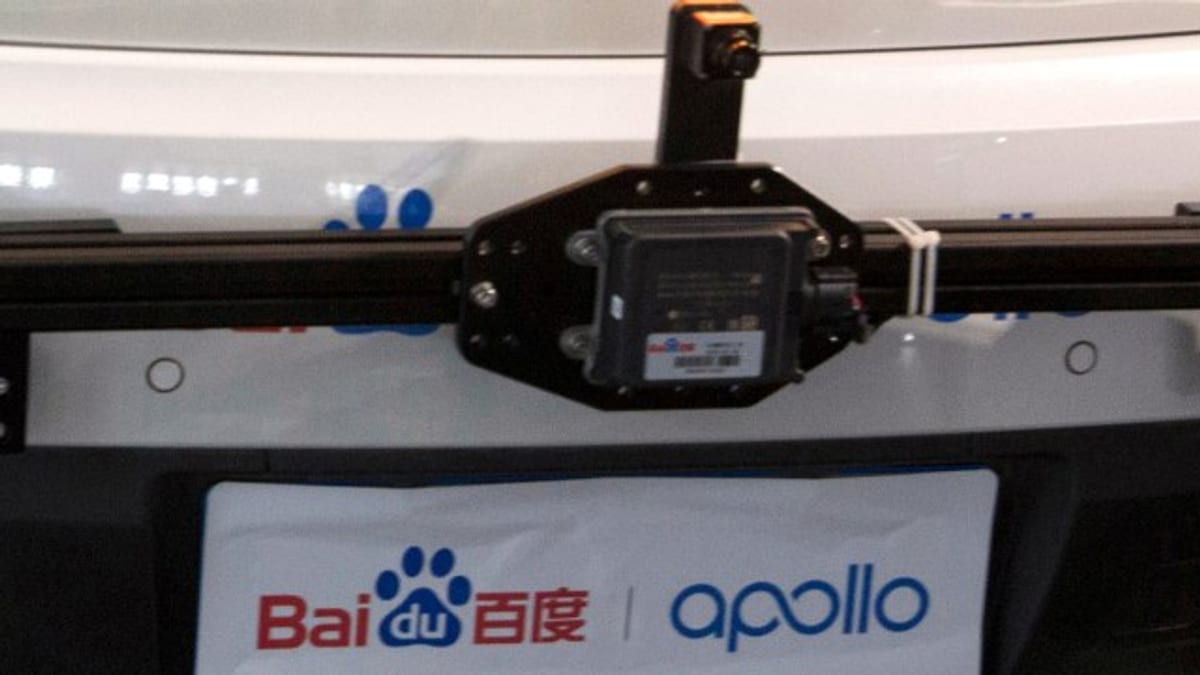
Mass Robotaxi Failure Freezes Traffic Across Wuhan
Publicly available information indicates that more than 100 Baidu Apollo Go robotaxis experienced a near simultaneous shutdown across Wuhan at around 8:57 p.m. local time on March 31. The vehicles reportedly stalled in active lanes on city roads and elevated expressways, disrupting traffic flows and prompting a surge of calls to local transport hotlines.
Media coverage describes driverless cars stopping where they were, in some cases in the middle or outer lanes of multi lane highways. Videos shared on Chinese and international social platforms appear to show stationary white Apollo Go vehicles surrounded by conventional traffic forced to slow or swerve around them. In at least one widely circulated dashcam clip, a human driven car appears to collide with the rear of a stopped robotaxi.
Reports indicate that local traffic police described the episode as a system malfunction affecting the fleet’s autonomous driving platform. While no fatalities have been reported, coverage in Chinese and international outlets notes that some passengers remained stuck for over an hour as staff attempted to reach vehicles scattered across the city.
The incident is being treated as one of the first known large scale simultaneous failures of a commercial robotaxi fleet in China, a country that has heavily promoted autonomous mobility pilots as part of its broader technology and smart city strategy.
Passengers Trapped on Highways and Overpasses
Accounts compiled by regional and international media describe tense moments for riders stranded in fast moving traffic with no human driver on board. Some passengers said their robotaxis came to an abrupt halt after routine maneuvers, such as turning a corner or driving onto an overpass, before displaying on screen alerts about a driving system malfunction.
In several cases, riders reported being surrounded by heavy trucks and fast moving vehicles while their robotaxis remained motionless in live lanes. One account cited in technology publications describes a passenger stuck on an elevated roadway with dump trucks passing nearby, creating a sense of exposure and vulnerability as there was no clear way to move the car out of danger.
Reports suggest that passengers attempted to seek help through in car SOS buttons and customer service hotlines. Some riders said it took considerable time to reach a representative, while others reported being instructed to wait inside the vehicle until staff arrived. In certain cars, passengers were able to manually open the doors and exit to the roadside, but doing so on busy highways carried obvious risks.
The combination of dark evening conditions, dense traffic and stalled vehicles without active human control contributed to a feeling of unease among many riders and other motorists, according to descriptions in local and foreign coverage of the event.
Baidu’s Apollo Go Service Under Intense Scrutiny
The outage centers on Apollo Go, the robotaxi service developed by Chinese technology company Baidu and operated at scale in Wuhan, Beijing and other major Chinese cities. Under normal conditions, Apollo Go vehicles provide app based ride hailing using high definition mapping, sensor arrays and remote supervision from centralized control centers.
Reports from business and technology outlets note that authorities in Wuhan attributed the disruption to a system failure affecting the autonomous driving platform, but did not immediately specify whether the cause was software, communications infrastructure or another technical component. Coverage of the incident highlights that Baidu had not released a detailed public explanation in the days following, even as media attention intensified.
Industry analysts quoted in international business press suggest that what sets this episode apart is not an isolated driving error by a single vehicle, but a simultaneous disruption affecting large numbers of cars across the network. That pattern raises questions about fleet wide dependencies, such as cloud connectivity, mapping services or centralized decision systems that could represent single points of failure.
The incident arrives at a sensitive moment for Baidu, which has been positioning Apollo Go as a global standard bearer for commercial robotaxis and has announced partnerships aimed at expanding its self driving services beyond China. The Wuhan failure has therefore become a focal point for broader debate about how resilient such systems must be before being deployed at mass scale in dense urban environments.
Safety Concerns for Travelers and Local Residents
For travelers and residents in Wuhan, the robotaxi stoppage has underscored both the promise and the perceived precarity of relying on fully autonomous mobility. Prior to the outage, Apollo Go rides were often promoted as a convenient, futuristic way to navigate the city, especially in newer districts where high tech infrastructure and wide boulevards were designed with connected vehicles in mind.
The March 31 incident, however, has left many observers focused on more immediate safety questions, particularly around how autonomous fleets manage rare but high impact failures. Reports emphasize the unusual nature of having dozens of driverless cars halted in live traffic, a scenario that poses different risks than those found in traditional breakdowns where human drivers can at least attempt to steer to the shoulder or use hazard signals proactively.
Travel and technology analysts writing about the outage point to the need for robust fallback strategies, such as automated pull over protocols, stronger roadside assistance coverage and clearer in vehicle guidance for passengers about when and how to safely exit if a vehicle cannot move. They also note that communications between fleet operators, traffic managers and emergency responders become crucial when incidents stretch across multiple locations at once.
For visitors considering the use of robotaxis in pilot cities like Wuhan, the episode serves as a reminder to remain aware of ongoing experimental aspects of these services, even when they are marketed as routine transportation options. Publicly available commentary suggests that many residents continue to use Apollo Go, but now with heightened attention to how quickly the service and regulators address the vulnerabilities revealed by the outage.
Global Context for Driverless Ride Services
The disruption in Wuhan is unfolding against a backdrop of rapid expansion of robotaxi programs worldwide, from North America and Europe to the Middle East and other parts of Asia. Recent years have seen self driving fleets operate in cities such as San Francisco and Phoenix, where separate outages and traffic snarls have already prompted fresh regulatory scrutiny and public debate.
Analysts following the Wuhan episode have drawn comparisons between this large scale system failure and earlier incidents elsewhere in which clusters of autonomous vehicles became immobilized after infrastructure or software problems. While each case involves different technologies and regulatory regimes, together they highlight a central challenge for cities integrating driverless services into existing traffic systems.
The Wuhan outage is likely to feed into ongoing discussions among policymakers, safety advocates and technology companies concerning standards for redundancy, real time monitoring and responsible scaling of fleets. Travel observers note that destinations seeking to brand themselves as innovative hubs increasingly rely on visible demonstrations of advanced mobility, making setbacks particularly sensitive.
For now, coverage indicates that authorities in Wuhan and the service operator are working to stabilize operations and investigate the root cause, even as international attention lingers on videos of stalled robotaxis and uneasy passengers on crowded roads. How thoroughly those lessons are translated into design changes, regulation and traveler information will help determine how quickly public confidence in driverless taxis recovers, both in Wuhan and in other cities watching closely.