

More news on this day
A large-scale outage affecting Baidu’s Apollo Go robotaxi fleet in Wuhan has stranded passengers in live traffic and disrupted major roads, sharpening global concerns over the reliability of driverless ride services.
Get the latest news straight to your inbox!
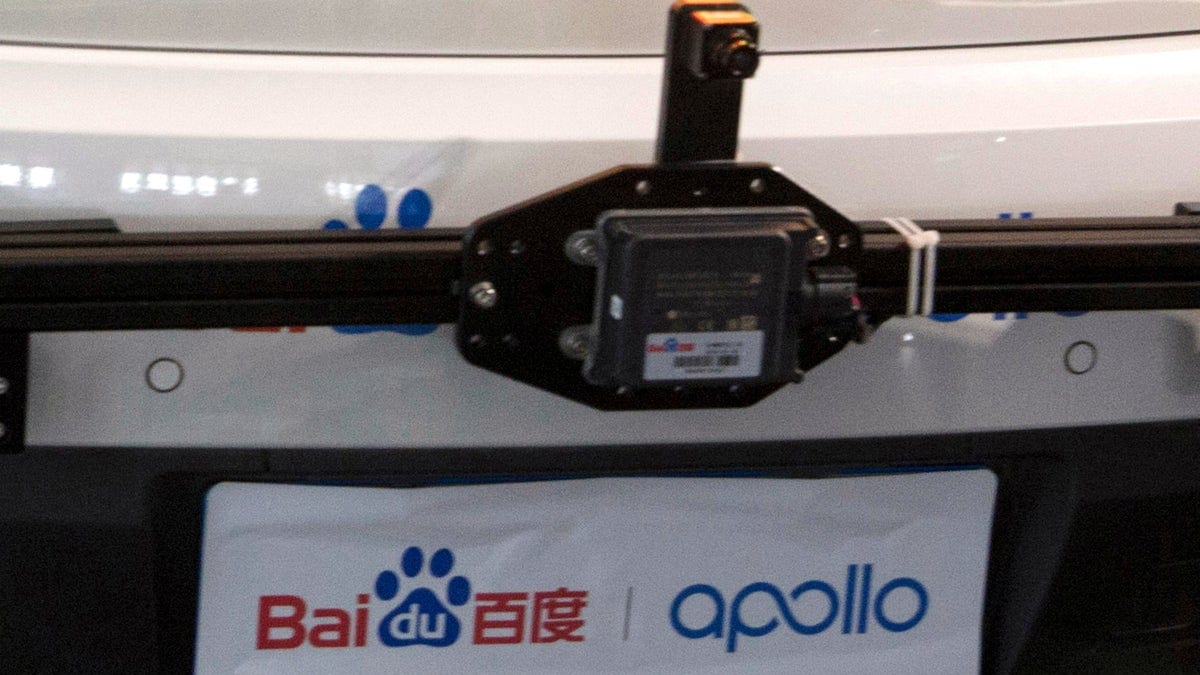
System malfunction halts more than 100 robotaxis
Publicly available information from Chinese media and international coverage indicates that on the night of March 31 a system failure caused more than 100 Apollo Go robotaxis operated by Baidu to stop abruptly across Wuhan, the capital of Hubei province. Many vehicles reportedly froze in the middle of multi-lane roads and elevated expressways while surrounding traffic continued to move.
Police and transport authorities in Wuhan described the event as a system malfunction or outage affecting the fleet’s driverless operation. Reports indicate that emergency calls began around 8:57 p.m. local time, as passengers discovered that their vehicles would not proceed and on-screen messages cited a driving system error.
Local and international outlets describe it as one of the first known large-scale shutdowns of a commercial robotaxi fleet in China. While no fatalities have been reported, coverage points to rear-end collisions involving stalled robotaxis and to significant congestion where the vehicles came to a halt.
The disruption unfolded in a city that has become a showcase for China’s autonomous driving ambitions, with Apollo Go heavily promoted as a glimpse of future urban mobility. The outage has quickly turned that showcase into a case study for the risks of centralized, software-dependent fleets.
Passengers trapped amid fast-moving traffic
Accounts compiled from Chinese social media, local news and international technology reporting describe passengers stuck in vehicles that had stopped in live traffic, in some cases surrounded by heavy trucks on elevated roadways. Several riders reported waiting close to or more than an hour for assistance while traffic continued to flow around the immobilized cars.
In one widely cited account shared via social platforms and later picked up by technology outlets, a passenger said their robotaxi stopped on an overpass with construction trucks passing nearby, creating a sense of exposure and vulnerability. Another rider told Chinese media that an in-car display showed a driving system malfunction and promised staff would arrive within minutes, but assistance did not materialize for a prolonged period.
Reports indicate that passengers tried repeatedly to reach Baidu’s customer support lines, sometimes spending 30 minutes or more just to connect with an operator. Some riders eventually chose to exit the vehicles on their own once they confirmed that doors could be opened, despite the dangers of stepping out into or next to moving traffic.
Images and video clips circulating on Chinese platforms and international news sites appear to show driverless taxis stopped in the middle of busy highways, with hazard lights blinking, and one incident in which a conventional vehicle collides with the rear of a stationary robotaxi. The scenes have intensified questions about how passengers should respond when automated systems fail in environments that are not designed for them to safely wait.
Baidu’s Apollo Go under pressure as questions mount
Public reports identify the stalled vehicles as part of Baidu’s Apollo Go service, one of China’s most prominent commercial robotaxi platforms. The company has been expanding paid driverless operations in Wuhan and other cities, and has announced plans to take its autonomous ride-hailing technology to overseas markets through partnerships.
As of early April, coverage from technology and automotive outlets indicates that Baidu has not provided a detailed public explanation of what triggered the failure or why so many vehicles were affected at once. The absence of a comprehensive technical account has drawn criticism from analysts who argue that large-scale outages pose a different type of risk than isolated driving errors.
Industry commentators cited in regional business newspapers and technology publications suggest that a fleetwide software, cloud or communications issue is a likely factor, given that many modern robotaxi systems are heavily dependent on centralized data and shared algorithms. The incident is being framed as a reminder that reliability of backend infrastructure is as critical to safety as the performance of sensors and onboard computers.
Some commentators note that the outage arrives at a sensitive moment for Baidu, which has positioned Apollo Go as a mature and scalable solution. The company’s push into new markets means that regulators and potential partners outside China are also watching closely to see how it explains the Wuhan failure and what corrective steps follow.
Global spotlight on autonomous vehicle safety and resilience
The Wuhan incident adds to a growing list of high-profile robotaxi disruptions around the world that are fueling debate about how ready fully driverless services are for widespread deployment. Publicly available reports have highlighted previous cases in which autonomous vehicles in the United States came to a stop en masse during power outages or unexpectedly blocked traffic lanes.
Transportation analysts quoted in regional and international coverage argue that Wuhan underscores a particular vulnerability of networked fleets. While traditional vehicles can fail individually, a centralized software or connectivity issue can immobilize large numbers of robotaxis simultaneously, multiplying the impact on passengers and other road users.
The episode is also prompting renewed scrutiny of emergency protocols. Commentators are asking whether passengers receive clear enough guidance on when and how to exit a stalled robotaxi, how quickly operators can dispatch support vehicles, and whether fleet control centers are able to prioritize the riskiest situations, such as cars stopped on high-speed expressways.
In policy discussions, the Wuhan outage is being cited as evidence that regulatory frameworks for autonomous vehicles may need to pay closer attention to fleet-level resilience, disaster recovery planning and real-time communication with riders. The focus is shifting from rare collisions to systemic failures that can paralyze entire corridors of a city in a matter of minutes.
Implications for China’s driverless ambitions
China has positioned itself as a global front-runner in autonomous driving, with major cities including Wuhan, Beijing and Shanghai hosting extensive robotaxi pilots and commercial services. The recent outage has triggered questions inside and outside the country about how setbacks will shape the next phase of deployment.
Coverage in regional newspapers and technology outlets suggests that most analysts do not expect the Wuhan event to halt China’s broader push toward driverless transport. Instead, they anticipate a period of intensified scrutiny, technical upgrades and possibly stricter operational requirements in high-risk environments such as elevated expressways.
Some experts point out that high-profile failures can also accelerate improvements if they lead to clearer standards for redundancy, local fail-safe behavior and passenger support. Ideas being discussed in public commentary include prioritizing rapid removal of stranded vehicles, strengthening backup communication channels and ensuring that control centers can scale up staffing quickly during major disruptions.
For passengers in Wuhan, the immediate legacy of the outage has been frustration, delay and, in some cases, fear. For the global autonomous vehicle industry, the incident has become a test of how operators communicate about failures, how transparent they are about system limitations, and how effectively they can convince the public that the benefits of driverless mobility outweigh the risks exposed when hundreds of vehicles fail at once.