

More news on this day
A widespread outage in Baidu’s Apollo Go robotaxi fleet left passengers stranded in the middle of live traffic across Wuhan this week, after more than 100 driverless cars reportedly froze in place on elevated highways and major ring roads during the evening rush.
Get the latest news straight to your inbox!
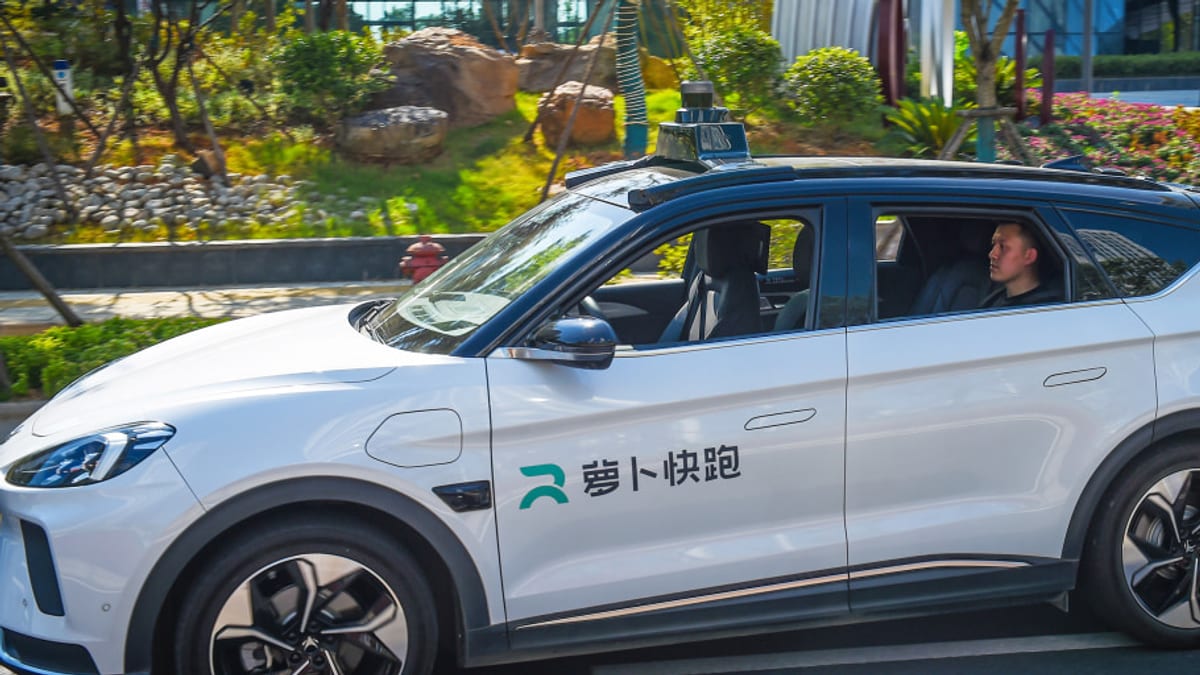
Mass shutdown hits Baidu’s Apollo Go fleet
Publicly available statements and media coverage indicate that the disruption unfolded on the night of March 31, 2026, when robotaxis operating in multiple districts of Wuhan abruptly came to a halt within minutes of one another. Local police notices and transport bulletins describe a sudden “system malfunction” or “system failure” that brought the Baidu-run Apollo Go vehicles to a standstill across several busy corridors.
Reports from outlets including the Associated Press, Sky News and Chinese media say more than 100 autonomous taxis were affected, making it one of the largest single outages yet recorded in a commercial driverless fleet. The incident occurred around 9 p.m. local time, when traffic on Wuhan’s ring roads and elevated expressways is still relatively heavy.
Images and videos shared on Chinese social platforms and republished by international media show Apollo Go cars stopped in live lanes, hazard lights blinking, while surrounding drivers weave past them. In some clips, long lines of robotaxis appear stationary in the middle and outer lanes of multilane roads, contributing to congestion and sudden braking by human-driven vehicles.
According to multiple technology and automotive reports, Baidu has not yet issued a detailed technical explanation of the failure. Coverage of the incident notes that the company operates hundreds of robotaxis in Wuhan as part of an advanced pilot program and that the city is one of its largest testing grounds for fully driverless services.
Passengers trapped in cars amid fast-moving traffic
For riders caught inside the stalled vehicles, the outage quickly turned from an inconvenience into a safety concern. Accounts collated by news organizations from Chinese social media platforms describe passengers stuck for up to 90 minutes on elevated highways and overpasses, surrounded by fast-moving trucks and cars.
Some riders reported that their robotaxi stopped suddenly after turning a corner or approaching an intersection, displaying on-screen notices indicating a driving system malfunction and instructing passengers to wait for staff. In several cases, public reports say that passengers repeatedly attempted to contact customer service through in-car systems or mobile apps, sometimes waiting extended periods before reaching a representative.
While police and media summaries state that the vehicle doors could be opened manually, not all riders felt safe stepping out. Several accounts mention passengers choosing to remain inside because their cars had come to rest in middle lanes, with traffic flowing on both sides. Others eventually exited and moved to the roadside, or waited for traffic police and company personnel to guide them off the roadway.
Local media coverage notes that there were no official reports of injuries directly linked to passengers evacuating the vehicles. However, dashcam footage circulated online appears to show at least one collision in which a human-driven car strikes a stationary robotaxi in the center lane of a wide highway, raising fresh questions about how self-driving fleets should behave when they encounter critical faults.
Officials point to ‘system malfunction’ as scrutiny builds
In public notices summarizing the incident, Wuhan police and transport agencies attributed the mass shutdown to a system malfunction affecting the autonomous vehicles, without specifying whether the issue stemmed from onboard software, communications infrastructure or external signals. Technology-focused outlets report that preliminary findings referenced a system outage and that investigations were ongoing as of early April.
The scale of the paralysis, involving more than 100 vehicles across a large metropolis, has intensified debate within China’s rapidly evolving autonomous driving sector. Commentators in local business media highlight how centralization is often seen as a strength of Chinese robotaxi operations, which can rely on high-definition maps, roadside sensors and robust connectivity. The Wuhan incident has prompted questions about whether the same interconnectedness can also create single points of failure.
International coverage has drawn comparisons to previous self-driving disruptions elsewhere, including clusters of halted Waymo vehicles in San Francisco during a major power outage in late 2025. Safety advocates note that while “minimum risk condition” protocols typically instruct autonomous vehicles to stop when systems detect serious anomalies, doing so in the middle of high-speed traffic may itself introduce new hazards if fail-safes are not designed with complex real-world environments in mind.
Analysts quoted in automotive and technology reports suggest regulators may examine whether additional rules are needed for how driverless fleets handle large-scale failures, particularly in dense urban areas where elevated roads and limited shoulders leave little room for disabled vehicles to pull over.
Implications for global robotaxi rollouts
The Wuhan outage arrives at a time when Baidu and other Chinese companies are working to expand robotaxi services both domestically and overseas. Apollo Go has previously announced pilot operations in locations such as Abu Dhabi and Dubai, and is working with partners on projects in parts of Europe. The incident is likely to be closely watched by regulators and potential partners evaluating the risks and benefits of importing similar systems.
Industry observers point out that other major players have faced their own setbacks, including service pauses and investigations after high-profile traffic jams or collisions involving driverless cars in the United States. The Wuhan case feeds into a broader international conversation about how quickly fully driverless services should scale beyond tightly controlled test zones, especially onto high-speed arteries and elevated ring roads.
Travel and mobility experts note that incidents of this magnitude can influence public perception far beyond the cities where they occur. Potential riders weighing whether to trust a driverless taxi service are likely to pay attention not only to crash statistics, but also to reports of being stranded in unfamiliar locations or precarious traffic situations for extended periods.
The episode may therefore shape how operators communicate about redundancy, emergency procedures and customer support. Clear information about how passengers can safely exit a vehicle, how quickly assistance can arrive and how fleets are monitored in real time could become key factors in rebuilding confidence after such a widely publicized failure.
Safety, regulation and the future of driverless travel
For the global travel industry, the events in Wuhan underscore both the promise and the fragility of autonomous mobility. Robotaxis are promoted as a way to ease congestion, cut emissions and provide convenient transport for visitors and residents alike. Yet the mass immobilization of vehicles during a single software or systems event demonstrates how tightly coupled modern transport networks have become to digital infrastructure.
Policy discussions in China and abroad are likely to focus on how to ensure that autonomous fleets remain resilient in the face of software glitches, network outages or cyber incidents. Ideas raised by researchers and commentators include stricter requirements for vehicles to move to the shoulder or next safe stopping zone when encountering a critical fault, stronger on-board autonomy that is less reliant on real-time connectivity, and clearer procedures for coordinating with human-driven traffic during emergencies.
For travelers, the incident is a reminder to treat driverless taxis as an evolving technology rather than a mature, failproof service. While no injuries have been reported in connection with the Wuhan outage so far, images of passengers stuck on elevated highways surrounded by heavy vehicles will likely linger in the public imagination and inform how visitors approach novel mobility options in unfamiliar cities.
As investigations continue in Wuhan, the outcome will likely influence not just Apollo Go’s operations, but the pace and shape of robotaxi deployments in other major destinations. Cities courting autonomous fleets as a marker of technological sophistication may find themselves weighing the marketing appeal of cutting-edge transport against the reputational risks when something goes suddenly, and very visibly, wrong in the middle of the road.