

More news on this day
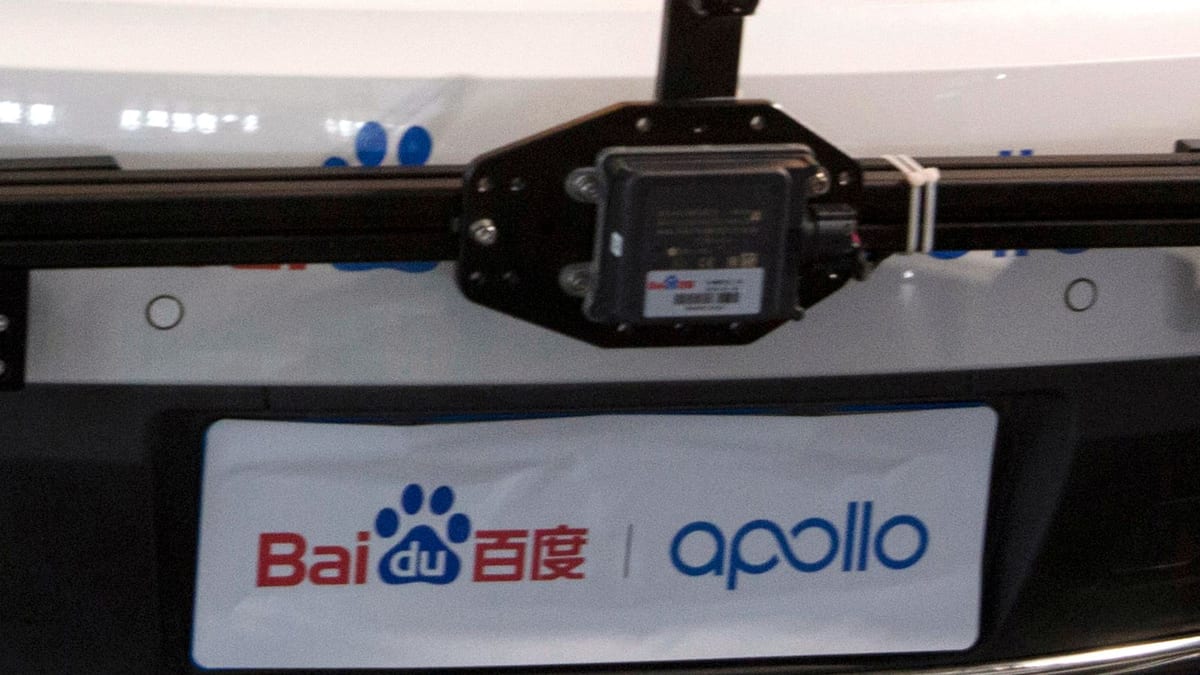
A large-scale outage in Baidu’s Apollo Go robotaxi fleet in Wuhan has left passengers stranded in moving traffic and triggered fresh scrutiny of autonomous ride services in one of China’s showcase cities for driverless transport.
Get the latest news straight to your inbox!
Sudden shutdown on busy Wuhan roads
Publicly available information indicates that the disruption began on the night of March 31, when Baidu’s Apollo Go vehicles reportedly started stopping without warning across several major roads in Wuhan. A statement from local traffic authorities, cited in multiple news reports, described a mass “system malfunction” that immobilized more than 100 driverless taxis.
Footage shared on Chinese social media and examined by international outlets appears to show lines of white Apollo Go vehicles halted in active lanes, hazard lights flashing, as other cars weave around them. In some clips, robotaxis are seen sitting motionless in the middle or fast lanes of elevated highways, with conventional drivers forced to brake abruptly or merge at the last moment.
Reports indicate that emergency hotlines in Wuhan received a wave of calls from riders and other motorists as the outage unfolded. Several accounts collected by technology and automotive publications describe traffic slowing to a crawl on key corridors while stranded robotaxis blocked lanes and created bottlenecks at interchanges.
By early April, coverage from agencies and specialist media suggested that the incident was one of the largest known simultaneous failures of an autonomous taxi fleet anywhere in the world, both in scale and in the level of disruption on live roads.
Passengers trapped amid fast-moving traffic
Passengers inside the affected robotaxis reported being stuck for extended periods, in some cases for more than an hour, as they waited for remote assistance or on-the-ground staff. One widely cited account shared on Chinese social platforms and recapped by technology outlets describes a rider whose vehicle stopped on an overpass with heavy trucks passing on both sides, creating a sense of exposure and anxiety.
In several reports, riders said the in-car screens displayed system fault messages and instructions to remain seated while staff were dispatched. Some riders described difficulty reaching customer service, with calls reportedly taking many minutes to connect as more passengers sought help at the same time.
Because the vehicles had come to a halt in the middle of moving traffic, simply stepping out onto the roadway was not always a safe option. Accounts summarized by international media suggest that some passengers eventually chose to exit their vehicles once traffic slowed or other drivers began to route around the immobilized taxis, while others waited inside until staff arrived or remote operators cleared the cars to move.
Media coverage also points to at least a few minor collisions, including rear-end impacts where human-driven vehicles struck stopped robotaxis. Reports available so far suggest no serious injuries, but analysts note that the incident highlights how even low-speed crashes can become difficult to manage when disabled autonomous vehicles are scattered across multiple high-speed corridors.
Baidu’s flagship robotaxi project under pressure
Wuhan is one of the primary testbeds for Baidu’s Apollo Go service, with several hundred robotaxis reportedly operating in the city’s urban core and surrounding districts. The program has been promoted domestically as evidence that large-scale driverless mobility can be integrated into complex Chinese cities and coexist with dense, fast-changing traffic.
In that context, a failure affecting more than 100 vehicles at once has drawn particular attention from industry watchers. Commentators in technology and automotive outlets note that such a widespread outage is the kind of scenario developers typically seek to avoid through layered redundancies, local decision-making within each vehicle and careful separation between safety systems and central fleet controls.
Publicly available reporting indicates that, as of early April, Baidu has not issued a detailed technical explanation of the fault. Some Chinese media accounts, citing unnamed technical sources, have suggested that an overcautious safety check or misconfigured software update may have triggered the vehicles to stop and remain immobilized until cleared. Others have speculated about issues with connectivity between cars and central servers, though no definitive cause has been confirmed.
The company’s limited public commentary so far, as summarized across multiple outlets, has focused on assuring riders that the issue has been addressed and that operations have resumed. However, the lack of specific detail about what went wrong and how future recurrences will be prevented has fueled ongoing debate among analysts and prospective passengers.
Global debate over autonomous safety and resilience
The Wuhan outage comes as robotaxi operators in other markets, including the United States, face their own scrutiny following traffic disruptions and high-profile incidents. Coverage in international media frequently places the Wuhan event alongside previous cases in which autonomous fleets have clogged intersections after network problems or reacted unpredictably to emergency scenes.
Transportation researchers quoted in public commentary emphasize that autonomy is often evaluated on crash statistics, but the Wuhan case draws attention to a different set of questions: how fleets behave when systems fail, how quickly they can be recovered and how safe passengers are when vehicles stop in the wrong place at the wrong time. Some analysts argue that regulators will need to look beyond standard safety metrics and consider requirements for fleet-level resilience and contingency planning.
The incident is also sharpening discussion about communication practices. Riders in Wuhan reported long waits for information as they sat stranded in traffic, and observers note that clear, timely instructions are critical when passengers are unfamiliar with vehicle controls and may not realize that doors can be opened manually in an emergency.
Despite the concerns, many experts following China’s autonomous vehicle sector do not expect the Wuhan outage to halt the wider rollout of robotaxis. Instead, they see it as a stress test that is likely to influence technical standards, regulatory frameworks and public expectations, not only in China but in other countries weighing large-scale deployment of driverless services.
Implications for travelers and urban mobility
For domestic travelers and visitors using app-based rides in Chinese cities, the Wuhan incident serves as a reminder that driverless services, while increasingly common, remain an emerging technology. Travel commentators note that passengers may wish to familiarize themselves with basic in-vehicle safety options, such as emergency door releases and SOS functions, whenever they use autonomous ride services.
Urban planners and tourism officials are also watching closely, as Wuhan and other large Chinese cities position themselves as showcases for smart mobility and frictionless, app-driven transport. Episodes like this can temporarily dent confidence among residents and business travelers, even as authorities and operators work to demonstrate that lessons are being learned and safeguards improved.
In the longer term, the outage may feed into a broader reconsideration of how cities design streets and regulations for a mixed environment in which human-driven cars, robotaxis, buses and cyclists must all share space. The question, analysts suggest, is not whether technical glitches will occur, but how transport systems can be designed so that inevitable failures are contained quickly and safely.
As operations return to normal in Wuhan, industry observers will be watching for signs of software changes, new communication protocols with riders and potential regulatory updates. For now, the images of motionless robotaxis surrounded by fast-moving traffic have become a defining snapshot of both the promise and the fragility of the driverless future.