

More news on this day
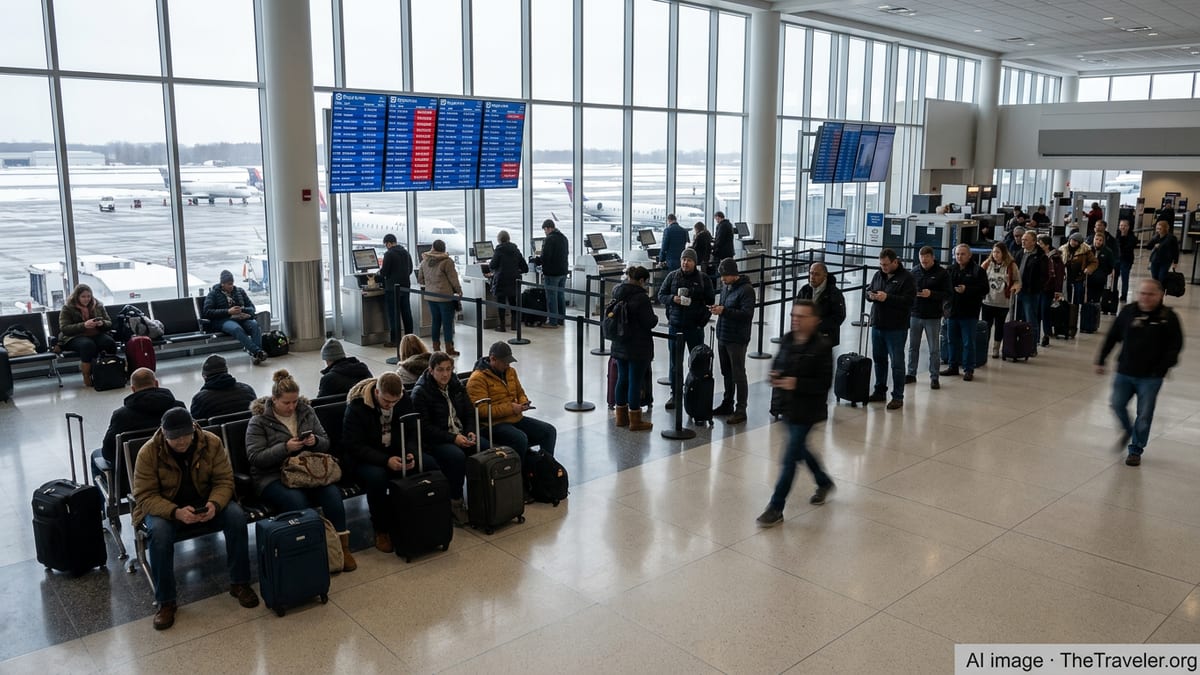
After a turbulent winter across the Northeast, Frederick Douglass Greater Rochester International Airport is contending with an uptick in cancellations and delays, leaving travelers weighing whether the convenience of flying from their hometown hub is worth the growing risk of disruption.
Get the latest news straight to your inbox!
Winter Weather and Systemwide Disruptions Collide
Rochester’s primary air gateway has long been vulnerable to winter storms sweeping across New York, but the 2025–26 season has been particularly punishing. Severe weather systems rolling up the East Coast in late February led to more than 30 cancellations in a single day at the airport, affecting both arrivals and departures and disrupting connections across the country.
These localized problems are intersecting with broader turmoil in the aviation network. Large winter storms across North America this season have triggered thousands of cancellations nationwide over short time spans, as airlines preemptively trim schedules, reposition aircraft and reset crews. When that happens, smaller markets like Rochester tend to feel the impact first, as carriers prioritize restoring service to larger hubs.
Weather is not the only factor. National coverage has highlighted how technology failures and operational meltdowns at major airlines over the past two years have cascaded into regional airports. When a systemwide issue strands aircraft or crews in distant cities, Rochester’s flights can be delayed or canceled even when skies over Monroe County are clear.
The result is a more fragile experience for travelers than the relatively predictable patterns seen before the pandemic. Passengers who might once have expected minor winter disruptions are increasingly finding that a storm hundreds of miles away, or a software issue in an airline’s operations center, can upend plans in Rochester with little warning.
Why Smaller Airports Feel Cancellations More Acutely
Publicly available aviation analyses show that smaller commercial airports typically offer fewer daily departures, which means each individual cancellation removes a larger percentage of available seats. Rochester is no exception. With limited nonstop routes and many flights timed around connections through major hubs, losing even one or two departures can close off an entire day’s worth of practical options to certain destinations.
Industry data and traveler accounts indicate that winter flight cancellations in and out of Rochester occur at a higher rate than at larger regional hubs, especially during marginal weather. Observers suggest several reasons, including airlines’ operational choices. When crews are stretched and aircraft are in short supply, carriers may opt to protect higher-volume hub-to-hub routes, trimming service at smaller stations like Rochester first.
Regional service patterns also matter. Many of Rochester’s flights are operated by regional partners on smaller jets. These aircraft face stricter operating limits in poor weather and are more likely to be subject to weight restrictions or cancellations when runway conditions deteriorate. At the same time, larger airports in the region often have more robust de-icing operations and additional runway capacity, making it easier for airlines to maintain at least a skeleton schedule there while scaling back in smaller markets.
Travel demand has also shifted since the pandemic. Coverage of Rochester’s air service shows that a significant share of local passengers continues to drive to larger airports for greater choice or lower fares. That dynamic can reinforce airlines’ focus on major hubs, leaving smaller airports more exposed when schedules are tightened during peak disruption periods.
How Current Airline Changes Are Shaping Rochester Travel
Frederick Douglass Greater Rochester International Airport currently hosts a broad mix of carriers, offering nonstop service to major hubs and select leisure destinations. Yet the network remains in flux. Over the past several years, Rochester, like many mid-sized airports, has experienced both route additions and losses as airlines adjust to shifting demand, pilot shortages and higher operating costs.
Recent filings from airport and county officials describe an ongoing effort to recruit and retain nonstop routes. At the same time, announcements tied to airline restructurings and bankruptcies have signaled that some low-cost carriers plan to suspend or reduce service at Rochester in early 2026. For travelers who rely on those routes, this means fewer backup options if a primary flight is disrupted.
Nationally, airlines have also tightened schedules to build in more buffers for crews and maintenance, after years of staffing strains. While this has reduced some of the rolling delays that characterized the immediate post-pandemic rebound, it has also meant that many routes are operating with little slack. When a Rochester-bound aircraft or crew goes out of position, there may not be another available plane or team to step in quickly, resulting in outright cancellations instead of shorter delays.
For passengers, these structural shifts can be hard to see until a problem arises. Published timetables might show multiple daily flights to a given hub, but if several are clustered at similar times or rely on the same small pool of aircraft, a single disruption can ripple through the day’s schedule.
What Passengers Can Do Before Heading to the Airport
Travel experts and consumer advocates emphasize that in the current environment, preparation is as important as the ticket itself. Publicly available guidance from airlines and airports consistently urges passengers to monitor flight status through airline apps, sign up for text or email alerts, and re-check departure times the day before and morning of travel. Mobile apps often show rebooking options more quickly than phone lines or airport counters when disruptions begin.
Travelers departing from Rochester are increasingly advised to consider the timing of their flights. Early-morning departures tend to be less affected by same-day knock-on delays, because aircraft and crews are often already in place overnight. Later flights, particularly those relying on inbound aircraft from busy hubs, may be more vulnerable when storms or congestion develop elsewhere in the system.
Allowing extra connection time is another key strategy. With delays now more common, itineraries that once felt comfortable can become risky. For passengers connecting through major hubs such as New York, Boston, Chicago or Atlanta, opting for longer layovers can provide a buffer against missed connections if the first leg from Rochester is late.
Finally, travel planners note the importance of realistic contingency thinking. That includes carrying essential medications and valuables in a carry-on rather than checked luggage, understanding airline policies on meal vouchers and hotel accommodations during irregular operations, and having a basic Plan B such as a later flight, an alternate routing or, in some cases, being prepared to delay a trip by a day.
Rebooking, Compensation and When Driving May Make Sense
When cancellations do occur, passengers flying from Rochester face the same consumer-rights landscape as travelers nationwide. Public information from the U.S. Department of Transportation explains that if a flight is canceled or significantly changed, travelers are generally entitled to a refund if they choose not to travel, even on nonrefundable tickets. If they still wish to fly, rebooking is typically offered on the next available flight on that airline, subject to seat availability and fare rules.
Airlines sometimes provide meal or hotel vouchers when disruptions are within their control, such as mechanical issues, but practices vary widely by carrier and situation. Weather-related cancellations are more likely to be considered outside the airline’s control, which can limit the support provided. Travelers from Rochester are encouraged to review their airline’s published customer service commitments in advance and consider travel insurance or credit card protections that may help cover additional costs.
Given Rochester’s proximity to larger airports in the region, some travelers now weigh whether driving to a bigger hub is prudent when forecasts show major storms or when their itinerary is especially time-sensitive. Larger airports often have more flights to a given destination and may recover faster after a disruption, though they also experience crowding and long lines during peak irregular operations.
For many, however, the convenience of a smaller airport remains compelling, especially for early departures and off-peak travel days when delays are less common. The tradeoff, travelers and analysts suggest, is accepting that in today’s strained aviation system, flying from Rochester increasingly requires flexibility, close monitoring of conditions and a willingness to adjust plans when cancellations ripple through the schedule.