

Rochester, New York is compact, connected and increasingly focused on giving residents and visitors realistic options beyond driving everywhere. Whether you are in town for a weekend or settling in for longer, understanding how to use the city’s buses, bikes, scooters, rideshares and walkable neighborhoods will make your time here smoother and more affordable. This guide walks through the main ways to move around Rochester so you can choose what fits your schedule, budget and comfort level.
Getting Oriented in Rochester
Rochester sits on the southern shore of Lake Ontario, with a small and fairly walkable downtown core surrounded by compact neighborhoods and suburban communities. Most visitors first arrive through Frederick Douglass Greater Rochester International Airport or via intercity buses and trains, then use local options to reach hotels, campuses, offices and attractions like the East End entertainment district, the Strong National Museum of Play or the Public Market.
The heart of the local transit network is the RTS Transit Center on Mortimer Street downtown. From here, buses fan out across the city and into the surrounding Monroe County suburbs. Rideshare cars, taxis and micromobility services cluster around this same area, so it often serves as a practical starting point even if you are not staying right in the center.
Rochester’s street grid is oriented roughly along the Genesee River, which runs north to south through the city and divides some neighborhoods. Bridges concentrate car, bike and bus traffic at a handful of crossings, so travel times can vary during busy periods. Planning a little extra time for cross river trips is wise, especially during the afternoon rush.
Weather is another important factor when choosing how to move around. Summers are generally pleasant and make walking, biking and scooter riding attractive. Winters can be snowy and windy, which impacts everything from driving conditions to bus reliability and whether shared bikes and scooters are available. Having a backup plan for cold months is useful if you are relying on surface transport.
Using RTS Buses and the Transit Center
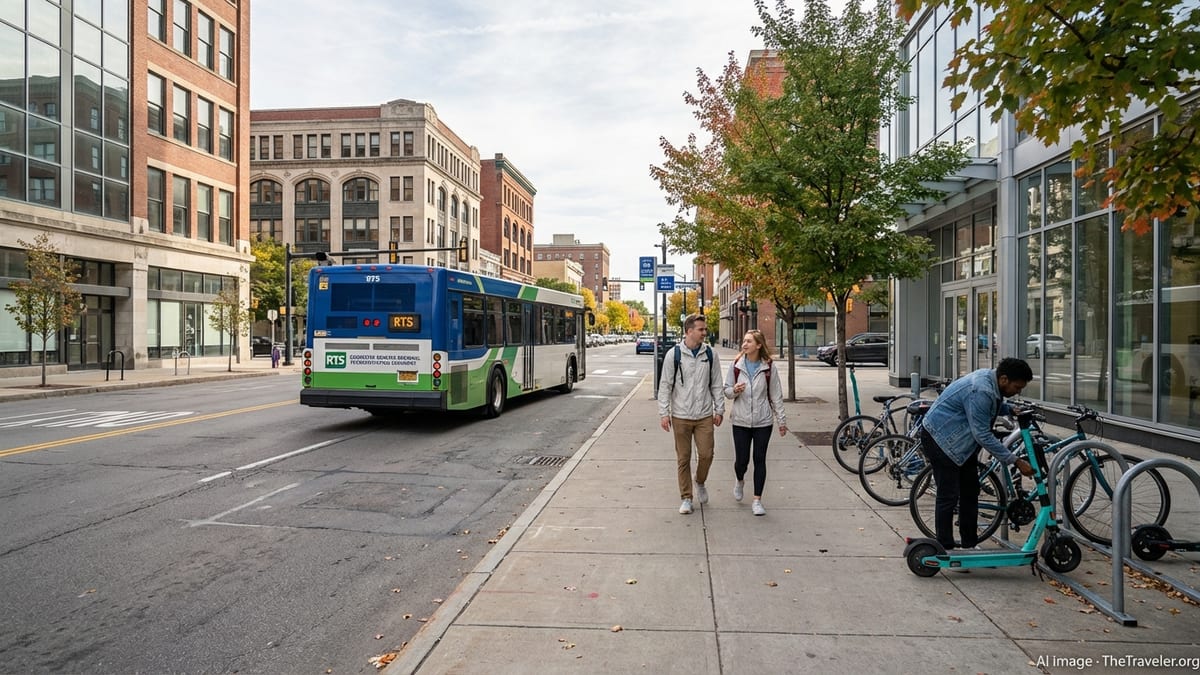
Local buses in Rochester are operated by the Rochester Genesee Regional Transportation Authority through its Regional Transit Service brand. Routes are designed around the downtown RTS Transit Center, where nearly all lines start or end. This hub and spoke system means that many journeys involve a change downtown, but it also makes the network easy to understand if you are new to the city.
Most regular routes link major employment centers, colleges, shopping districts and key neighborhoods. Service is generally frequent during weekday daytime hours and more limited at night and on weekends, especially in lower density suburbs. Schedules and real time information are available through RTS digital tools and posted timetables at major stops, but it is sensible to allow extra time when traveling in poor weather or at off peak hours.
Fares are kept relatively simple, with flat pricing on most local routes and options for passes that can lower the cost if you ride more than just a few times. Riders can usually pay with exact change, mobile ticketing or smart cards depending on the current RTS system. If you will be in Rochester for several days without a car, looking into a multi day or monthly product can be cost effective.
The RTS Transit Center itself is a modern indoor facility with sheltered boarding areas, clear signage and staff on hand during core hours. It is located near many downtown offices, hotels and the East End, so even if you arrive by car, parking nearby and using buses for part of your stay can spare you from repeated downtown parking searches and fees.
Micromobility: Bikes and Scooters
Rochester has leaned into shared micromobility as an alternative for short trips around the urban core. A citywide program operated by Veo supplies electric scooters and selected bike style devices that can be rented by the minute with a smartphone. Riders typically pay a small fee to unlock a vehicle and then a per minute rate for the duration of their trip, making it attractive for hops of a few kilometers or less.
Use of these shared vehicles has grown strongly, with recent seasons recording hundreds of thousands of trips across the city. The system is particularly popular with residents who do not own a car or do not have a driver license, as well as people connecting to bus routes or traveling to jobs and services in corridors that are less efficiently served by fixed routes. The city and operator also promote reduced fare options aimed at lower income riders, though eligibility requirements apply.
Practical use is straightforward. After downloading the app and creating an account, you locate a nearby scooter or bike on the map, scan a code to unlock it and ride to your destination. At the end of your trip, you are expected to park the device upright at a bike rack or near the sidewalk edge without blocking pedestrians, then end the trip in the app. During winter, the fleet is partially or fully removed for safety, usually returning in spring when snow and ice risks are lower.
Riding in Rochester is generally comfortable for people with some bike or scooter experience, though streets can be busy around downtown and at major intersections. There is a growing network of bike lanes and traffic calming measures, but conditions vary by neighborhood. Wearing a helmet, obeying local traffic laws and avoiding riding on sidewalks in busy pedestrian areas are important for your own safety and the comfort of others.
Walking and Cycling Around the City
Despite its northern climate, Rochester can be an enjoyable city for walking, particularly in spring, summer and early fall. Downtown blocks are relatively short, major cultural attractions sit within a compact radius, and several neighborhoods such as Park Avenue, Corn Hill and the Neighborhood of the Arts are pleasant to explore on foot. Sidewalk coverage is good in the core, although snow and ice can occasionally affect walkability in winter until plows and property owners clear paths.
The city has invested over time in multi use trails that appeal to both cyclists and pedestrians. Routes along the Genesee Riverway connect parks, campuses and residential districts, while the Erie Canalway Trail offers a scenic corridor for longer bike rides or leisurely walks just outside the dense core. These green corridors are often more relaxing than main streets and are a good way for visitors to orient themselves to Rochester’s geography.
If you plan to cycle beyond short shared scooter trips, consider bringing your own bike or renting from local bike shops, especially if you want a specific type of bicycle or plan to ride during the shoulder seasons when shared fleets are smaller. Rochester drivers are generally accustomed to sharing the road with bikes, but infrastructure is mixed, so planning routes that use quieter streets or marked bike lanes can make rides more comfortable.
Year round riders should prepare for lake effect snow, strong winds and chilly temperatures. Studded tires, good lighting, reflective clothing and layers are essential for winter cycling. For many residents and students, combining biking with buses or rideshares in the coldest months offers a sensible balance between sustainability and comfort.
Rideshares, Taxis and Driving
For door to door travel, Rochester is well covered by app based rideshare services such as Uber and Lyft, as well as locally based taxis and private car services. Rideshares in particular are a convenient choice for late night outings in the East End, trips between downtown and the airport or station, or occasions when winter weather makes waiting at a bus stop less appealing. Fares fluctuate with demand, time of day and distance, so it is wise to check estimates before confirming.
Traditional taxi companies still operate in the city and may be preferable for travelers who do not use smartphones or prefer to arrange pickups by phone. Taxis are sometimes available at key locations like the airport, major hotels and intercity bus or train stations, although densities will generally be lower than in larger cities. If you know you will need a ride at a specific time, booking ahead improves your chances of an on time pickup.
Driving in Rochester is straightforward for most of the year. The street network is logical, congestion is usually modest compared to major metropolitan areas and parking is widely available outside the tightest downtown blocks. Many attractions and shopping centers offer free surface lots. In the city center, you will find a mix of garages and metered street spaces with time limits and varying price points. Snow events can affect visibility, lane markings and on street parking, so keeping an eye on local advisories is prudent in winter.
If you are renting a car, compact models are usually sufficient for local driving and easier to park in older neighborhoods with narrow streets. Fuel stations are widely distributed, and most hotel areas are within a short drive of supermarkets and services. For visitors who plan to explore the wider Finger Lakes region, a car offers the greatest flexibility, but within the downtown Rochester area you may find that mixing driving with other modes reduces stress and parking costs.
Airport, Train and Regional Connections
Frederick Douglass Greater Rochester International Airport sits only a few miles southwest of downtown, which keeps transfer times short. Travelers can reach the city center by taxi, rideshare, hotel shuttle where offered or local bus. Some RTS routes stop at or near the airport, but schedules may not match very early morning or late night flights, so checking exact operating hours before relying on the bus is important.
Rochester’s intercity rail link is the Louise M. Slaughter Rochester Station, served by several Amtrak routes that connect the city to New York City, Niagara Falls, Toronto and Chicago. The station is close to downtown and reachable by local buses, taxis and rideshares. For visitors arriving by train who plan to remain largely within the urban core, it is realistic to rely on transit, walking, micromobility and occasional car services instead of renting a vehicle immediately.
Long distance buses, including intercity services operated by national carriers, also serve Rochester, typically stopping at facilities near downtown. These terminals are often within a short drive or transit ride of major hotels and campuses. Coordinating your arrival time with local transit schedules or pre booked rides can reduce waiting time, particularly during winter evenings.
For regional trips, many residents use a combination of personal cars and intercity services. Wine trails, state parks and small towns across the Finger Lakes are generally not well covered by fixed route public transport. If you plan excursions beyond the city, renting a car for a day or two can be a practical complement to using buses and bikes for everyday urban movement.
Accessibility, Safety and Practical Tips
Rochester’s transportation providers place growing emphasis on accessibility. RTS buses include features such as low floors or ramps, designated spaces for mobility devices and priority seating. Drivers receive training on assisting passengers with disabilities, and paratransit services operate in parallel with fixed routes for riders who cannot comfortably use regular buses. If you rely on these services, registering in advance and confirming eligibility requirements will streamline your experience once you are in the city.
Shared micromobility operators work with the city to provide lower cost options for qualifying riders and to distribute vehicles more evenly so that lower income and historically underserved neighborhoods have reasonable access. This is an ongoing effort, and availability can still vary by time of day and demand. Riders with visual or mobility impairments should be aware that poorly parked scooters can sometimes obstruct sidewalks, although operators and the city encourage users to park responsibly and may move devices that block access.
From a safety perspective, Rochester is similar to other mid sized American cities. Using common sense goes a long way: avoid displaying valuables on public transport, be mindful of your surroundings at night, and choose well lit routes when walking or waiting for buses. Severe weather is one of the more significant risks. Snow, ice and strong winds can arrive quickly, so check forecasts, allow extra travel time and dress appropriately if you are relying on surface transportation in winter.
Practical planning tools such as real time transit apps, smartphone maps and weather notifications make a noticeable difference in day to day convenience. Saving the location of your accommodation, key bus stops and frequently visited places in your navigation app simplifies route finding. If you are staying longer, learning the main east west and north south corridors and how they relate to the Genesee River will make it easier to improvise alternative routes when traffic or construction disrupts your usual path.
The Takeaway
Moving around Rochester does not have to be complicated. The combination of an easy to understand bus network, a growing micromobility system, widespread rideshare coverage and a reasonably walkable core gives you genuine choices. You can tailor your mix of modes to your budget, your tolerance for winter weather and how far beyond downtown you plan to venture.
Visitors who stay primarily in the city center can often rely on buses, walking, scooters and occasional rideshares without renting a car. Residents and longer term guests may find that owning or leasing a vehicle makes regional travel easier while still using shared options for short urban trips. In either case, getting familiar with the RTS Transit Center, understanding seasonal patterns for bikes and scooters, and planning for winter conditions will help you move confidently through the city.
By thinking of Rochester’s transport options as a flexible toolkit rather than an all or nothing choice, you can piece together trips that are efficient, affordable and aligned with your comfort level. With a bit of preparation, getting around becomes part of the experience of discovering the city, from its riverside trails and historic neighborhoods to its lively markets and cultural venues.
FAQ
Q1. Do I need a car to visit Rochester?
Many visitors manage without a car if they stay near downtown, using buses, walking, scooters and rideshares. A car becomes more useful for exploring the wider Finger Lakes region.
Q2. How reliable are RTS buses in Rochester?
RTS buses generally run reliably during the day, with some delays possible in rush hour or winter weather. Evening and weekend service is less frequent, so planning ahead is important.
Q3. Are shared scooters and bikes available year round?
Shared scooters and similar micromobility devices are typically most available from spring through fall. Operators often reduce or pause service during the snowiest winter months.
Q4. Is it safe to walk around Rochester?
Central areas and popular neighborhoods are commonly walked during the day. At night, using well lit routes, staying aware of your surroundings and avoiding very quiet areas is sensible.
Q5. How do I get from the airport to downtown without a car?
You can use a rideshare or taxi for a direct trip, or check RTS bus routes that serve the airport. Some hotels may also offer limited shuttle services.
Q6. Can I take bikes or scooters on RTS buses?
Many RTS buses are equipped with front mounted bike racks for personal bicycles. Shared scooters and bikes are usually not allowed on board, so plan to end those trips before boarding.
Q7. Are transportation options accessible for people with disabilities?
RTS buses have accessibility features such as ramps and securement spaces, and paratransit services operate for eligible riders. Sidewalk and curb ramp conditions vary by area and weather.
Q8. How expensive are rideshares in Rochester?
Rideshare costs depend on time, distance and demand, but they are often more affordable than in larger cities. Short trips within downtown and nearby neighborhoods are usually reasonably priced.
Q9. Is parking difficult in downtown Rochester?
Parking is easier than in many big cities, but the busiest blocks can fill during events and workdays. Garages and slightly more distant lots usually have space if street parking is tight.
Q10. What is the best way to get around during winter?
In winter many people combine buses, rideshares and limited walking. Having a flexible plan and allowing extra time for snow and ice conditions will make winter travel more manageable.