

More news on this day
Rocinha, Rio de Janeiro’s largest favela, is at the center of a tourism surge as travelers increasingly trade beachside clichés for immersive, community-led experiences inside the city’s hillside neighborhoods.
Get the latest news straight to your inbox!
Record Visitor Numbers Drive Favela Tourism Growth
Rio de Janeiro is experiencing a tourism upswing, and Rocinha is emerging as one of its most talked-about destinations. Publicly available data from the city indicates that Rio welcomed around 12.5 million visitors in 2025, including more than 2 million international travelers, with overall tourist spending climbing sharply compared with the previous year. As visitor numbers rise, coverage from international outlets describes a growing share of travelers choosing guided tours in favelas such as Rocinha, rather than limiting themselves to Copacabana, Christ the Redeemer, and Sugarloaf Mountain.
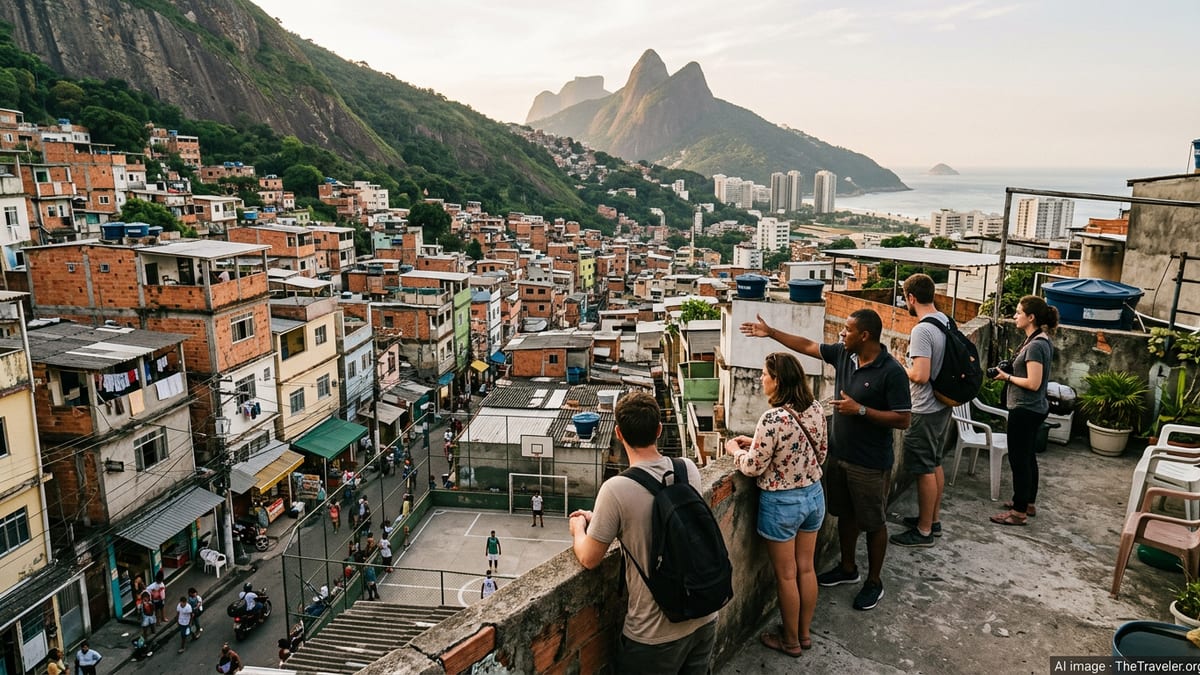
Reports on the ground portray Rocinha’s narrow alleyways, murals, and rooftop vistas as key backdrops for this new wave of tourism. Long stigmatized in international media, the community is increasingly showcased as a complex urban neighborhood with dynamic cultural life. Operators highlight visits to local food stalls, small businesses, and art spaces as central elements of their itineraries, signaling a shift away from the quick drive-through bus tours that once defined the sector.
At the same time, social media is amplifying Rocinha’s visibility. Recent coverage has focused on viral drone videos filmed from rooftop viewpoints in the favela, which have drawn millions of views and inspired a stream of visitors looking to recreate the same sweeping panoramas of the densely built hillside.
From “Slum Safari” Criticism to Community-Led Models
The boom in favela tourism has not been without controversy. For more than a decade, scholars, travel writers, and local activists have warned that poorly run tours risk turning low-income communities into human zoos. Academic research on favela tourism in Rio has pointed to instances where visitors were shuttled through in jeeps, discouraged from interaction, and given little context on the social and political realities shaping daily life.
Recent reporting, however, indicates a noticeable pivot toward locally owned and community-led operations in Rocinha. Many of the most prominent tours are now designed and guided by residents who grew up in the neighborhood and present themselves as cultural mediators rather than intermediaries for outside companies. Their stated aim is to counter sensationalist narratives by focusing on history, resilience, entrepreneurship, and artistic production alongside the very real challenges of informality, inequality, and intermittent public services.
Guides and commentators quoted in travel and news coverage emphasize that ethical favela tours should avoid staged poverty, voyeuristic photography, and surprise visits into private homes. Instead, itineraries increasingly prioritize street-level walking routes, conversations in locally owned cafés, visits to social projects, and open discussion about how drug trafficking, policing, and public policy intersect with everyday life.
What Ethical, Immersive Tours in Rocinha Look Like
Community-focused operators working in Rocinha typically market their experiences as small-group walking tours lasting around three to four hours. Information published by established companies describes itineraries that move on foot through key thoroughfares and viewpoints, pausing at street markets, informal commerce hubs, and overlooks where travelers can see the full scale of the favela stretching across the hillside between São Conrado and Gávea.
Rather than promising adrenaline or spectacle, these tours are framed as opportunities for cultural exchange. Visitors may observe a capoeira demonstration, street football, or funk dance practice, but are generally encouraged to engage respectfully rather than consume performances as exotic entertainment. Several operators publicly state that they cap group size, avoid sensitive areas, and coordinate with residents and local businesses to minimize disruption to daily life.
Pricing information from tour companies suggests that standard Rocinha walking experiences in 2026 often cost in the range of 100 to 120 Brazilian reais per person, with some operators highlighting that a portion of revenue is reinvested into local initiatives. These include youth sports programs, arts workshops, and educational projects that aim to create additional opportunities for residents and broaden the long-term benefits of tourism.
Travel advisories and specialist guides stress that visitors should only enter Rocinha with reputable, community-embedded operators. Publicly available guidance warns against attempting solo visits or joining unlicensed tours, both for safety and ethical reasons, given the area’s complex social dynamics and the importance of maintaining trust with residents.
Social Media Fame Fuels Debate on Representation
Rocinha’s rising profile is closely tied to viral content. In early 2026, international and Brazilian media reported on a drone video filmed at a rooftop viewpoint known locally as a key photo spot in the favela. The footage showed influencers walking along a narrow rooftop as a drone pulled back to reveal the sprawling community below, reinforcing Rocinha’s image as a dramatic urban landscape.
Supporters of this type of visibility argue that such images help destigmatize the favela by presenting it as a vibrant neighborhood rather than a danger zone, encouraging more people to book guided tours and spend money with local entrepreneurs. They note that foreign visitors who once avoided the area now arrive with a sense of curiosity and a willingness to learn, rather than fear.
Critics, however, caution that social media fame can easily slide into performance that prioritizes aesthetic spectacle over real engagement. Commentators in Brazilian and international outlets have raised concerns about tourists posing for glamorous shots on rooftops while everyday life continues below, asking whether residents truly benefit from these fleeting moments of global attention. The debate mirrors broader questions about “Instagram tourism” worldwide and whether image-driven travel can ever be fully equitable.
This tension is particularly sharp in Rocinha, where residents and tour organizers are still negotiating how to manage visitor flows at heavily photographed spots. Some operators have begun to introduce clearer guidelines on where and how guests can film, in an effort to protect privacy and ensure that viral content does not undermine community dignity.
How Travelers Can Make Rocinha Visits More Responsible
For international visitors considering a Rocinha tour, experts in responsible travel and local commentators consistently highlight preparation and operator choice as the most important factors. They recommend prioritizing companies that are based in the favela, publish clear commitments to ethical tourism, and demonstrate transparent links to community projects or resident associations.
Travel guides advise that guests approach Rocinha as they would any residential neighborhood, dressing modestly, asking permission before taking close-up photos of individuals, and avoiding posting identifiable images of children. Visitors are also encouraged to think beyond the tour itself by supporting local businesses during and after their visit, whether by buying food, crafts, or services directly from residents.
Published coverage further suggests that travelers reflect critically on their own motivations. Instead of seeking shock or contrast with the beachfront districts, visitors are urged to focus on learning about the social fabric of Rio and recognizing favelas as integral parts of the city, with their own histories, politics, and cultural contributions.
As Rio’s tourism industry continues to evolve, Rocinha’s experience illustrates both the promise and the pitfalls of immersive travel in marginalized urban areas. Done thoughtfully, community-led tours can generate income, challenge stereotypes, and give visitors a richer understanding of Brazil’s largest favela. Managed carelessly, they risk reinforcing old hierarchies under a new, photogenic veneer.