

More news on this day
Romania has surged to the top of Bulgaria’s inbound tourism markets in 2025, underpinning a broader recovery that is delivering record foreign arrivals, longer stays, and historic revenue for one of Europe’s fastest rising destinations.
Get the latest news straight to your inbox!
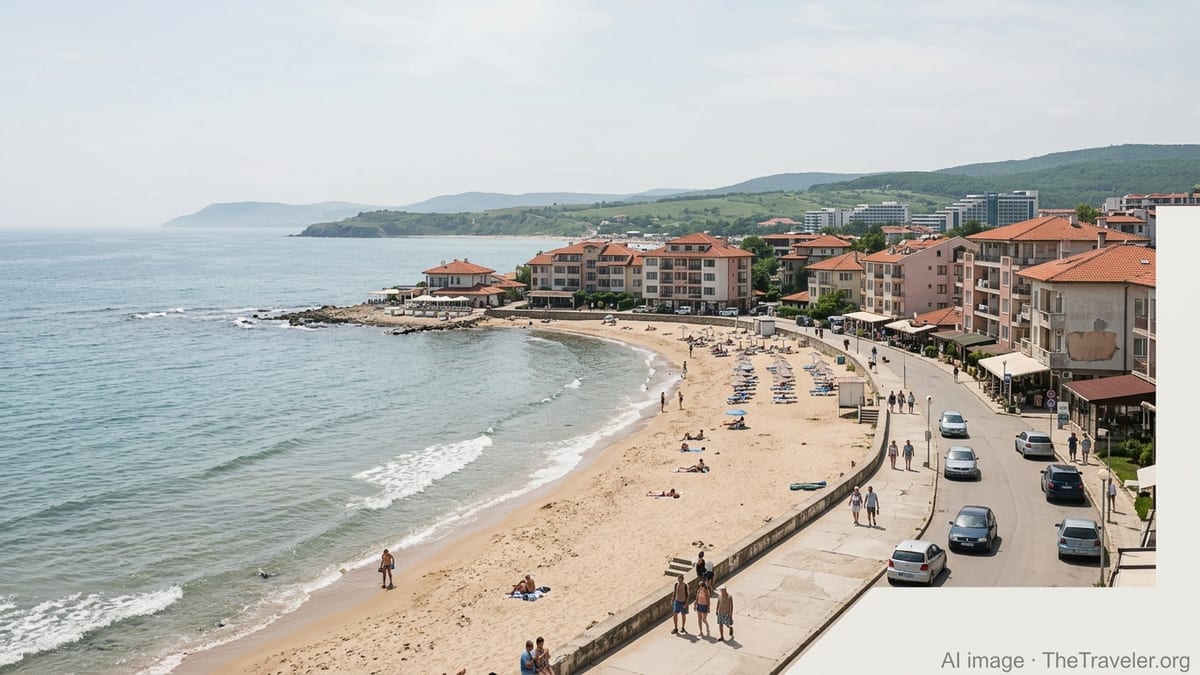
Romanian Visitors Take Lead in Bulgaria’s Tourism Rankings
Recent data from Bulgaria’s National Statistical Institute and regional industry monitors indicate that Romania has moved ahead of traditional source markets such as Turkey, the United States, Greece, the United Kingdom, and Germany as the single largest generator of foreign visitors to Bulgaria. Monthly figures for late 2024 and early 2025 show Romanians consistently topping the charts of incoming tourists, particularly along the Black Sea coast and in urban leisure hubs.
According to publicly available statistics, Romania accounted for close to 900,000 visitors to Bulgaria in 2024, and that flow strengthened further into 2025 as cross-border travel intensified after both countries’ entry into the Schengen area for air and sea borders at the start of the year. Travel analysts note that easier border formalities, short driving distances, and relatively competitive prices are turning Bulgaria into an increasingly routine choice for Romanian holidaymakers, rather than a once-off summer alternative.
Industry briefings point out that the Romanian market has broadened beyond traditional summer beach segments to include winter sports, spa and wellness breaks, and city getaways to destinations such as Plovdiv, Veliko Tarnovo, and Sofia. This diversification is helping to stabilize arrivals throughout the year and reduce Bulgaria’s dependence on a handful of Western European and long haul markets that have been more volatile since the pandemic period.
The prominence of Romanian visitors is also reshaping regional dynamics. Cross-border tourism between the two neighbors is increasingly two way, yet the balance in visitor volumes and spending now tilts clearly toward Bulgaria, where the tourism offer is more export oriented and supported by larger accommodation capacity, competitive fuel and food prices, and aggressive regional marketing campaigns.
13.6 Million Foreign Visitors and 28.8 Million Nights Mark a New Peak
Against this backdrop, Bulgaria’s wider tourism performance has accelerated. Consolidated estimates for 2025 point to about 13.6 million foreign visitors, edging above the already strong 2024 season and firmly surpassing pre pandemic benchmarks. This represents a significant recovery from the disruptions of 2020 and 2021 and signals Bulgaria’s arrival in the upper tier of European leisure destinations by volume.
Overnight stays tell a similar story. Sector data indicate that foreign guests will generate roughly 28.8 million nights in Bulgarian accommodation establishments in 2025, an increase that places the country among the European Union’s fastest growers in this category. Eurostat figures released in early 2026 already show Bulgaria outperforming the EU average in terms of the annual rise in tourism nights, highlighting how the rebound is no longer confined to headline arrival counts but is reflected in longer and more frequent visits.
Market observers link this momentum to a mix of returning charter operations from Central and Western Europe, the strengthening of nearby source markets such as Romania and Poland, and gradual expansion in city tourism. While core competitors like Greece and Turkey still attract far higher absolute volumes, Bulgaria’s growth rate from a smaller base is narrowing the gap and encouraging investors to revisit plans for new hotels, resorts, and supporting infrastructure.
Crucially, the 2025 season is not just about recovering lost ground. The combined rise in visitors and overnight stays suggests that Bulgaria is consolidating gains made in 2023 and 2024, when the country first exceeded 13 million foreign tourists. The new plateau above 13.5 million arrivals, supported heavily by regional markets, indicates that Bulgaria’s tourism sector has moved beyond short term post pandemic catch up into a more structural expansion phase.
From Seasonal Peaks to Year Round Travel Patterns
One of the most notable shifts in Bulgaria’s tourism profile over the past two years has been the move away from an ultra concentrated summer season. Publicly available monthly statistics for 2024 and 2025 show robust growth in winter and shoulder months, driven by ski resorts such as Bansko, Borovets, and Pamporovo, along with spa regions in southwestern and central Bulgaria.
Romanian travelers are playing a central role in this change. Car borne visitors from the north are increasingly taking advantage of weekend and short break opportunities at Bulgarian mountain resorts, often combining skiing or hiking with wellness stays. This pattern is helping to fill hotels during months when many coastal properties traditionally struggled with low occupancy, supporting staff retention and local employment in destinations that previously relied heavily on a short beach season.
The country’s urban centers are also gaining ground as independent travel grows. Sofia, Plovdiv, Burgas, and Varna are receiving more city break visitors, with Romanians again prominent among regional travelers making repeat visits for concerts, sporting events, shopping, and gastronomy. Tour operators note that these shorter but more frequent trips are particularly important for smoothing seasonality, injecting demand during periods when charter flights to the coast are limited.
This year round broadening is visible in the structure of overnight stays. While peak summer months still account for the largest share of nights spent, the relative weight of winter and shoulder seasons has been rising steadily. Combined with strengthening domestic travel, this trend supports a more resilient business model for hotels and guesthouses, reducing their exposure to weather shocks or sudden drops in demand from any single foreign market.
Historic Revenue Growth and Competitive Advantage in the Region
The surge in visitor numbers and overnight stays is translating into record financial results. Tourism revenue estimates for 2025 point to historic highs, building on earlier ministry projections that international tourism income would reach the equivalent of several billion euro in 2024. Trends reported by banks, card payment providers, and accommodation statistics all indicate strong growth in both overall spending and average receipts per foreign visitor.
Part of this improvement reflects inflation and higher room rates, but analysts emphasize that structural factors are also at work. Bulgaria’s gradual shift toward higher value segments in wellness, cultural tourism, wine and gastronomy, and nature based travel is reinforcing the core offering of sea and ski packages. The country’s relatively low cost of living, euro linked currency board, and adoption of Schengen rules for air and sea borders have further reduced friction for travelers from neighboring EU states and beyond.
In this environment, Romania’s role as a leading source market becomes even more significant. The large and growing middle class north of the Danube has easy access to Bulgarian resorts by road or short haul flights, and many visitors already have familiarity with the language and culture from previous trips. Compared with more distant markets like the United States or the United Kingdom, where growth is constrained by flight capacity and longer planning cycles, demand from Romania can respond more rapidly to new offers, promotions, or improved infrastructure.
Regional comparisons show that while Turkey and Greece remain powerhouses in the wider Black Sea and Eastern Mediterranean area, Bulgaria’s relative gains since 2019 have been stronger in percentage terms. With record revenue, rising average spend, and more balanced seasonality, the country is positioning itself as a competitive alternative that combines EU regulatory stability with pricing that is still markedly lower than many Western European destinations.
Challenges Ahead as Bulgaria Manages Rapid Expansion
The pace of growth in arrivals and overnight stays also poses challenges. Industry observers warn that infrastructure in some coastal and mountain regions is under strain during peak periods, with traffic congestion, pressure on water resources, and waste management emerging as recurring issues. Local authorities are exploring measures such as upgraded public transport, parking regulations, and stricter controls on illegal accommodation to keep pace with demand.
There is also increasing discussion around how to sustain quality while keeping Bulgaria affordable. Hospitality providers face rising wage and energy costs, along with heightened expectations from a new generation of travelers who compare experiences across multiple countries in the region. Maintaining service standards and reinvesting record revenues into modernizing facilities will be crucial to retaining loyal visitors from Romania and other nearby markets.
At the same time, diversification remains a priority. Commentators note that Bulgaria will benefit from deepening ties not only with its leading regional markets, but also with higher spending segments from Germany, the United Kingdom, and North America. By combining strong regional volume from Romania with targeted promotion in long haul and premium niches, the country aims to build a more balanced portfolio of source markets that can cushion against shocks in any one economy or currency.
For now, however, the data for 2025 point decisively to a tourism sector in expansion. With Romania firmly established as the largest source of foreign visitors, 13.6 million international arrivals on the horizon, and an estimated 28.8 million overnight stays, Bulgaria is reinforcing its status as one of Europe’s standout recovery stories and a rising year round destination on the Black Sea.