

More news on this day
Hundreds of travellers were left stranded at Rome and Milan’s main airports after a fresh wave of disruption on Sunday led to 166 flight delays and 20 cancellations, snarling operations for Qatar Airways, Gulf Air, El Al and several other international carriers serving Italy’s busiest air gateways.
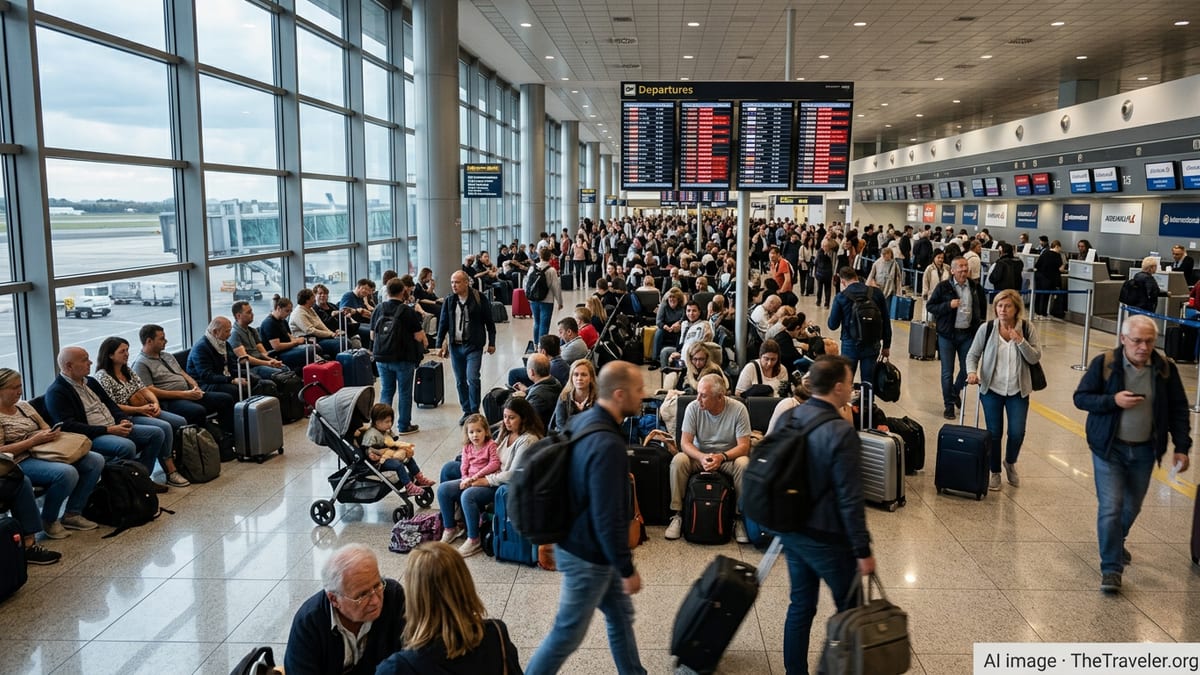
Major Italian Hubs Squeezed by Widening Network Turmoil
The latest disruption unfolded across Rome Fiumicino and Milan’s Malpensa and Linate airports as Italian and international carriers struggled to realign schedules already stretched by regional airspace restrictions and knock-on delays from elsewhere in Europe and the Middle East. Airport operations teams reported crowded departure halls, bottlenecks at check in and security, and mounting pressure on available gates as aircraft went out of rotation.
While Italian authorities did not immediately attribute the problems to a single cause, aviation analysts pointed to a complex mix of factors, including congestion at upstream hubs, rerouting around restricted airspace in the Gulf region, and aircraft and crew stranded out of position after earlier cancellations. The result was a domino effect that left Rome and Milan particularly exposed on some of the continent’s busiest travel corridors.
By late afternoon, a combined 166 flights had been reported delayed across the two cities, alongside 20 outright cancellations. Given the high proportion of connecting traffic at both hubs, the disruption rippled into onward journeys to the Middle East, Asia, Africa and the Americas, heightening the impact for long haul travellers.
Qatar Airways, Gulf Air and El Al Among Hardest Hit
Qatar Airways, Gulf Air and El Al were among the most affected long haul operators, with several services to and from Doha, Bahrain and Tel Aviv either significantly delayed or pulled from the schedule. These carriers, which rely heavily on tightly timed connections through their respective hubs, were already under strain from wider regional constraints and volatile demand patterns.
Passengers on Gulf-bound services reported escalating departure times posted on terminal screens, followed by last minute gate changes and extended waits on the tarmac once boarding was complete. For some travellers, delayed arrivals into Doha and other Gulf hubs meant missed onward connections to destinations across Asia and Australia, forcing overnight stays and complex rebookings.
El Al customers connecting through Italy also faced uncertainty as delays on European feeder flights upset onward itineraries toward Israel and beyond. With aircraft and crews tied up by rolling disruptions, airline operations centres were forced into constant schedule revisions, frequently updating passengers via airport announcements and mobile alerts as the day progressed.
Passengers Face Long Queues, Confusion and Limited Options
Inside the terminals, the human impact of the disruption was unmistakable. Travellers described lengthy queues at airline service desks as customers sought alternative routings, accommodation vouchers and clarification on their rights. Families with young children and older passengers were particularly affected as waiting areas filled and access to seating became scarce in some departure zones.
Many travellers turned to airline apps and social media feeds for real time updates when public address announcements lagged behind fast changing schedules. However, with so many flights simultaneously affected, rebooking options quickly narrowed, especially for those needing to reach onward connections in the Gulf, Eastern Mediterranean and South Asia within tight timeframes.
Airport staff and ground handling companies deployed additional personnel to help manage crowds and direct passengers to updated gates and baggage claim areas. Nonetheless, the pace of change meant some travellers only learned of cancellations after prolonged delays, compounding frustration and fuelling complaints over communication and care standards.
Wider European and Middle East Disruptions Feed Italian Gridlock
The situation in Rome and Milan unfolded against a backdrop of broader network stress, as airlines across Europe grappled with weather related issues, saturated airspace and the continuing operational repercussions of airspace closures and restrictions linked to tensions in the wider Middle East. Schedules involving Doha, Dubai, Abu Dhabi and other key Gulf hubs remained particularly fragile, with even minor delays frequently cascading through multi leg itineraries.
Frequent fliers noted that disruption in recent days had already been mounting at several major European airports, heightening the risk that any further disturbance would quickly spill over into secondary hubs and key city pairs. Italy’s strategic position on routes linking Western Europe with the Middle East and Asia made Rome and Milan especially vulnerable to sudden swings in on time performance.
Industry observers said Sunday’s events underscored how interconnected the global air transport system has become, with operational shocks in one region often translating into tangible delays thousands of kilometres away. For airlines, balancing safety, regulatory compliance and commercial imperatives in this fluid environment remained an increasingly complex task.
Travellers Urged to Monitor Flights and Know Their Rights
With schedules still unstable into the evening, airlines operating from Rome and Milan urged passengers to check their flight status before leaving for the airport, use official mobile apps wherever possible and allow additional time for check in and security. Some carriers activated flexible rebooking policies, permitting free date changes for affected customers or offering travel vouchers where itineraries were no longer viable.
Consumer advocates reminded travellers on disrupted flights to retain boarding passes, booking confirmations and any written communication from airlines to support potential compensation or reimbursement claims under applicable passenger rights regulations. They also advised passengers to document expenses for meals, local transport and accommodation incurred as a direct result of long delays or cancellations.
As operations teams worked to re thread aircraft and crews back into position, observers warned that residual delays could persist into subsequent days, particularly on heavily trafficked routes linking Italy with the Gulf and Eastern Mediterranean. For now, passengers navigating Rome and Milan’s airports were urged to prepare for continued uncertainty, stay closely informed, and build extra buffer time into their onward travel plans.