

More news on this day
Rome’s Leonardo da Vinci–Fiumicino Airport, usually gearing up for the busy spring and Easter travel rush, is instead confronting a sharp spike in flight cancellations that is throwing holiday plans into disarray for passengers across Europe, the Middle East, and North America.
Get the latest news straight to your inbox!
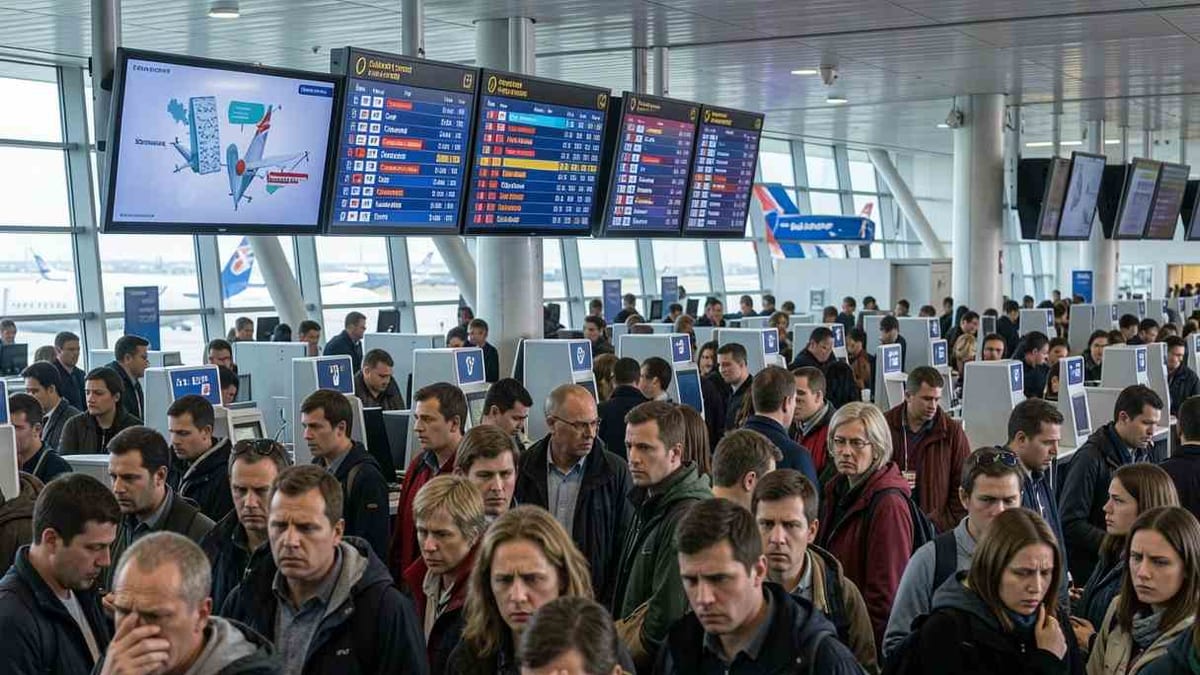
Image by Global Travel Alerts, Advisories, International Travel Alerts
Regional Tensions Ripple Through Rome’s Main Hub
Publicly available aviation data and recent industry reporting indicate that a series of geopolitical shocks in early March has triggered widespread schedule volatility at major European hubs, with Rome Fiumicino among the airports feeling the strain. Disruptions to airspace over parts of the Middle East have forced some long-haul carriers to reroute or refuel, while others have pulled selected services entirely, compressing already tight spring schedules.
Travel forums and passenger reports show that several airlines using Fiumicino as a key European gateway have proactively thinned out capacity on routes to destinations such as Jeddah and other cities in the wider region. One low cost carrier has been flagged by travelers for cancelling all March flights on its Rome Fiumicino to Jeddah route, leaving many religious and leisure trips in limbo and triggering a scramble for alternative connections via other hubs.
At the same time, the broader European network has been under pressure from knock-on delays and aircraft rotations. Eurocontrol’s recent overviews note a dip in movements at Rome Fiumicino attributed to “numerous flight cancellations,” reflecting not only the loss of some point to point services but also the disruption of onward connections that rely on tight turnarounds and predictable slot availability.
The result is a more fragile schedule than usual for late March and early April, just as families and city break travelers typically converge on Rome and other Italian destinations for spring holidays, religious festivals, and the first wave of Mediterranean sunshine.
From Long Haul Cuts to Low Cost Cancellations
The wave of disruption at Fiumicino is not confined to one market segment. On the long haul side, publicly circulated airline advisories over recent weeks have highlighted selected suspensions and reductions affecting intercontinental services into and out of Rome. Some carriers have quietly removed specific transatlantic or Gulf rotations from their March timetables, while others have opted for technical stops at Fiumicino on flights otherwise bound for North America in order to avoid conflict zones and fuel constraints. Each of these operational choices reshapes gate allocation and potentially displaces other services.
For budget travelers, the pain is even more visible. Social media posts and community forums feature a growing number of passengers whose spring itineraries from Fiumicino to secondary European and Middle Eastern airports were cancelled weeks before departure. In one widely shared case, travelers discovered that their early May flight from Rome to London Luton had quietly shifted to “cancelled” status on tracking apps, prompting uncertainty about whether the entire rotation series had been pulled or simply retimed.
Such early cancellations are often a sign of airlines consolidating frequencies on overlapping routes in response to cost pressures, weaker demand on certain city pairs, or operational limits brought on by aircraft and crew availability. While consolidation can protect the viability of remaining flights, it also leaves those on the cancelled departures scrambling for scarce seats at similar times or accepting long detours via other hubs.
Adding to the complexity, some carriers are simultaneously announcing new or upcoming services from Fiumicino for the peak summer season. This creates an uneasy contrast: glossy marketing for new routes on one side, and granular notices of cancelled or “zeroed out” spring flights on the other, leaving travelers unsure whether the network is expanding or contracting in the short term.
How Vacation Plans Are Being Hit Right Now
The immediate impact for passengers is a wave of last minute itinerary changes, particularly for those with intricate, multi leg vacations built around a Rome stopover. Reports from travel discussion boards in March describe passengers bound for religious pilgrimages, cruises departing from Civitavecchia, and Mediterranean island escapes who suddenly found their key Fiumicino segments cancelled or significantly retimed.
Some travelers have been able to rebook on alternative flights within a few hours of their original departure time, often connecting through other hubs such as Frankfurt, Paris, or Istanbul. Others, especially those booked on low cost point to point services, report fewer options and higher replacement fares as remaining seats fill quickly. For those traveling in families or groups, finding multiple seats on the same new flight has become a particular challenge.
The timing of the cancellations is amplifying the disruption. Many airlines have been notifying passengers only a couple of weeks before travel, which is just late enough that cheaper alternatives may have disappeared from the market. Travelers who booked nonrefundable accommodation, tours, or cruise segments tied closely to their original arrival time in Rome are now wrestling with additional change fees or partial losses on those ground arrangements.
Even for passengers whose flights remain scheduled, the overall sense of uncertainty is altering behavior. Travel agents and online booking platforms report rising numbers of customers asking about flexible tickets, travel insurance coverage for cancellations, and the risks of tight connections through Rome, especially for journeys that involve long haul segments connecting to short European hops.
Why Fiumicino Is Vulnerable to Knock On Disruptions
Rome Fiumicino’s role as Italy’s main international gateway, combined with its mix of network carriers and aggressive low cost operators, makes it particularly sensitive to regional shocks. The airport serves as a crucial link between Europe and the Middle East, North Africa, and parts of Asia, meaning that any sudden restriction or risk perception in those airspaces quickly reverberates through its departure boards.
Industry analyses published in March highlight that European hubs with a high share of flights touching the eastern Mediterranean and Gulf region are currently more exposed to cancellations and last minute rescheduling. Fiumicino fits that profile, acting both as an origin point and a refueling or technical stop for flights rerouted around sensitive areas. This creates a complex puzzle of slot management, turn times, and crew duty hours that leaves less room for error when wider network stress appears.
Additionally, the spring shoulder season often sees airlines fine tune their schedules in response to forward bookings and evolving economic conditions. Rising fuel prices linked to regional tensions, along with ongoing fleet and staffing constraints inherited from previous winters, have encouraged some carriers to prune marginal routes and focus capacity on higher yielding city pairs. When those strategic cuts involve aircraft that were due to operate from or through Fiumicino, passengers at the airport feel the impact directly.
The overall picture is of an airport that remains operational but is hosting a more fragile and fluid schedule than many travelers anticipate. Departures may still look busy on the day, yet behind the scenes a significant number of rotations have been removed, retimed, or reassigned in the last few weeks, eroding the sense of reliability that many visitors expect from a major European hub.
What Travelers Should Do Before Heading to Rome
With the situation evolving day by day, travelers holding tickets to or from Rome Fiumicino in late March and April are being urged by widely shared travel advisories and airline updates to stay proactive. The single most important step is to check flight status directly through the airline or trusted flight tracking tools starting several days before departure, and again on the morning of travel, rather than relying on old confirmation emails or printed itineraries.
Passengers whose flights are already labeled as cancelled should contact their airline or booking intermediary promptly to understand available options, which may include rerouting via a different hub, moving travel to a later date, or requesting a refund. In many reported cases, travelers who responded quickly were better able to secure seats on remaining services at acceptable times, while those who waited encountered limited availability and higher prices.
For those still planning new trips that use Fiumicino as a gateway, industry commentators currently recommend building in longer connection times, especially when linking a long haul arrival with a short haul departure on a separate ticket. Opting for fares that allow changes at a reasonable cost, and verifying how travel insurance treats schedule changes triggered by regional instability, can also help reduce the financial sting if the situation deteriorates further.
Most importantly, would-be visitors should recognize that Rome itself remains open and welcoming, but that the path through its main airport is more complicated than usual. With diligent monitoring, flexible planning, and a willingness to adjust routes if necessary, many trips can still go ahead, even as cancellations continue to reshape the departure boards at Leonardo da Vinci–Fiumicino Airport.