

More news on this day
Rome is cementing its status as Europe’s most passenger-pleasing gateway, with Leonardo da Vinci–Fiumicino Airport named Best Airport in Europe for a record ninth consecutive year and sister airport Ciampino once again topping its category in global customer-experience rankings.
Get the latest news straight to your inbox!
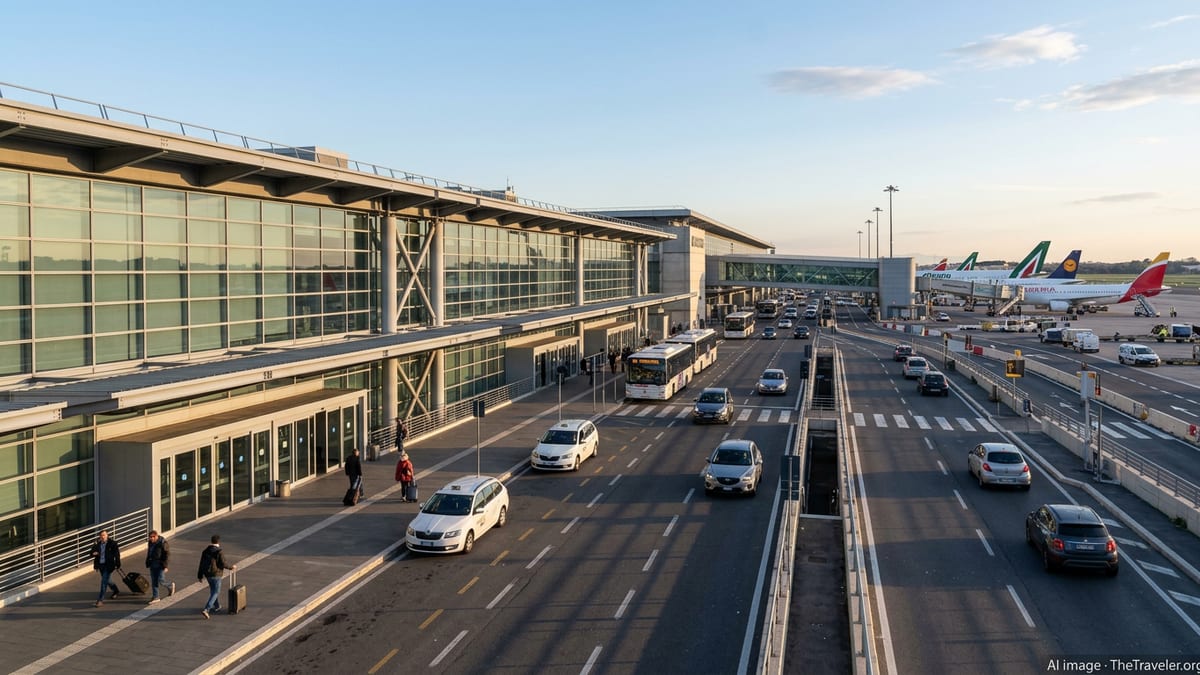
Ninth Straight Win for Europe’s Leading Hub
Airports Council International (ACI) World has confirmed that Rome’s Leonardo da Vinci–Fiumicino Airport is Europe’s best-performing hub in its 2025 Airport Service Quality (ASQ) Customer Experience Awards, marking the ninth year in a row that the Italian capital’s main gateway has taken the top prize in the category for airports handling more than 40 million passengers.
The latest results, based on passenger surveys conducted throughout 2025 and released in February 2026, give Fiumicino a record-breaking overall satisfaction score of 4.64 out of 5, the highest among the 124 European airports evaluated. The ASQ programme measures real-time traveler feedback on everything from check-in and security to cleanliness, comfort and retail, making the accolade one of the most closely watched indicators of airport quality in the industry.
For Aeroporti di Roma, the operator of the Rome airport system, the ninth consecutive win caps a decade-long transformation that has turned what was once regarded as an underperforming hub into a benchmark for the continent. The airport now consistently appears in global top-ten rankings and is one of a handful of large hubs worldwide to combine rapid growth with rising customer-satisfaction scores.
Fiumicino’s sustained performance also reflects the new realities of European air travel, where competition among hubs is increasingly fought on quality and efficiency as much as on route networks. With passenger traffic at Europe’s airports surpassing pre-pandemic levels and airlines adding capacity on key long-haul routes, maintaining a lead in service rankings has become strategically important.
Ciampino Joins Rome’s Winning Streak
Rome’s success story does not end at Fiumicino. Ciampino Airport, the city’s secondary gateway and a key base for low-cost and charter carriers, has been recognized by ACI World as one of Europe’s best-performing airports in the 2 to 5 million passenger category, extending a run of top finishes in its size segment.
According to the latest ASQ results, Ciampino has now been awarded in its category for the third consecutive year, underlining the consistency of passenger approval for an airport that often serves as travelers’ first encounter with Italy. Survey respondents highlight friendly staff, efficient processing and a compact layout that makes navigation straightforward, even at peak times.
The dual recognition places the Rome airport system among a select group of European metropolitan areas where both primary and secondary airports achieve top-tier customer-satisfaction scores simultaneously. While Fiumicino handles the bulk of long-haul and full-service traffic, Ciampino’s performance indicates that Rome’s broader aviation offering is competitive across different segments of the market.
With Ciampino processing close to 4 million passengers a year and serving a growing mix of leisure and short-haul business routes, its strong showing in the ASQ rankings suggests that budget-conscious travelers are not being asked to compromise on basic comfort or service quality when they choose the cheaper airport option.
How Fiumicino Pulled Ahead of Europe’s Giants
Fiumicino’s rise to the top of the European rankings has been driven by a multi-year investment programme focused on modern terminals, smoother passenger flows and a high-touch approach to customer service. Travelers now encounter brighter, more spacious departure halls, intuitive wayfinding, expanded security lanes and upgraded boarding areas designed to reduce bottlenecks during busy banked waves of flights.
The airport’s Terminal 1 has undergone a major refurbishment, with redesigned check-in zones, automated bag drops and extensive commercial areas that introduce natural light and softer acoustics. Security screening has been enhanced with advanced scanners and updated queue management, cutting waiting times while maintaining rigorous controls.
Passenger feedback collected through the ASQ surveys repeatedly highlights cleanliness and comfort as standout features, with restrooms, seating areas and gate zones all receiving high marks. A broader food and beverage offering, including Italian regional cuisine and international brands, has also been a factor in improved scores, as travelers spending longer connection times look for more varied dining choices.
Operationally, the airport has worked to improve punctuality and baggage delivery, areas that often determine whether a journey feels smooth or stressful. In recent years Fiumicino has outperformed several larger European hubs in year-on-year traffic growth while still achieving gains in these operational metrics, a combination that has helped sustain its leadership position in passenger-satisfaction surveys.
Sustainability, Connectivity and the Traveler Experience
Rome’s airports have also embraced sustainability and digital innovation as core components of their strategy, aligning with evolving expectations from both airlines and passengers. Fiumicino has expanded its use of energy-efficient systems within terminals, increased the share of renewable energy in its consumption mix and invested in greener ground-transport solutions for airside operations.
Digital tools are now embedded throughout the traveler journey, from mobile-friendly wayfinding and flight information to biometric boarding on selected routes. These technologies are designed less as headline-grabbing novelties and more as practical enhancements that speed up processes and reduce friction, particularly for frequent travelers and transfer passengers.
Connectivity remains another pillar of Fiumicino’s appeal. The airport has strengthened its position as a transatlantic and Mediterranean hub, with particularly strong growth on routes to North America. More daily frequencies translate into shorter layovers and more choice for passengers, which in turn makes Rome a more attractive connection point compared with rival hubs in Western and Central Europe.
For travelers heading into the city, ongoing improvements to rail links between the airport and central Rome, alongside regulated taxi and car services, are intended to make the last leg of the journey more predictable. While ground access remains a common pressure point at many major airports, authorities in Rome view smoother surface connections as critical to maintaining high overall satisfaction scores.
Implications for Europe’s Competitive Airport Landscape
Fiumicino’s ninth consecutive Best Airport title sends a strong signal in a European market where hubs from Paris, Frankfurt, Amsterdam, Istanbul and Madrid routinely vie for passengers and airline partnerships. Rome’s success demonstrates that a mid-sized hub in terms of overall traffic can lead the field on quality if investments are tightly aligned with passenger expectations.
The performance of Ciampino in the smaller-airport category underscores that customer experience is now a key differentiator even in the low-cost segment, where price has traditionally been the primary driver. Consistently positive ratings at both Rome airports are likely to strengthen the city’s case with carriers seeking reliable, traveler-friendly bases for growth.
For passengers planning trips to and through Italy, the latest ASQ results suggest that both of the capital’s airports are evolving quickly, combining expanded route networks with service upgrades that are being noticed at the check-in desk, at security, in departure lounges and at the baggage carousel.
As competition intensifies across Europe and airports look to secure their place in airline scheduling strategies, Rome’s dual triumph at the ACI World awards positions the Italian capital as a benchmark for the region, setting a high bar for what travelers can expect from a modern European gateway.