

More news on this day
With its debut now expected in 2026, Rosewood Blue Palace on Crete’s famed Elounda coast is emerging as one of the Mediterranean’s most anticipated luxury openings, signaling a new chapter for high-end travel to Greece’s largest island.
Get the latest news straight to your inbox!
A Landmark Reimagining on Elounda’s Iconic Shoreline
Rosewood Blue Palace is taking shape on the site of the former Blue Palace resort in Plaka, near Elounda, a stretch of coastline long associated with discreet, high-spend tourism. Publicly available information from Rosewood’s brand materials and recent market reports indicates that the property, first announced for 2025, is now targeted for a 2026 reopening following an extensive transformation.
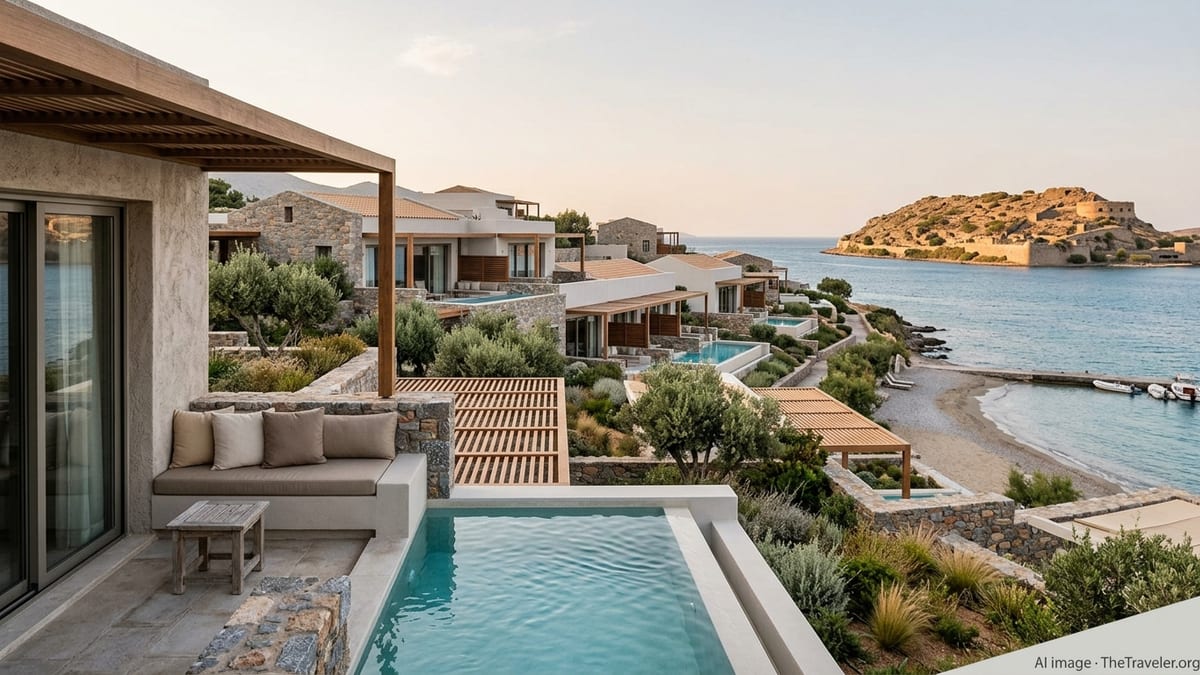
The resort occupies a terraced hillside facing the island of Spinalonga, with uninterrupted views across Mirabello Bay. Existing descriptions of the site emphasize a design that steps down toward a private beach, giving most rooms and public areas an elevated vantage point over the sea. These Mediterranean panoramas are expected to remain a central part of the guest experience once the resort reopens under the Rosewood flag.
Industry analyses of the Cretan hotel pipeline describe the project as one of the island’s flagship luxury redevelopments, citing the scale of investment and the international profile of the management company. The shift of the opening date to 2026 is being interpreted within the sector as a sign of the ambition behind the redesign, rather than a retreat from the destination.
For Crete, the relaunch of such a well-known property under a global luxury brand is seen as reinforcing the island’s status among Europe’s top-tier resort markets, alongside destinations in the Balearic Islands, the Amalfi Coast and the French Riviera.
Design Vision: Modern Mediterranean Luxury Rooted in Cretan Heritage
According to published press material, Rosewood Blue Palace will feature 154 rooms and suites, with a significant proportion offering private pools. The overall aesthetic is being led by Athens-based architecture and design studio K-Studio, whose work across Greece is associated with contemporary interpretations of vernacular forms, using stone, timber and natural tones that sit quietly within the landscape.
The new iteration of the resort is being framed as a careful balance between the original property’s low-slung, village-like layout and a more refined, residential style of luxury. Descriptions of the design approach highlight an emphasis on indoor-outdoor living, shaded terraces and layered views toward the sea that are intended to draw the horizon line into everyday guest life.
Plans point to subtle references to Cretan heritage in textures and materials, rather than overt themed motifs. This aligns with a broader Mediterranean trend in high-end hospitality, where understated architecture and generous outdoor spaces are used to create a sense of place that feels authentic rather than staged.
Landscape treatments are expected to play a central role, with existing information referencing native planting schemes designed to echo the island’s rugged coastline. Combined with the stepped configuration of rooms and suites, these choices are set to amplify the resort’s reputation for dramatic yet tranquil sea views.
Wellness, Gastronomy and Experiences Focused on “Sense of Place”
Rosewood has signaled that the reimagined Blue Palace will double down on wellness and experiential travel. Public information outlines the inclusion of Asaya, the group’s holistic wellness concept, alongside a fitness center, movement studio, yoga pavilion and hydrotherapy-focused facilities. This positions the resort within a growing segment of luxury properties in Greece that prioritize multi-day, program-led well-being stays.
The food and beverage offering is also slated for a major overhaul. Reports indicate that London-based, Greek-born designer Afroditi Krassa has been engaged to shape the interiors of the resort’s six restaurants and bars, suggesting a strong emphasis on atmosphere and storytelling around dining. Industry coverage anticipates a mix of contemporary Cretan cuisine, seafood-forward concepts and destination-style bars that lean into the property’s wide sea views.
Rosewood’s broader strategy in Europe, as outlined in recent corporate communications, places heavy weight on “sense of place” programming, from culinary events with local producers to hands-on cultural experiences. Observers expect Rosewood Blue Palace to follow this template, with itineraries that might include access to hillside villages, vineyards, archaeological sites and small-scale artisanal workshops across eastern Crete.
Such programming is likely to appeal to travelers seeking more than a traditional beach resort stay, positioning the property as a base for deeper exploration of Cretan culture in combination with high-contact, resort-based luxury.
Implications for Crete’s High-End Tourism Market
The arrival of Rosewood in Crete is being closely watched by tourism analysts, who see it as part of a shift toward more branded, experience-led luxury resorts on the island. Market insight documents and hospitality trade coverage point to rising demand for five-star inventory that can compete with established Mediterranean destinations while still offering a distinctive local narrative.
By blending a recognized global brand with a property that already enjoys strong name recognition among seasoned travelers, Rosewood Blue Palace is expected to lift average daily rates and length of stay in the Elounda area. Local tourism businesses, from yacht charters to independent restaurants and boutique tour operators, are anticipated to benefit from increased spending by international visitors drawn to the resort.
The 2026 opening timeframe also aligns with broader infrastructure and investment cycles in Crete, where improvements to airports, roads and marina facilities are gradually enhancing access to the island’s more exclusive pockets. Observers suggest that the repositioned resort could become a reference point for future luxury developments on Crete, particularly those focused on coastal sites with strong landscape appeal.
If current plans are realized, Rosewood Blue Palace will not only reintroduce a beloved resort to the global market but also underscore Crete’s evolving identity as a destination where contemporary luxury, deep-rooted culture and sweeping Mediterranean vistas converge.
A New Mediterranean Flagship for the Rosewood Portfolio
Within Rosewood’s global pipeline, the Crete project is listed among the group’s headline European and Middle Eastern resort openings for the coming years. Corporate fact sheets and brand communications now reference Rosewood Blue Palace with a 2026 opening date, positioned alongside other high-profile coastal developments.
The property will represent Rosewood’s first foothold in Greece, a strategically significant move given the country’s enduring appeal among North American and European luxury travelers. Industry commentators note that success in Crete could pave the way for additional Rosewood projects in the Greek islands or mainland cultural hubs over the longer term.
As competition intensifies across the Mediterranean, the combination of a storied site, expanded wellness and culinary offerings, and a global luxury brand is expected to help Rosewood Blue Palace stand out in a crowded field. For travelers, the resort’s evolution from a well-regarded local favorite into an international flagship signals that Crete’s luxury tourism scene is entering a more ambitious, experience-driven era.
With the countdown to 2026 underway, the reopening of Rosewood Blue Palace is set to serve as a bellwether for how Greece’s leading islands adapt to the next wave of high-end travel, where immersive experiences and singular views matter as much as traditional notions of five-star comfort.