

More news on this day
Royal Air Maroc is reinforcing its partnership with Atlas Servair as it scales up in‑flight catering operations across Morocco, a move that aligns the flag carrier’s growth plans with the country’s rising tourism ambitions and expanding airport infrastructure.
Get the latest news straight to your inbox!
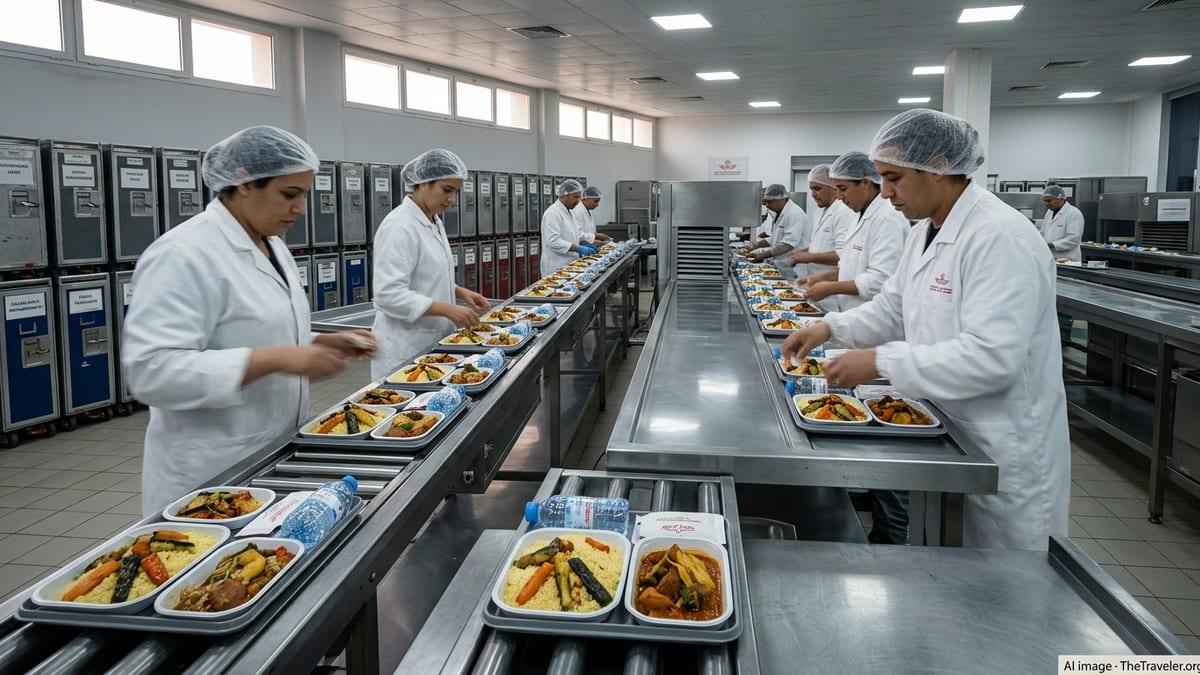
Long-Standing Partnership Enters a New Phase
Publicly available information shows that Royal Air Maroc and the French-founded catering specialist Servair entered a strategic partnership in 2013, when Servair acquired a 40 percent stake in Atlas Catering Airlines Services, later branded Atlas Servair. The deal created a dedicated airline catering company serving the Moroccan flag carrier and other airlines from major airports in the country.
Atlas Servair has since developed into a key player within Royal Air Maroc’s broader ecosystem. Company materials describe Atlas Servair as a subsidiary within the Royal Air Maroc group and a member of the Gategroup network, focusing on in‑flight catering as its primary area of expertise. Its units operate on Morocco’s main platforms, including Casablanca, Marrakech, Agadir and Rabat, where the national carrier concentrates a large share of its traffic.
Reports indicate that the catering company has grown its daily production capacity into the tens of thousands of meals, serving Royal Air Maroc and a portfolio of other international airlines using Moroccan airports as gateways between Europe, Africa and the Americas. The closer integration of Atlas Servair into Royal Air Maroc’s operations is viewed by industry observers as a way to ensure consistency of product while leveraging group synergies.
The renewed focus on catering comes at a time when Royal Air Maroc is executing a long-term expansion strategy toward 2030, which aims to increase fleet size and open new routes as Morocco prepares to co-host the FIFA World Cup that year. Strengthening food services through an embedded partner such as Atlas Servair is seen as one of several operational levers to support that growth trajectory.
Scaling Up at Key Moroccan Hubs
According to information published by Atlas Servair, the caterer is established on Morocco’s largest airport platforms, with facilities at Casablanca Mohammed V, Marrakech, Agadir and Rabat. These hubs mirror Royal Air Maroc’s network structure, with Casablanca functioning as the primary intercontinental gateway and the other cities anchoring regional and leisure traffic.
Industry data and trade brochures indicate that Atlas Servair’s production centers are designed to handle large volumes of trays per day, supplying a mix of full-service, buy‑on‑board and special meals tailored to the needs of each airline client. For Royal Air Maroc, this allows the company to align menu planning, provisioning and last‑minute changes closely with its operations control and turnaround schedules at home bases.
The integration of catering into the broader airport ecosystem is also important as Morocco upgrades infrastructure. Casablanca’s airport has been subject to phased investments in recent years, while regional airports such as Agadir and Marrakech are being readied for higher passenger throughput driven by tourism. A robust, locally anchored caterer capable of scaling quickly is regarded as a key enabler of that increased capacity.
Observers note that the deepening relationship between Royal Air Maroc and Atlas Servair follows wider trends in which airlines either bring catering in‑house or build long-term joint ventures at their main hubs. In Morocco’s case, the structure gives the flag carrier both operational control and access to international culinary and logistics know‑how through Servair and the Gategroup network.
Improving Passenger Experience Through Food
The enhancement of catering operations is also framed within Royal Air Maroc’s efforts to improve the onboard experience. Travel reviews and industry commentary frequently highlight catering as a visible part of service quality, particularly on long‑haul routes connecting Casablanca with North America, Europe and West Africa.
Atlas Servair’s own material emphasizes compliance with international standards on food safety and aviation security, as well as the use of dedicated quality and safety teams to monitor production lines. For passengers, this translates into a more consistent product and wider menu options, including special meals that have become increasingly important as travelers request vegetarian, vegan, halal-certified, or allergen‑managed dishes.
Royal Air Maroc has also been positioning itself as a bridge between Africa and the rest of the world, supported by campaigns encouraging travelers to "meet" Morocco through its culture and hospitality. Integrating Moroccan culinary elements into in‑flight menus, supported by an established local caterer, allows the airline to reinforce that brand message while competing with large global carriers that have invested heavily in their food offer.
Reports from the global inflight catering market show rising expectations from travelers for restaurant‑style dining, even in economy cabins. As airlines emerge from the pandemic recovery phase, many are recalibrating their catering strategies to balance cost control with differentiation. Royal Air Maroc’s renewed emphasis on its in‑house linked caterer positions it to respond to these evolving expectations.
Morocco’s Tourism Growth Drives Catering Ambitions
According to tourism and aviation analyses, Morocco welcomed record visitor numbers in 2023, and projections for the coming years suggest continued growth as new markets open and air connectivity deepens. Royal Air Maroc is central to this push, with plans to expand its fleet and route network by 2030 in coordination with the country’s broader aviation and tourism roadmap.
This macro trend has direct implications for in‑flight catering demand. More international routes and higher frequencies translate into additional daily meal cycles, complex provisioning schedules and greater pressure on kitchen capacity. By consolidating and expanding its relationship with Atlas Servair, Royal Air Maroc is preparing its food operations for higher volumes while seeking to maintain quality standards.
Market research on the global inflight catering sector points to steady growth through the end of the decade, driven by rising passenger traffic and competition on service quality. In this context, Morocco’s positioning as a connecting hub between Europe, Africa and the Americas creates an opportunity for Atlas Servair to serve not only the national carrier but also foreign airlines that route through Casablanca, Marrakech and Agadir.
Industry watchers suggest that as Morocco moves toward co‑hosting the 2030 FIFA World Cup, pressure will mount on all parts of the travel chain, from airports and hotels to onboard services. An expanded, more tightly integrated catering operation anchored by Atlas Servair is therefore likely to be a critical piece of Royal Air Maroc’s preparations for the event and for the broader growth of the country’s aviation sector.
Competitive Dynamics in Morocco’s Catering Market
While Atlas Servair has a strong historical link to Royal Air Maroc, it operates in an increasingly competitive local catering landscape. Other international players have been expanding in Morocco, opening new production units and signing contracts with foreign carriers, especially in leisure destinations such as Agadir and Marrakech. These moves indicate that demand for professional in‑flight catering in the country is rising and attracting investment.
For Royal Air Maroc, the presence of multiple caterers at Moroccan airports can be both a challenge and an opportunity. On one hand, competition pushes all providers to improve quality and efficiency. On the other, having a closely aligned in‑group caterer like Atlas Servair allows the flag carrier to exert greater influence over menu design, cultural relevance and operational responsiveness at its main bases.
Analysts note that global airline groups have adopted similar models, building joint ventures or majority-owned catering companies at core hubs while sometimes outsourcing smaller stations. The structure in Morocco, where Atlas Servair is tied directly to the Royal Air Maroc group and connected to an international network through Gategroup, is seen as consistent with this pattern.
As air travel continues its recovery and growth across North and West Africa, Royal Air Maroc’s decision to emphasize and expand its collaboration with Atlas Servair signals that the airline views catering not merely as a support function, but as a strategic asset in its ambition to strengthen Casablanca’s role as a continental hub and showcase Moroccan hospitality at 30,000 feet.