

More news on this day
Royal Air Maroc is adding a new nonstop route between Tetouan and Brussels as part of a wider expansion from northern Morocco, reinforcing fast-growing travel flows between Europe and the Mediterranean kingdom.
Get the latest news straight to your inbox!
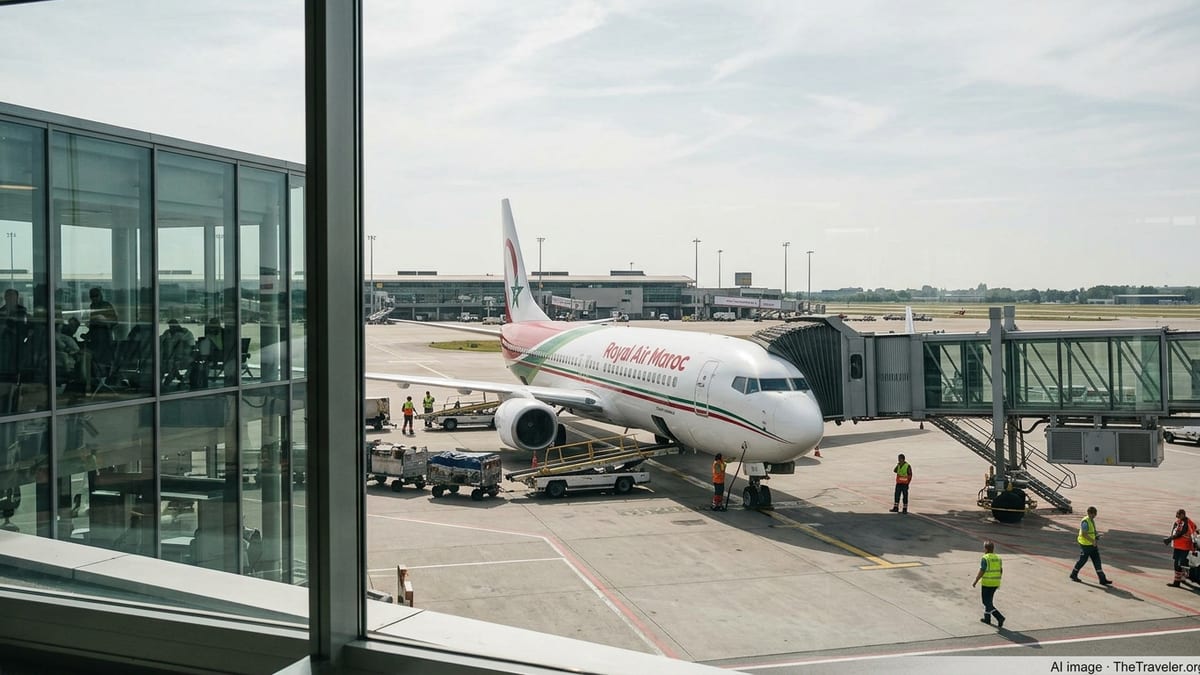
New Direct Link Between Tetouan and the Belgian Capital
Publicly available information on Royal Air Maroc’s network strategy indicates that Tetouan’s Sania R’Mel Airport is being upgraded from a minor regional facility to a fully fledged base, with Brussels listed among the new European destinations to be served directly. The Tetouan–Brussels route is slated to operate as part of the carrier’s northern Morocco growth plan centered on point to point services into key European markets.
Reports from recent Moroccan aviation and business press coverage show that from late March 2026 Royal Air Maroc will significantly increase capacity out of Tetouan, with several new international links including Brussels. While detailed day by day schedules and frequencies for the Tetouan–Brussels service are still being finalized, the route is planned as a regular seasonal operation designed to capture strong demand during peak travel months.
The addition of Brussels gives Tetouan a direct connection to one of Europe’s busiest hubs for both leisure and diaspora travel. Network maps from Brussels Airport highlight Tetouan alongside other Moroccan coastal cities, reflecting a broader trend in which secondary airports in North Africa are gaining nonstop links to European capitals as airlines chase new demand pools.
Boost for Northern Morocco’s Tourism and Regional Economy
The new Tetouan–Brussels route is expected to support ongoing efforts to disperse tourism beyond Morocco’s traditional gateways of Casablanca and Marrakech. Industry analysis notes that Royal Air Maroc’s Tetouan base, developed in coordination with national tourism strategies, is meant to channel more visitors directly into the northern coastal region rather than routing them through larger hubs.
Tetouan and nearby resorts along the Mediterranean shore have been attracting increasing attention from European travelers interested in shorter beach breaks and cultural city stays. Direct links from Brussels reduce travel time and remove the need for domestic transfers or long overland journeys, making the area more competitive against other sun destinations in the western Mediterranean.
Local economic observers point out that improved air connectivity can also stimulate small business development, real estate investment and conference or event activity in northern Morocco. Easier access from Belgium, which hosts a substantial Moroccan community with close ties to the north of the country, is likely to support both visiting friends and relatives traffic and new entrepreneurial ventures.
Responding to Strong Europe–Morocco Travel Demand
Published coverage of Royal Air Maroc’s medium term strategy underscores that Europe remains the airline’s primary international market, with Belgium and France singled out as focus countries for growth. Recent trends show resilient demand on Morocco bound routes from European cities, driven by competitive fares, year round leisure attractiveness and a large diaspora base.
Air travel data for Brussels reveals a dense network of services to Morocco operated by multiple carriers, including to cities such as Casablanca, Nador, Tangier and Oujda. By adding Tetouan to this portfolio with its own nonstop flight, Royal Air Maroc is positioning itself to capture incremental passengers who might otherwise choose alternative carriers or travel via neighboring airports.
Analysts following the market note that the Tetouan–Brussels launch fits within a wider push across North Africa to decentralize international traffic from mega hubs. Secondary city links allow airlines to grow capacity where airport charges and congestion are lower, while giving travelers itineraries that are more closely tailored to their final destination.
Operational Plan and Fleet Deployment
Moroccan business press reports covering the Tetouan base development indicate that Royal Air Maroc plans to operate its new northern Morocco routes with Embraer 190 regional jets. These aircraft typically seat around 100 passengers in a single class layout and are suited to mid haul sectors such as Tetouan–Brussels, balancing operating costs with the need for schedule flexibility.
The airline is expanding its narrow body and regional fleet as part of a multiyear growth program that runs through 2030, which includes the introduction of additional Boeing 737 aircraft alongside Embraer jets. Using smaller jets on emerging routes like Tetouan–Brussels allows Royal Air Maroc to test and adjust capacity in response to seasonal shifts and booking patterns.
Timings are expected to be coordinated with broader flows between northern Morocco and Europe, including connections with domestic services from Tetouan to Casablanca that feed into the long haul network. Even though the Tetouan–Brussels route is marketed primarily as a nonstop point to point link, its scheduling within the overall portfolio is likely to support onward connectivity where commercially viable.
Implications for Travelers and Competing Hubs
For travelers in Belgium and neighboring countries, the Tetouan–Brussels service offers an additional non stop option into northern Morocco without routing through Casablanca or Tangier. This may appeal particularly to passengers heading to the Tetouan area, the nearby Rif mountains or Mediterranean resorts who would otherwise require an extra leg by road or domestic flight.
Travel industry commentary suggests that the move could also shift some traffic away from surrounding airports used as alternatives for northern Morocco, including Tangier and Nador, where capacity to Europe has been expanding. By anchoring capacity directly in Tetouan, Royal Air Maroc is creating a distinct entry point that can compete for both leisure and diaspora demand.
The launch of this route also aligns with broader patterns in European aviation, where airlines are looking to diversify beyond traditional city pairs and tap underserved origin and destination markets. If load factors and yields on Tetouan–Brussels prove robust, similar secondary city links between Morocco and Europe are likely to follow, reinforcing the current surge in cross Mediterranean travel.