

More news on this day
Royal Caribbean’s plans for its upcoming Royal Beach Club Cozumel are emerging as a pivotal moment for the island’s coastline, with the company working alongside Mexican authorities to pair a premium paid club with improved public beach access that could fundamentally change how locals and cruise visitors experience one of the Caribbean’s busiest ports.
Get the latest news straight to your inbox!
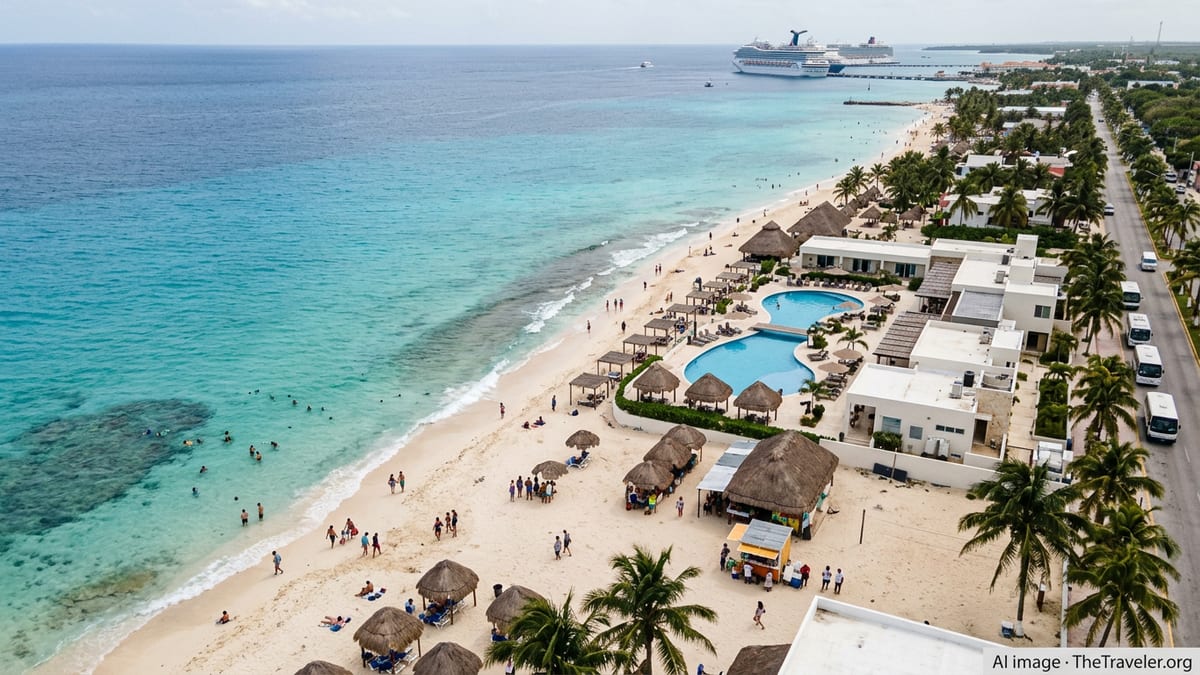
A New Chapter for Cozumel’s Crowded Coastline
Cozumel has long balanced two competing identities: a laid-back Caribbean island for locals and overnight guests, and a high-throughput cruise hub where thousands of passengers can arrive on a single day. As Royal Caribbean advances its Royal Beach Club Cozumel project, slated to open in late 2026 on the island’s western shore, planners and port officials are framing the buildout as an opportunity to relieve pressure on existing beaches while guaranteeing local residents more structured access to the waterfront.
The project, which will repurpose the site of the long-standing Playa Mia beach resort and adjoining parcels, is designed as a dedicated day destination for Royal Caribbean Group guests. Company materials describe multiple pools, separate zones for families and adults, and a mix of restaurants and bars that lean into Mexican flavors and regional design touches. Yet behind the glossy renderings, the most consequential aspect for Cozumel may be the reconfiguration of coastal access roads, parking and shoreline setbacks that Mexican authorities say will preserve and, in some spots, expand public entry to the beach.
Local tourism officials say they have pushed for clearer public corridors to the sea as part of the permitting process, noting that years of piecemeal resort development have left stretches of shoreline effectively gated behind private facilities. By tying new access points and signage to a marquee international investment, they hope to demonstrate that cruise-led growth can coexist with the everyday needs of island residents.
Balancing a Premium Club With Open Shores
Royal Beach Club Cozumel is being positioned as a paid, all inclusive experience for cruise guests, separate from the downtown piers and the island’s existing network of beach clubs. Buses are expected to carry passengers roughly 15 to 20 minutes south from the main cruise terminals, steering heavy foot traffic away from central waterfront streets that can become congested on peak days. That routing, according to destination planners, creates space to formalize public paths and parking areas near the new complex without overwhelming Cozumel’s urban core.
Mexican port and tourism officials involved in the approvals say that while the club itself will operate as a controlled access facility, the coastline setback rules applied to the project oblige the developer to preserve strips of federal maritime zone for public use. In practical terms, that means designated entry points where residents can reach the sand and water without paying for a day pass, supported by clearer wayfinding on the main coastal road.
For Royal Caribbean, aligning with those priorities offers reputational benefits at a time when cruise lines face scrutiny over the environmental and social footprint of private-style destinations. Executives have emphasized that the Royal Beach Club model is meant to complement, not wall off, local communities, with Cozumel highlighted alongside similar plans in Nassau as examples of what the company describes as long term, partnership driven development.
Industry analysts note that the approach also reflects shifting traveler expectations. While many cruise passengers are willing to pay a premium for curated, crowd controlled beach days, there is growing sensitivity to whether those experiences come at the expense of local access or traditional businesses. Baking public beach corridors into the design helps address those concerns while still delivering a controlled environment inside the gates.
Implications for Local Businesses and Everyday Life
The transformation of a well known private resort area into a branded cruise beach club is being watched closely by Cozumel’s independent operators, from taxi drivers and tour guides to small beach bars and snorkeling outfits. Some worry that a self contained complex could keep guests inside a closed loop of company managed experiences, reducing the number of visitors who wander further along the coast or into town.
At the same time, improved public access in the vicinity of the club could open up new opportunities for local entrepreneurs who cater primarily to residents or independent travelers rather than to cruise excursions. Easier entry points to the sand, combined with nearby road access, may support small scale food vendors, rental operators and community events that were previously squeezed out by parking constraints and unclear right of way.
Community leaders say the key will be ensuring that public access is not merely theoretical. That means visible signage indicating open beach corridors, practical amenities such as small parking areas or bus stops, and consistent enforcement of rules that prohibit private operators from blocking public paths. If those elements materialize alongside the Royal Beach Club, locals argue, the project could demonstrate a workable balance between large scale cruise investment and the everyday life of the island.
Residents are also watching how traffic patterns evolve once buses begin shuttling thousands of passengers to and from the club on busy days. While the route is designed to bypass the tightest downtown streets, any surge in bus movements along the coastal highway will require coordination with existing public transport and local drivers who rely on the same road to reach schools, workplaces and traditional beaches.
A Shift in How Cruise Guests Experience Cozumel
For visiting cruise passengers, the combination of a new club and clearer public beach options could significantly reshape what a day in Cozumel looks like. Today, many guests either book excursions to independent beach clubs or negotiate their own taxi rides to popular stretches of sand, a process that can be confusing for first timers stepping off a ship into busy pier shopping areas and taxi queues.
With Royal Beach Club Cozumel, the cruise line is offering a more turnkey alternative: prebooked day passes that bundle transportation, food, drinks and beach access in one package. That predictability is likely to appeal to families and travelers who prioritize simplicity and controlled environments, particularly as the club markets separate zones for quieter relaxation, kid friendly fun and livelier poolside scenes.
At the same time, improved public corridors along parts of the shoreline could make it easier for independent minded visitors to access low key beaches without relying as heavily on packaged excursions. Clearer distinctions between paid club experiences and genuinely public stretches of sand may help travelers choose the kind of day they want while reducing misunderstandings at resort gates.
Destination specialists suggest that Cozumel’s challenge will be to maintain a diverse ecosystem of experiences as cruise traffic grows. If the Royal Beach Club succeeds in absorbing a share of demand for all inclusive beach days, that could relieve some pressure on smaller clubs and near port beaches, leaving more room for niche operators focused on snorkeling, diving or cultural excursions.
Environmental and Regulatory Oversight in Focus
As with any significant coastal development in Mexico, the expansion of cruise infrastructure in Cozumel is subject to environmental reviews and federal oversight of the maritime zone. Conservation groups on the Yucatán Peninsula have long warned that unchecked resort construction and marine activity can damage fragile reef systems and erode beaches, concerns that are heightened when thousands of guests are funneled into concentrated areas.
Officials say environmental impact studies for the Royal Beach Club project have included requirements around wastewater treatment, shoreline protection and reef safe operating practices for any associated water sports. The commitment to retain and enhance public access is framed as part of a broader effort to manage the coastline holistically, rather than as a patchwork of isolated private enclaves.
For Cozumel, the stakes are high. The island’s economy is deeply tied to cruise and resort tourism, yet its long term appeal depends on the health of the surrounding sea and the perception that its beaches remain, at least in part, shared spaces. How Royal Caribbean and local authorities navigate the next two years of construction and community engagement around public beach access will go a long way toward determining whether this latest expansion is seen as an imposition or a genuine game changer.
With the first elements of the project already reshaping expectations about who can reach the water and how, Cozumel is emerging as a test case for a newer model of cruise development, one in which premium experiences and public rights to the shoreline are negotiated in tandem rather than in conflict.