

More news on this day
Royal Caribbean has removed more than 20 Summer 2027 cruises from public sale, according to booking-site checks and deployment trackers, signaling a significant reshuffle of the company’s long-range Caribbean and Europe plans.
Get the latest news straight to your inbox!
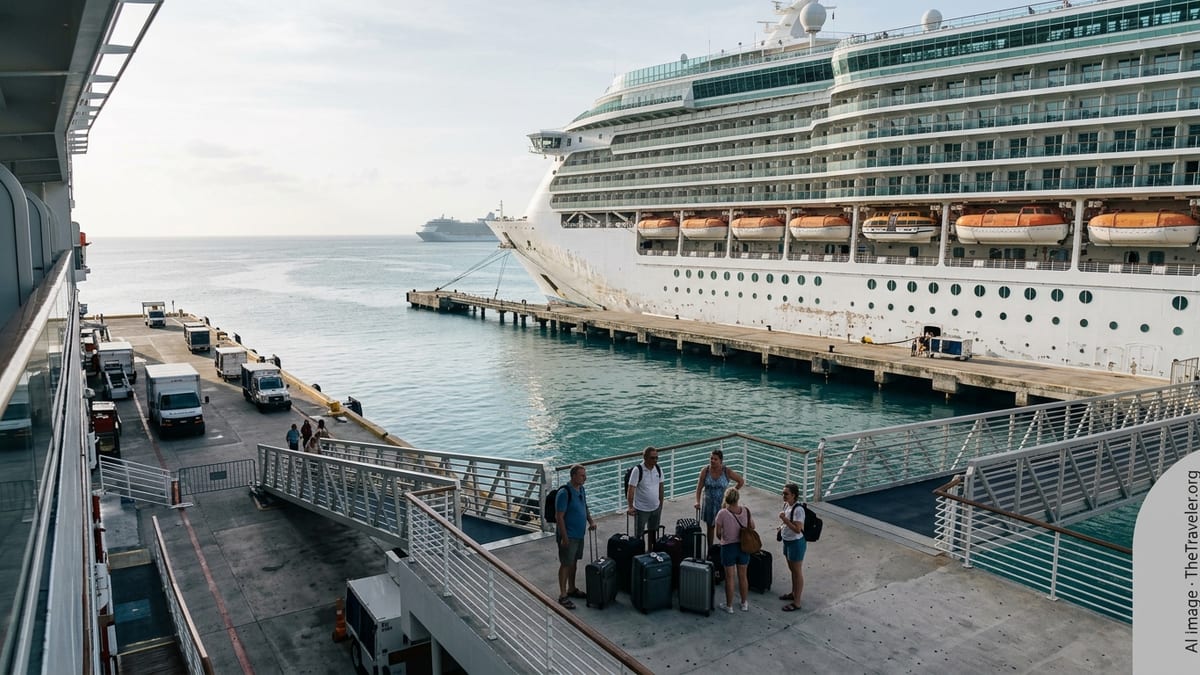
Unusual Wave of 2027 Cancellations and Removals
Publicly available booking data and cruise-tracking discussions indicate that Royal Caribbean has taken more than 20 scheduled Summer 2027 sailings off its website and from major online travel agencies. Some departures have disappeared completely from search results, while others briefly vanished before reappearing with altered pricing or details. In several cases, guests reported receiving generic cancellation or “deployment change” notices referencing broader fleet strategy rather than specific technical problems.
The pattern is emerging across multiple ships and regions, rather than being confined to a single vessel or homeport. Prospective passengers following Royal Caribbean’s 2026 to 2027 deployment calendar had been watching for new summer itineraries to fill out, but instead are seeing select voyages removed, particularly in the late spring and early summer window. In some instances, cruises that were available to book in recent weeks for early and mid 2027 no longer appear as active sailings.
Royal Caribbean routinely adjusts sailings years in advance, but the scale of the changes affecting Summer 2027 has drawn attention because the affected departures span a variety of routes, including Caribbean, Mediterranean and repositioning itineraries. The company’s published materials continue to state that all itineraries remain subject to change without notice, a reminder that even confirmed reservations can be altered or withdrawn as deployment plans evolve.
Fleet Deployment Strategy Behind the Changes
The latest round of cancellations appears closely tied to Royal Caribbean’s evolving deployment strategy for its growing fleet, including new Icon class ships and forthcoming large-tonnage vessels scheduled through 2027. Planning documents and promotional material highlight ongoing shifts between Caribbean homeports such as Fort Lauderdale and Tampa, as well as adjustments to European and transatlantic schedules. These moves can ripple through multi-year calendars, forcing the removal or reconfiguration of sailings that had been opened early for booking.
Industry coverage and analyst commentary point to several drivers behind the changes, including higher demand on key marquee routes, port-capacity constraints, and the need to align newbuild delivery timelines with profitable markets. When a ship is reassigned to a different region or homeport for a season, the itineraries originally planned for that vessel may be scrapped or reworked, leading to the disappearance of multiple sailings at once. For guests, this can look like a sudden wave of cancellations concentrated in a single season, even if the underlying decisions were gradually taking shape inside long-term deployment models.
Royal Caribbean has previously used similar strategies when technical issues or operational constraints forced changes to ships such as Radiance of the Seas and Brilliance of the Seas, with subsequent seasons rebalanced around maintenance windows and alternative deployments. The current Summer 2027 adjustments seem more aligned with strategic repositioning than with acute technical disruptions, though the end result for affected guests is the same: the need to rebook or reconsider travel plans.
Impact on Guests With Early 2027 Bookings
Travelers who prefer to reserve voyages several years in advance are among the most directly affected by the Summer 2027 reshuffle. Reports shared across cruise-planning forums describe guests seeing previously secured sailings vanish from booking engines, followed by cancellation notices outlining options to rebook on alternate departures or receive refunds. Some posters describe situations in which a sailing disappeared temporarily, only to return later in the day or week, occasionally at higher fares or with minor changes to itinerary details.
In other accounts, guests holding reservations for late spring or early summer 2027 Caribbean cruises say they have received emails referencing changes to ship assignments. These communications describe scenarios where a ship originally slated to operate a series of island-hopping itineraries is moved to a different homeport, with a sister ship or older vessel taking over part of the program, or leaving gaps in the schedule. Where entire series of sailings have been withdrawn rather than reassigned, passengers report being presented with a mix of rebooking options, alternative routes and straightforward cancellations.
The experience underscores a longstanding feature of cruise planning: itineraries published two or more years out are effectively provisional, even after deposits are paid. While many seasoned cruisers factor this into their planning, the clustering of more than 20 removed Summer 2027 sailings stands out as a reminder that long-range bookings can carry a higher risk of change, particularly in periods of rapid fleet expansion and market realignment.
Travel Advisors Weigh Rebooking and Timing Strategies
The shifting Summer 2027 landscape is prompting travel advisors and experienced cruisers to revisit how far in advance to commit to complex itineraries. Commentators tracking Royal Caribbean’s deployment patterns note that some 2027 routes may be reintroduced with modified ships or dates once internal plans are finalized, while others may quietly disappear in favor of higher-yield deployments. As a result, some advisors are steering clients toward slightly closer-in bookings for that season, or encouraging flexible routing, ship and cabin preferences.
Advisory articles and cruise-planning blogs emphasize the importance of carefully reviewing cancellation terms whenever a line cancels or substantially alters a sailing. Standard practice in similar past situations has included full refunds and, at times, additional credit or limited-time rebooking incentives where disruptions were significant. For the Summer 2027 changes, publicly visible documentation so far points mainly to refund and rebooking pathways, with any additional goodwill measures varying by sailing and market.
For travelers determined to sail Royal Caribbean in mid 2027, published coverage suggests several practical strategies: tracking deployment calendars for future releases, watching for replacement itineraries out of major homeports, and considering alternative dates in late spring or early autumn if prime summer weeks remain unsettled. Advisors also highlight the value of monitoring reservation portals closely in the weeks after any cancellation notice, in case new sailings that fit similar parameters open quietly for sale.
What the Summer 2027 Changes Signal for the Cruise Market
Beyond the immediate inconvenience for affected passengers, the removal of more than 20 Royal Caribbean sailings for Summer 2027 illustrates how fluid the cruise industry’s long-term scheduling has become. Lines are balancing strong demand in marquee regions such as the Caribbean and Mediterranean with rising operating costs, shifting geopolitical conditions, and evolving port regulations. In this environment, multiyear deployment grids are increasingly treated as adjustable frameworks rather than fixed commitments.
The pattern at Royal Caribbean mirrors broader trends at other major brands, several of which have also trimmed or reshaped 2026 and 2027 programs in response to fleet redeployments and global travel uncertainties. Observers note that while cancellations and removals can frustrate early bookers, they also hint at a competitive environment in which cruise lines are constantly recalibrating to chase the most resilient and profitable markets. That ongoing recalibration is now visible to consumers in real time, as entire blocks of sailings appear and vanish from public booking systems.
For now, the main takeaway for travelers looking at Summer 2027 with Royal Caribbean is that the schedule remains in motion. Many itineraries for that season are still expected to be released or finalized over the coming months, even as others are pared back or reconfigured. Prospective guests may find that a mix of flexibility, close attention to booking systems, and a willingness to adjust dates or ships provides the best chance of securing a preferred cruise in a period of rapid fleet evolution.