

More news on this day
Royal Caribbean is reshaping its Caribbean playbook, revising itineraries and deployment plans for its new Icon-class ships in ways that will ripple across Florida homeports, Mexico beach towns, and some of the Caribbean’s busiest cruise ports from 2026 onward.
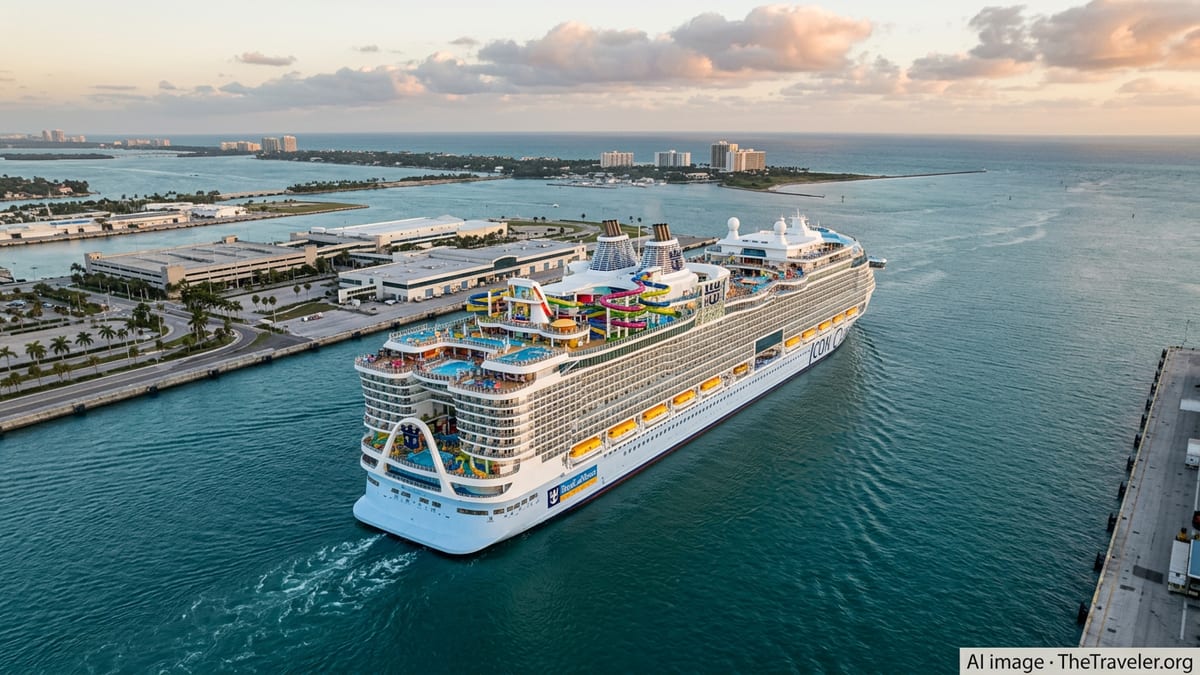
Icon-Class Expansion Forces Caribbean Rethink
The rollout of Royal Caribbean’s Icon-class vessels is driving a broad reset of how, when, and where the line deploys its biggest ships in the Caribbean. With Icon of the Seas already based in Miami and Star of the Seas slated for Port Canaveral, attention is now turning to Legend of the Seas, the third Icon-class ship, and how its arrival will affect itineraries throughout the region.
Royal Caribbean has confirmed that Legend of the Seas will debut in Europe in summer 2026 before repositioning to South Florida in November 2026 for a year-round Caribbean program from Fort Lauderdale. That move consolidates three Icon-class ships within easy reach of Florida’s major drive-to and fly-in markets, concentrating capacity on seven-night and slightly longer itineraries across the Western and Southern Caribbean.
As the line finalizes deployment, schedule adjustments and itinerary tweaks are filtering through booking systems, affecting both new reservations and guests already booked on future sailings. While the headline is more Icon-class capacity, the fine print includes altered port calls, reshuffled sea days, and revised route patterns that impact Florida, Mexico, and island destinations alike.
Industry analysts say the strategy is designed to maximize demand for the premium-priced Icon-class experience while feeding traffic into Royal Caribbean’s growing network of private and branded destinations in the region. That, in turn, requires a careful rebalancing of port calls, pier space, and passenger flows across the wider Caribbean.
Florida Homeports Take Center Stage
Florida is emerging as the operational backbone for Royal Caribbean’s Icon-class ambitions. Icon of the Seas continues to sail from Miami, while Star of the Seas is set to operate from Port Canaveral on seven-night Eastern and Western Caribbean routes. Legend of the Seas will join the lineup from Fort Lauderdale in late 2026, creating a triangle of major Florida gateways feeding high-capacity ships into the region.
To accommodate this concentration of tonnage, Royal Caribbean has been fine-tuning deployment across its broader fleet. Some non–Icon-class vessels are seeing itineraries adjusted or gradually shifted away from overlapping seven-night patterns from Florida to avoid saturating the same ports on the same days. For travelers, that can translate into revised embarkation dates, different combinations of ports, or sailings that are slightly longer or shorter than originally advertised.
Port infrastructure is also part of the story. Miami and Port Canaveral have spent recent years upgrading terminals to handle the world’s largest cruise ships, while Fort Lauderdale is preparing to receive an Icon-class vessel with a mix of facility enhancements and schedule coordination. Local tourism officials see the shifting deployment as a chance to capture more pre- and post-cruise business, particularly during peak winter and spring seasons when Icon-class demand is expected to be strongest.
For Florida-based cruisers, the practical upshot is more choice among blockbuster ships, but also an environment where itineraries may change as Royal Caribbean refines its network. The line has indicated that when it adjusts published sailings, affected guests are typically offered options to rebook, shift dates, or receive refunds depending on the extent of the change.
New Patterns Emerge for Mexico’s Caribbean Ports
Mexico’s Caribbean ports, especially Cozumel and Costa Maya, are central to the revised Icon-class deployment. Royal Caribbean has signaled that these destinations will feature heavily on Legend of the Seas’ Western Caribbean runs once the ship transitions to Fort Lauderdale, anchoring a mix of six- and eight-night itineraries that are designed to appeal to families and repeat cruisers.
Alongside traditional calls, the cruise line is investing in its own branded foothold in Mexico. A new Royal Beach Club in Cozumel is expected to open in 2026, adding a curated, resort-style option to complement the island’s existing mix of beaches, reefs, and downtown attractions. That development is already influencing itinerary planning, with cruise schedules crafted to give Icon-class guests enough time ashore to justify the added experience.
In Costa Maya, adjusted sailing patterns are increasing the prominence of full-day visits as part of revised Western Caribbean routes. For port operators and local tour providers, the shift promises more predictable waves of high-spending passengers traveling on the newest ships, but it also raises pressure on infrastructure, crowd management, and environmental protections along fragile coastal zones.
Mexican tourism officials are watching these changes closely, seeing Royal Caribbean’s Icon-class focus as both an economic opportunity and a test of how well the region can absorb ever-larger vessels. With additional Icon-class ships planned beyond Legend of the Seas, the deployment decisions being made now could shape call patterns and investment in Mexican Caribbean ports for the rest of the decade.
Caribbean Islands Brace for Icon-Class Crowds
Beyond Mexico, several Caribbean destinations are preparing for heavier Icon-class traffic and, in some cases, altered call frequencies. Royal Caribbean’s private island in the Bahamas has become a cornerstone of many Eastern and Western itineraries, and the addition of another Icon-class vessel serving the region will amplify that role. At the same time, Southern Caribbean islands are gaining more visibility in plans for Legend of the Seas’ longer eight-night cruises from South Florida.
Ports accustomed to receiving large Oasis-class ships are now calibrating their operations for the Icon class, which introduces new onboard attractions and higher overall capacity. Harbor authorities and tourism boards are weighing berth assignments, shore excursion capacity, and transportation links to ensure that the influx of passengers translates into sustainable onshore spending rather than congestion and bottlenecks.
The shifting pattern may also mean that some mid-sized islands see fewer calls from older ships as Royal Caribbean reallocates vessels to avoid redundancy with its marquee fleet. That can have uneven effects, boosting business in some ports while challenging others to diversify their mix of cruise partners or focus on niche itineraries outside the mainstream seven-night circuit.
For travelers, the most visible changes will be in the blend of ports offered on a given sailing and the balance between sea days and time ashore. Royal Caribbean has emphasized that Icon-class itineraries are being structured to preserve ample time to experience the ships themselves while still delivering marquee beach, snorkeling, and cultural experiences across the Caribbean basin.
What Booked and Prospective Guests Should Watch
As Royal Caribbean refines its Icon-class deployment, travelers with existing reservations or plans to book should be prepared for itinerary adjustments, particularly on sailings scheduled from late 2026 into 2027. Changes may include swapped ports of call, altered arrival and departure times, or reclassified sailings that shift from one itinerary pattern to another as the line aligns its network around Icon of the Seas, Star of the Seas, and Legend of the Seas.
Guests are encouraged to monitor official communications from the cruise line and their travel advisors for the latest updates, as even small timing shifts can affect privately booked shore excursions, independent hotel stays, and air travel. When Royal Caribbean implements material changes, it has typically provided rebooking flexibility or alternative options, though specifics vary by sailing and degree of disruption.
The ongoing adjustments underscore how closely linked Florida homeports, Mexican Caribbean destinations, and island ports across the region have become to Royal Caribbean’s long-term Icon-class strategy. With additional Icon-class ships planned beyond 2026, the current wave of revisions is likely a preview of further fine-tuning as the company continues to adapt its Caribbean footprint to match demand, port capacity, and the evolving expectations of cruise travelers.
For now, the message for would-be passengers is clear: the Icon-class era is expanding quickly, and with it comes both an unprecedented range of mega-ship Caribbean options and a more dynamic, fast-evolving itinerary landscape that rewards those who pay close attention to the details of their chosen sailing.