

More news on this day
Royal Caribbean International is reshaping how guests drink and spend at sea, stripping automatic Coca-Cola Freestyle access from two of its most popular beverage packages and turning a once-standard perk into a paid add-on from March 15, 2026.
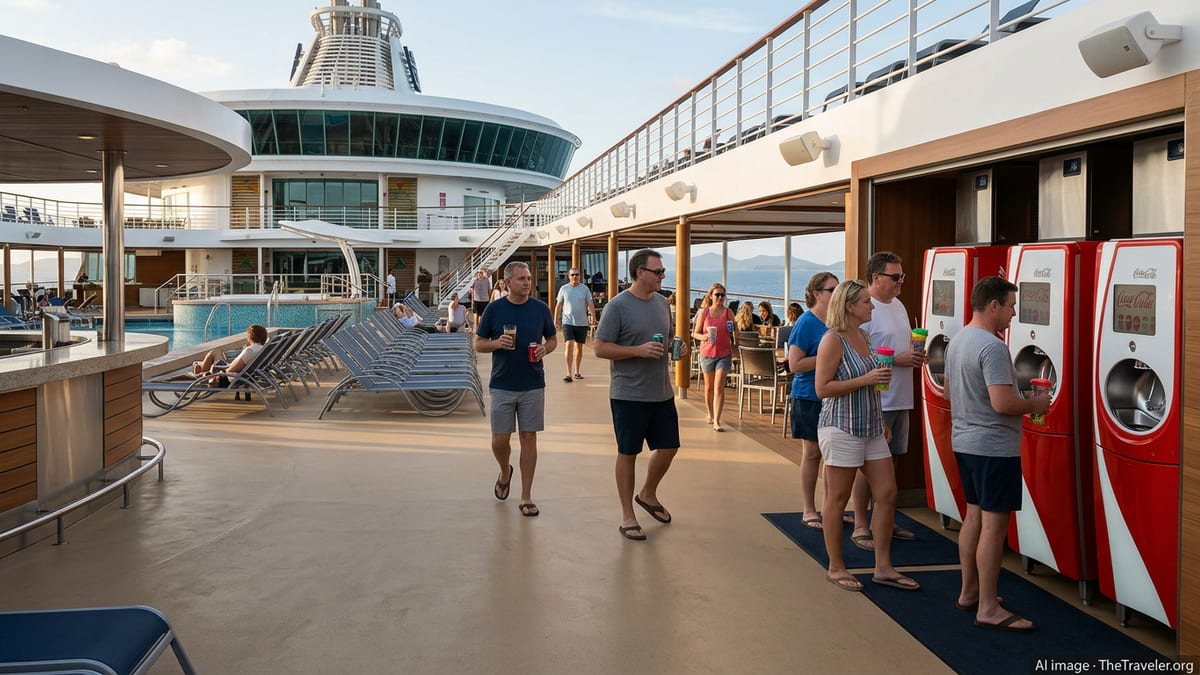
Key Changes to Royal Caribbean’s Beverage Packages
Royal Caribbean has updated the terms of its Deluxe Beverage Package and Royal Refreshment Package, confirming that new bookings made from March 15, 2026 will no longer include a Coca-Cola souvenir cup or built-in access to Coca-Cola Freestyle machines. The change affects passengers sailing from major markets including the United States, Canada and the Caribbean, where the line has seen strong demand for all-inclusive style cruising.
Instead of being bundled, Freestyle access will become an optional extra. Guests purchasing either the Deluxe or Royal Refreshment packages will be able to buy a chip-enabled souvenir cup onboard for a one-time fee of about 4.99 dollars, which then unlocks the self-service Freestyle dispensers throughout the voyage. Soda itself remains part of both packages, but will default to cans or fountain service from bars and restaurants for those who do not purchase the cup.
Royal Caribbean has said that customers who already bought drink packages on or before March 15, 2026 will sail under the previous terms, retaining the souvenir cup and complimentary Freestyle access. That carve-out aims to avoid backlash from guests who planned their vacation budgets around the earlier inclusions and had already locked in their beverage spending months in advance.
The Classic Soda Package, the line’s lower priced soft drink option, will continue to include the Freestyle souvenir cup as part of the daily rate. That means families focused solely on soda may find the entry-level package still delivers the same self-serve benefits that have become a familiar part of Royal Caribbean’s onboard experience.
Flexibility for Guests, Efficiency for the Cruise Line
By decoupling Freestyle access from its top packages, Royal Caribbean is pitching the move as an effort to create more flexibility and reduce waste. Not every Deluxe or Refreshment package holder uses the Coca-Cola machines regularly, and many souvenir cups are discarded or left behind in staterooms at the end of each sailing. Turning the cup into an opt-in purchase gives more control to guests who value the feature and allows others to skip a perk they might never use.
The change also has implications for onboard operations. Freestyle machines require regular maintenance, cleaning and ingredient restocking, which are complex tasks on ships that can carry more than 5,000 passengers. If only guests who pay for the cup use the machines, Royal Caribbean can better forecast syrup and CO2 demand, adjust machine placement and staffing patterns, and potentially reduce queues at peak times in busy venues such as buffet restaurants.
Crew members in bars and lounges may see service flows become more predictable as well. With a portion of guests shifting soda consumption back to staffed venues instead of self-serve stations, bartenders gain clearer visibility into drink volumes and can better balance alcoholic and non-alcoholic orders. For a cruise line focused heavily on yield management, tightening control over high-margin beverage distribution is likely a strategic goal.
From a guest perspective, the optional cup structure allows more granular tailoring of onboard budgets. Travelers who plan to spend heavily on cocktails and specialty coffees might still favor the Deluxe package and simply add the Freestyle cup, while occasional soda drinkers may lean toward bar service alone, especially on shorter itineraries where the perceived value of self-service access is lower.
Reactions From Cruise Travelers and Industry Analysts
The shift has drawn mixed reactions from cruise fans monitoring Royal Caribbean’s online planner tools and social media channels. Some frequent cruisers have criticized the change as a cut to the “all-in” feeling of premium packages, arguing that paying extra for a cup on top of daily beverage rates that can exceed 70 dollars per person feels like nickel and diming. For larger families, even a modest 4.99 dollar add-on per guest can add up across a weeklong sailing.
Others see the adjustment as a relatively minor tweak, pointing out that the incremental cost is small compared with the overall price of a cruise vacation and that Freestyle access remains available rather than being removed entirely. For these travelers, the ability to opt in or out reinforces personal choice, particularly for adults who primarily drink coffee, bottled water or alcoholic beverages and do not need a dedicated soda vessel.
Industry observers note that beverage revenue has become a critical pillar of cruise profitability, especially as operators absorb higher fuel, labor and regulatory compliance costs. Rebalancing package inclusions allows lines like Royal Caribbean to protect margins without resorting to headline fare hikes, while still advertising broad drink coverage. Incremental sales of Freestyle cups and reduced waste from unused souvenirs can both feed into onboard spending metrics closely watched by investors.
Some analysts also link the beverage changes to Royal Caribbean’s broader growth strategy in the Caribbean and North American markets, where the company is rolling out new itineraries and investing heavily in private destinations and onboard attractions. Refining the economics of every add-on, from Wi-Fi to drinks, positions the line to support ambitious capacity expansion plans over the next several years.
Implications for Cruise Tourism Growth and Onboard Experience
Royal Caribbean’s adjustment comes as cruise tourism continues to expand across the Americas, with major ports reporting record passenger numbers and strong forward bookings into 2027 and 2028. Within this growth story, onboard spending is increasingly central to revenue models, encouraging lines to experiment with more modular pricing for food and beverage offerings.
In that context, the Coca-Cola Freestyle decision illustrates a broader trend toward unbundling secondary perks while keeping core inclusions, such as basic sodas within packages, largely intact. Rather than cutting access outright, Royal Caribbean is reshaping how and when guests pay for enhanced convenience and customization. Self-service technology, from soft drink machines to mobile ordering, gives operators new levers to tune capacity, control waste and steer guest traffic around large ships.
For destinations that depend on cruise tourism, the evolution of beverage packages is another sign that onboard revenue will remain a priority, potentially influencing how long guests stay ashore and how much they spend in ports. Travelers who allocate more of their vacation budget to shipboard extras, including drinks, specialty dining and attractions, may have less discretionary cash for local restaurants and shops, a tension that port authorities and tour providers are watching closely.
At the same time, more flexible and transparent package structures can help sustain the perception of value that underpins cruising’s appeal as a bundled vacation. If guests feel they can fine-tune spending on items like Freestyle access rather than paying for blanket inclusions they do not use, satisfaction scores and repeat bookings could benefit, supporting continued expansion of cruise capacity worldwide.
What Travelers Should Consider Before Sailing
For travelers planning Royal Caribbean voyages after March 15, 2026, the new beverage structure makes it more important to review package details before booking. Prospective guests are being encouraged by travel advisors to estimate realistic daily consumption of alcoholic and non-alcoholic drinks, then decide whether a package, pay-as-you-go approach or a combination with an added Freestyle cup works best.
Families with teenagers or soda enthusiasts may still find strong value in the Classic Soda Package, which continues to bundle the Freestyle cup by default and preserves the self-serve access many young cruisers enjoy. Adults focused on cocktails or specialty coffees should weigh whether they will use the Coca-Cola machines enough to justify the small flat fee, especially on shorter sailings where the per-day cost of the cup is higher.
Guests with existing bookings that include Deluxe or Royal Refreshment packages purchased before the March cutoff should keep documentation of their package terms, as they are due to receive the former benefits. Travel agents and cruise line representatives are advising passengers to check their online cruise planners regularly for any updated wording as the implementation date approaches and to ask questions before boarding if they are unsure how their sailing will be handled.
As Royal Caribbean and rival brands continue to refine the balance between inclusivity and profitability at sea, beverage packages and access to features such as Coca-Cola Freestyle machines are likely to remain closely watched indicators of how cruise tourism adapts to changing consumer expectations and economic pressures.