

More news on this day
Royal Caribbean is widening its Asia-Pacific deployment and bringing a new, high-end Royal Beach Club experience to market, moves that industry observers say are set to reshape how cruise travelers combine shipboard amenities with curated days ashore across multiple regions.
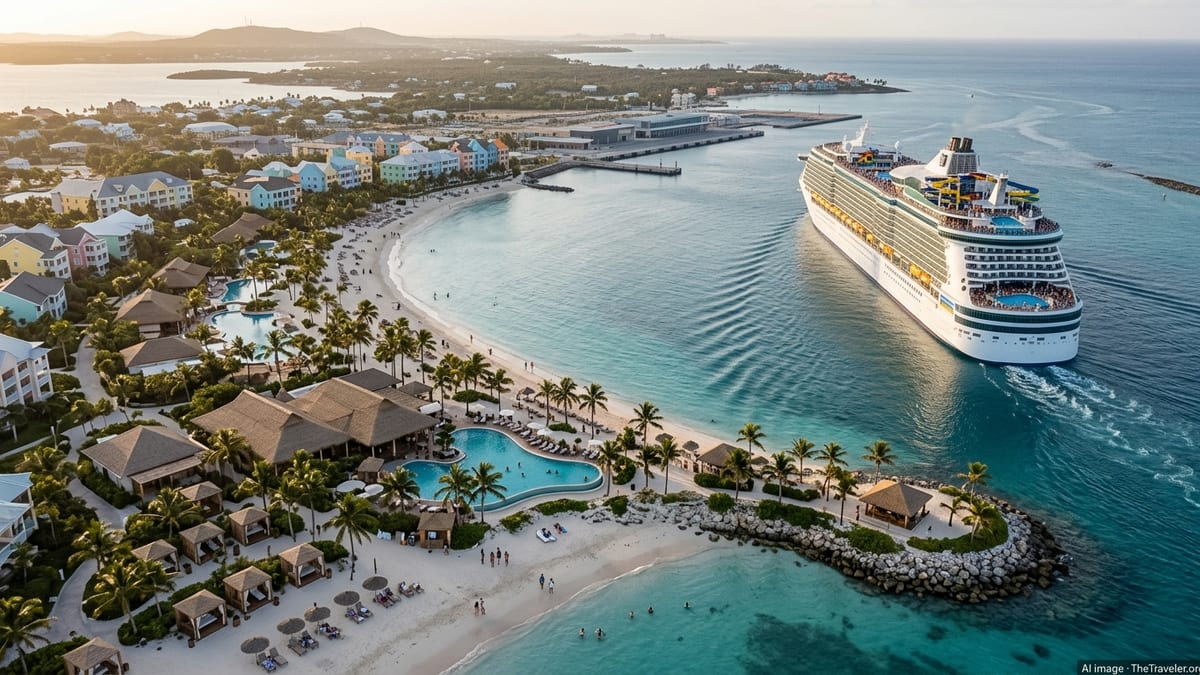
Expanded Asia-Pacific Sailings Target Soaring Regional Demand
Royal Caribbean has been ramping up its presence across the Asia-Pacific over successive deployment cycles, with recent schedules highlighting more short-break and weeklong itineraries from major homeports such as Singapore, Sydney and Brisbane. Publicly available deployment guides for 2025 and 2026 outline an emphasis on frequent, repeatable itineraries that connect marquee destinations in Southeast Asia, Australia, New Zealand and the wider Pacific, aimed at both first-time cruisers and a growing repeat market.
Industry reports indicate that the line is leaning on its newest and largest ships to anchor this growth, particularly in markets where family and multigenerational travel are driving bookings. While the Icon-class vessels are initially concentrated in the Caribbean and Europe, trade publications note that Royal Caribbean’s long-term planning includes additional Icon-class ships that could support seasonal or future redeployment into Asia-Pacific as port infrastructure and demand evolve.
Travel trade briefings show that the company is also using Asia-based itineraries to test more flexible holiday patterns. These range from two- and three-night “taster” cruises out of key hubs, designed to appeal to younger and first-time guests, to longer regional journeys that link city-break appeal in ports such as Singapore and Hong Kong with resort-style stops in Thailand, Vietnam and the South Pacific.
Analysts point out that this layered approach, pairing shorter breaks with longer, more immersive itineraries, mirrors Royal Caribbean’s strategy in the Caribbean. The company is effectively building an Asia-Pacific network that can feed repeat visits throughout the year, not just during peak holiday seasons.
Royal Beach Club Paradise Island: A New Template for Port Days
In parallel with its ship deployment, Royal Caribbean is rolling out its first Royal Beach Club on Paradise Island in Nassau, The Bahamas, a project the company describes in official materials as a 17-acre private beach experience tailored exclusively to its guests. Construction milestones reported throughout 2025, including updates that the site was around halfway complete by mid-year, underline the scale of the investment in what is intended to be a flagship destination.
Current plans indicate that Royal Beach Club Paradise Island is scheduled to open to paying guests on December 23, 2025, following a soft-opening period earlier in the month. Independent cruise news coverage notes that day passes will be capacity controlled and sold separately from the cruise fare, differentiating the experience from the widely known Perfect Day at CocoCay model and positioning the club as a premium, all-day add-on.
Destination guides published by Royal Caribbean outline multiple pools, two distinct beach zones, a large central swim-up bar, private cabanas and dedicated spaces for families and adults. Planning documents emphasize Bahamian cultural elements in food, music and design, and highlight a cooperative structure that reserves a significant equity stake and revenue participation for local partners.
The Royal Beach Club strategy is widely viewed in the cruise sector as a test bed for a new category of “curated port days,” giving the line more control over the shore-side environment while still working within existing port frameworks. For travelers, the concept signals a shift from traditional day passes at resort properties toward purpose-built venues designed around cruise schedules and guest flow.
Premium Day-Pass Model Redefines the Caribbean Stopover
Pricing data shared across cruise planning platforms suggests that Royal Beach Club Paradise Island is positioned firmly in the premium segment. Sample fares for early 2026 visits show per-person prices that are substantially higher than many public-beach or resort-day alternatives in Nassau, with bundled options that include dining, nonalcoholic beverages and optional alcoholic packages.
Cruise commentators note that the model borrows elements from all-inclusive resorts while preserving a limited-capacity, private-club feel. With the beach club accessed by dedicated ferries from Nassau Cruise Port, the experience is designed as a self-contained “day resort” that still allows time for short visits into downtown Nassau before or after a beach session.
Operational details published by independent cruise sites describe staggered arrival times and capacity caps intended to avoid overcrowding, along with separate quiet zones and family-oriented areas. The goal, according to these reports, is to deliver a reliable, high-comfort experience that feels distinct from both shipboard amenities and traditional port-area beaches.
Caribbean deployment announcements for 2026 and 2027 already show select itineraries built specifically around calls that include Royal Beach Club access, reinforcing its role as a headline feature rather than a secondary excursion. Observers expect that successful performance in Nassau will accelerate similar projects in Mexico and the South Pacific that are mentioned in planning documents and trade coverage.
Implications for Asia-Pacific: From Concept to Regional Blueprint
Although the Royal Beach Club collection is debuting in The Bahamas, travel industry analysis suggests that the concept has clear implications for Royal Caribbean’s longer-term strategy in the Asia-Pacific. Company statements and trade reports reference planned beach club developments in destinations such as Cozumel and Lelepa, indicating that the template is designed to be replicated and adapted to different cultural and geographic settings.
In the Asia-Pacific context, this could eventually translate into curated beach-club style experiences in markets known for island tourism and strong cruise potential, such as Southeast Asia or the South Pacific. Industry watchers believe that data gathered from Nassau and subsequent beach club openings will help refine elements such as crowd management, local partnerships and pricing before any expansion to Asian ports is confirmed.
Regional tourism boards across Asia-Pacific have been increasingly focused on attracting higher-spend cruise visitors who engage in shore activities beyond quick city-center stops. A mature beach club portfolio could support this by offering controlled-capacity venues that blend local culture, food and design with the predictable infrastructure expected by large-ship operators.
While no specific Asia-Pacific Royal Beach Club sites have been formally detailed, sector commentary points out that Royal Caribbean’s expanding deployment in the region, combined with its experience in developing private and semi-private destinations elsewhere, positions the company to move quickly if suitable locations, permits and community partnerships align.
Transforming Global Holiday Travel Through Integrated Experiences
Taken together, Royal Caribbean’s widened Asia-Pacific cruise schedules and the launch of the Royal Beach Club concept reflect a broader pivot toward integrated, end-to-end holiday planning. Travelers are increasingly booking cruises not simply as a way to reach ports, but as a curated sequence of experiences that span ship, shore and sometimes pre- and post-cruise land stays.
Industry reports show that guests now expect resort-level amenities at sea and on land, with consistent service, reliable infrastructure and clear value propositions. By combining large, amenity-rich ships on busy regional routes with controlled-access destinations such as Royal Beach Club Paradise Island, the company is aiming to deliver that continuity across the entire trip.
Analysts say this strategy also helps cruise brands differentiate themselves in a competitive market where ships alone are no longer the only headline attraction. Destination projects and expanded regional networks can become key drivers for repeat bookings as guests seek to try new routes or revisit favorite ports with upgraded shore experiences.
For travelers considering future holidays in the Asia-Pacific or Caribbean, these shifts mean more options that blend the convenience of cruise travel with increasingly tailored days ashore. As Royal Caribbean’s first Royal Beach Club opens in December 2025 and additional regional deployments roll out into 2026, the coming seasons are likely to offer one of the clearest views yet of how integrated cruise-and-shore experiences may shape global holiday travel in the years ahead.