

More news on this day
A new Royal Caribbean beach project in Cozumel is emerging as one of Mexico’s most closely watched cruise developments, with recent filings and public statements indicating that the upcoming Royal Beach Club will include formal access for the general public alongside paying cruise guests.
Get the latest news straight to your inbox!
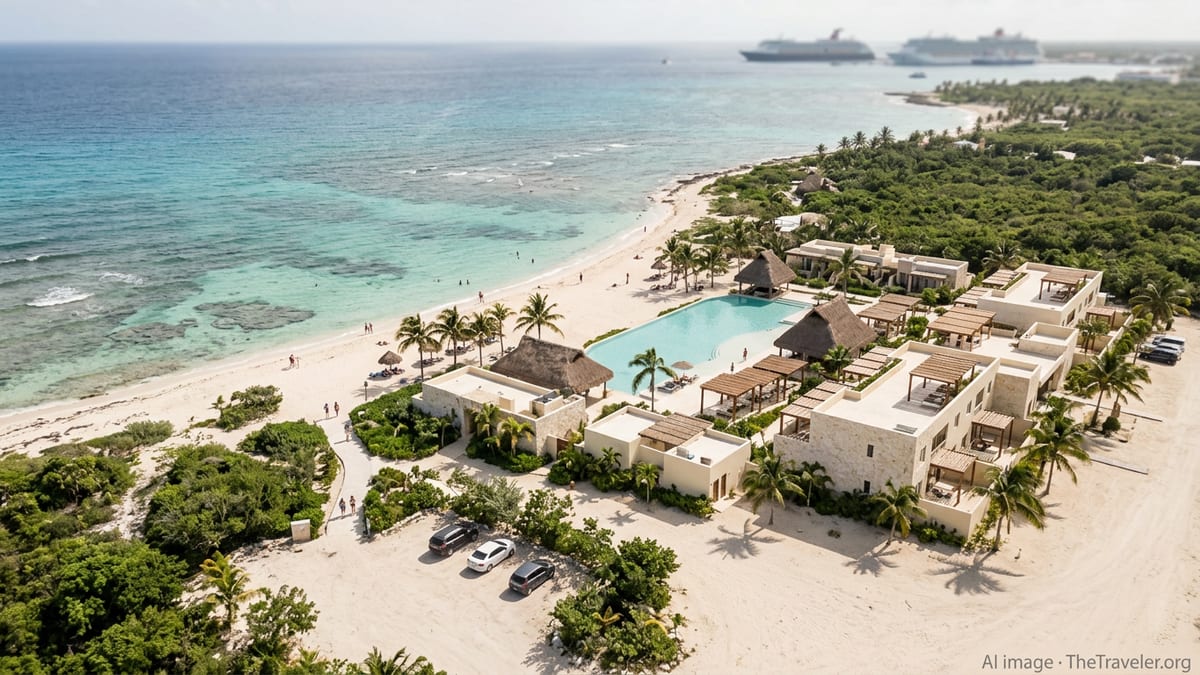
New Beach Club Signals Shift in Cozumel Access Policy
Royal Caribbean’s Royal Beach Club Cozumel, slated to open in late 2026, is being framed as both a premium private-style experience and a federally regulated coastal concession that remains open to everyone. Publicly available information on the project indicates that the club will occupy roughly 17 hectares on Cozumel’s western shoreline, with an investment estimated at about 65 million dollars and capacity designed for large volumes of cruise visitors each year.
Recent coverage of the project notes that, unlike a fully gated private island, the Cozumel club sits on federally regulated maritime land where Mexico’s constitutional protections for public beaches still apply. Reports indicate that the concession model allows Royal Caribbean to develop infrastructure, restaurants and pools, while shoreline and sea access must legally remain available to the wider public, subject to practical access routes and safety rules.
Regional tourism and cruise industry observers describe the project as a test case for how large cruise operators can expand in high-demand destinations while formally acknowledging local rights to the coast. The arrangement also reflects a broader push in Mexico to clarify the difference between exclusive-feeling beach products and outright privatization, particularly in heavily visited areas such as Cozumel.
Promises of “Open to the Public” Access
Key to the current debate is Royal Caribbean’s public assertion that Royal Beach Club Cozumel will not be limited to cruise passengers. Local media reports on recent company briefings highlight that the facilities are planned to be accessible to the general public, with entry controlled through day passes and capacity management but not restricted by cruise booking status alone.
Additional reporting on the environmental impact documentation submitted to federal regulators notes that the club is being developed under a federal concession rather than as fully privatized coastal property. This distinction is being emphasized as a way to reassure residents and travelers that physical access to the shoreline and swimming areas will remain possible for non-cruise visitors, even as much of the on-site experience is packaged as a paid resort-style product.
Travel analysts say this model could effectively create a new, clearly marked beach access point on a stretch of coast where many sandy areas are currently tied up within fee-based clubs and resorts. For independent travelers, crew members and Cozumel residents, the project has the potential to add another legally recognized gateway to the water, even if full use of pools, cabanas and food venues is priced as a premium offering.
Environmental Scrutiny and Community Concerns
Alongside access questions, the project has drawn sustained attention from environmental organizations and local advocates concerned about its footprint on reefs, mangroves and coastal forests. A formal environmental impact study has been lodged with Mexico’s federal environment ministry, outlining expected impacts and a suite of mitigation and restoration measures.
Critics argue that concentrating well over a million visitors per year on a relatively compact stretch of coast could place additional pressure on coral systems already facing cumulative stress from climate change and maritime traffic. Advocacy groups have circulated analyses warning that even with mitigation, new dredging, construction and increased human presence may erode habitat quality in one of the Caribbean’s most biodiverse reef corridors.
In response, the company’s publicly shared materials highlight commitments to restoration projects, coastal vegetation management and water quality monitoring, positioning the development as a showcase for more responsible cruise-related infrastructure. Observers note that how these mitigation pledges are translated into day-to-day operations will likely determine whether the project is regarded as a model or a misstep for large-scale coastal tourism in Mexico.
What the New Access Could Mean for Cruise Visitors
Cruise-focused publications tracking the buildout of Royal Beach Club Cozumel describe it as a major new option for passengers seeking a structured beach day within easy reach of the island’s busy piers. Plans reference a large central pool, shaded lounge areas, cabanas, a food hall concept with Mexican flavors and water activities such as snorkeling and kayaking just offshore.
While day passes for cruise passengers are expected to be priced at a premium level, the existence of a formally recognized public access point at the same site may subtly reshape how visitors plan their time ashore. Industry commentators suggest that independent travelers and guests staying elsewhere on the island could make use of legal shoreline access while choosing how much of the fee-based infrastructure to purchase.
The development also arrives as Cozumel maintains some of the highest cruise arrival figures in the Caribbean, with multiple piers and frequent calls from Royal Caribbean and other lines. The beach club is being positioned as an additional pressure valve, capable of absorbing large numbers of beach-seeking visitors who might otherwise cluster at a small number of existing clubs south of the port.
Implications for Cozumel’s Long-Term Tourism Model
For Cozumel, the Royal Beach Club project crystallizes wider questions about how the island balances its role as a global cruise hub with resident quality of life and environmental resilience. Public debate over the project has spotlighted long-standing issues around beach access, the visibility of local businesses within cruise itineraries and the distribution of economic benefits.
Economic analysts following the cruise sector note that Cozumel has increasingly become a proving ground for large-scale, branded coastal experiences that are tightly integrated into cruise lines’ own excursion portfolios. The Royal Beach Club, with its formal nod to public access, suggests an evolution of this model rather than a retreat from it, with greater regulatory and community scrutiny including how concessions are granted and monitored.
In the coming months, attention is expected to focus on the final terms of environmental approvals, the specifics of how public entry will operate on the ground and the degree to which local suppliers, tour operators and workers are embedded into the beach club’s daily operations. For travelers, the project signals that future Cozumel calls are likely to offer a new kind of beach day option, one that blends a controlled resort environment with legal guarantees that the shoreline itself belongs to everyone.