

More news on this day
Cruise giant Royal Caribbean is moving ahead with plans for a new Royal Beach Club in Cozumel, Mexico, pairing a reimagined private-style resort with public beach access that local officials say will open a fresh chapter for one of the Caribbean’s busiest ports in 2026.
Get the latest news straight to your inbox!
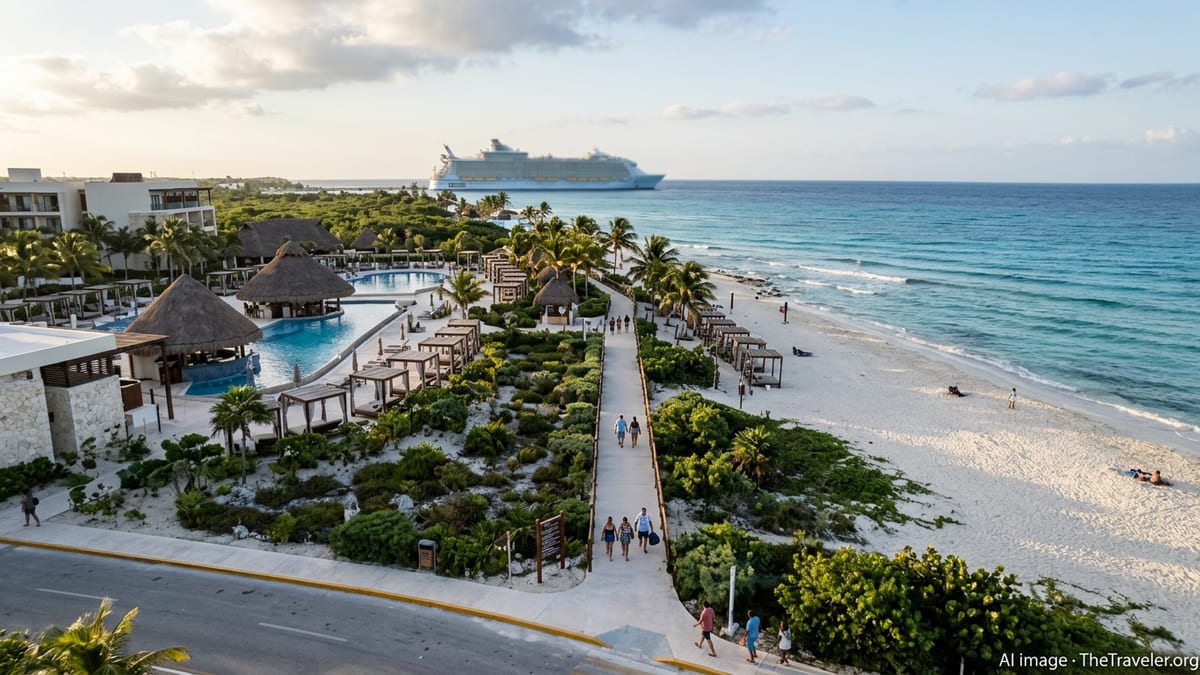
Royal Beach Club Cozumel Anchors Royal Caribbean’s 2026 Plans
Royal Caribbean has confirmed that Royal Beach Club Cozumel, part of its growing portfolio of destination experiences, is slated to open in 2026 on the island’s western shore. The development will occupy and expand on the site of the former Playa Mia Grand Beach Park, a well-known day resort a short drive south of Cozumel’s main cruise terminals.
The project is framed as an all-inclusive, bookable shore-excursion style beach club designed primarily for Royal Caribbean guests. Renderings and company statements highlight a mix of pools, cabanas, beachfront lounging and restaurant spaces that are meant to extend the onboard experience onto shore while still tying into the island’s coastal setting.
Executives have described Royal Beach Club Cozumel as a key pillar in a broader private-destination strategy, complementing existing stops such as Perfect Day at CocoCay and the recently opened Royal Beach Club Paradise Island in the Bahamas. With Cozumel already among the Caribbean’s highest-volume cruise calls, the new club is expected to absorb growing demand for curated beach days.
Industry analysts note that the timing, towards the back half of the decade, positions the club to serve a new wave of larger ships entering Royal Caribbean’s fleet. Internal investor materials and public comments from company leadership continue to point to 2026 as the target year for opening, even as detailed timelines remain subject to permitting and construction progress.
New Public Beach Access Path Addresses Local Concerns
Alongside the private-style beach club, planning documents and local reporting highlight a significant feature for Cozumel residents and independent visitors: a publicly accessible beach corridor running through or alongside the project site. Under Mexican law, beaches are public, but physical access is often constrained when resorts and private developments line the coast.
Officials in Quintana Roo have indicated that the Royal Beach Club plan incorporates a designated access path to the shoreline, responding to long-standing complaints on the island about gates, walls and security checkpoints that can make public beaches difficult to reach. The proposed path is expected to provide a formal, clearly signed route between the main road and the water, separate from controlled entry to the paid club facilities.
For local tour operators and non-cruise visitors, the promise of a reliable access way is a notable element of the project. It could allow residents, independent travelers and crew members on break to reach a section of shoreline that has historically been dominated by all-inclusive properties and day passes.
Urban-planning observers say the inclusion of a public corridor may also set a precedent for future coastal developments in the state. If implemented as described, it would balance the commercial aims of a large-scale cruise-focused attraction with Mexico’s legal commitment to keeping beaches open to the public.
Redevelopment of Playa Mia Site Aims for Lower Environmental Impact
Royal Caribbean’s Cozumel project is being scrutinized closely in Mexico’s environmental review system, where the company has submitted extensive studies and mitigation plans. A centerpiece of its argument is that the new beach club will reuse a site that has hosted tourism infrastructure for years, instead of clearing untouched coastline.
The proposed footprint covers roughly 42 acres, according to documents filed with regulators, of which only around a third would see intensive development. The remainder is described as a mix of landscaped green space and natural areas intended to be preserved or restored, including coastal vegetation that plays a role in buffering storms and protecting marine habitats.
Materials submitted to authorities outline the use of local stone, native woods and regionally appropriate colors, with the goal of integrating structures into the existing landscape. Royal Caribbean has also pledged a suite of mitigation measures, from erosion control and careful management of construction waste to monitoring programs for nearby reefs and seagrass beds.
Environmental advocates on the island remain cautious, pointing out that any concentrated tourism facility can increase pressure on fragile coastal ecosystems through higher traffic, wastewater and energy use. However, some also acknowledge that reworking an existing park, rather than opening a new stretch of shoreline, may limit the project’s incremental impact if safeguards are enforced.
Economic Boost Expected for Cozumel’s Cruise and Tourism Sector
Local authorities have framed Royal Beach Club Cozumel as a vote of confidence in the island’s long-term tourism prospects. The investment, reported at more than 75 million US dollars, comes as Cozumel continues to recover from the pandemic slowdown and navigates global fluctuations in cruise itineraries and regional security perceptions.
The new beach club and its associated public access path are projected to generate construction jobs in the near term and ongoing employment once operations begin, from hospitality and food service roles to transport, security and maintenance positions. Cozumel’s governor has publicly linked the project to efforts to diversify local income beyond traditional hotel zones and downtown shopping corridors.
Economists following the cruise industry say the club is likely to increase per-passenger spending for Royal Caribbean guests who choose the all-inclusive experience. At the same time, a steady flow of visitors to the south-of-town site could spill over to independent taxis, small vendors and nearby attractions, particularly if transportation options are not fully captive to the cruise line.
Community leaders are watching closely to see how benefits are distributed and whether local businesses are integrated into supply chains for food, crafts and cultural programming. The structure of concessions, vendor spaces and potential partnerships with Cozumel-based operators may determine how broadly the economic gains are felt on the island.
Design Highlights Blend Poolside Leisure With Local Culture
Concept imagery for Royal Beach Club Cozumel showcases a layout divided into distinct zones, including large central pools, quieter beachfront stretches and areas marketed for families or more energetic social scenes. The design echoes the tiered “chill, family and party” approach seen at the company’s other beach destinations.
Shaded cabanas, swim-up bars and expansive loungers dominate the pool decks, while palapa-style structures and open-air dining spaces draw on regional architectural cues. Plans call for a strong culinary focus, with Mexican and Caribbean dishes presented in market-style food halls and specialty venues rather than a single main buffet.
Royal Caribbean has emphasized that the club will weave local music, art and flavors into the experience, aiming to differentiate it from a generic resort day. How deeply that cultural element runs will likely become clear only after opening, but early descriptions reference collaborations with Mexican chefs and performers, as well as opportunities for guests to join small-group activities tied to regional traditions.
For many cruise passengers, however, the core appeal is expected to remain simple: easy logistics from ship to shore, controlled capacity, reliable amenities and a beach-and-pool environment curated to the standards of a major cruise brand. If construction and permitting stay on track, those travelers could be testing the new path to the sand and settling into loungers at Royal Beach Club Cozumel before the end of 2026.