

More news on this day
Royal Jordanian Airlines has been forced to suspend multiple routes and warn of delays after a sudden wave of airspace closures across the Middle East disrupted flight corridors and upended travel plans for thousands of passengers.
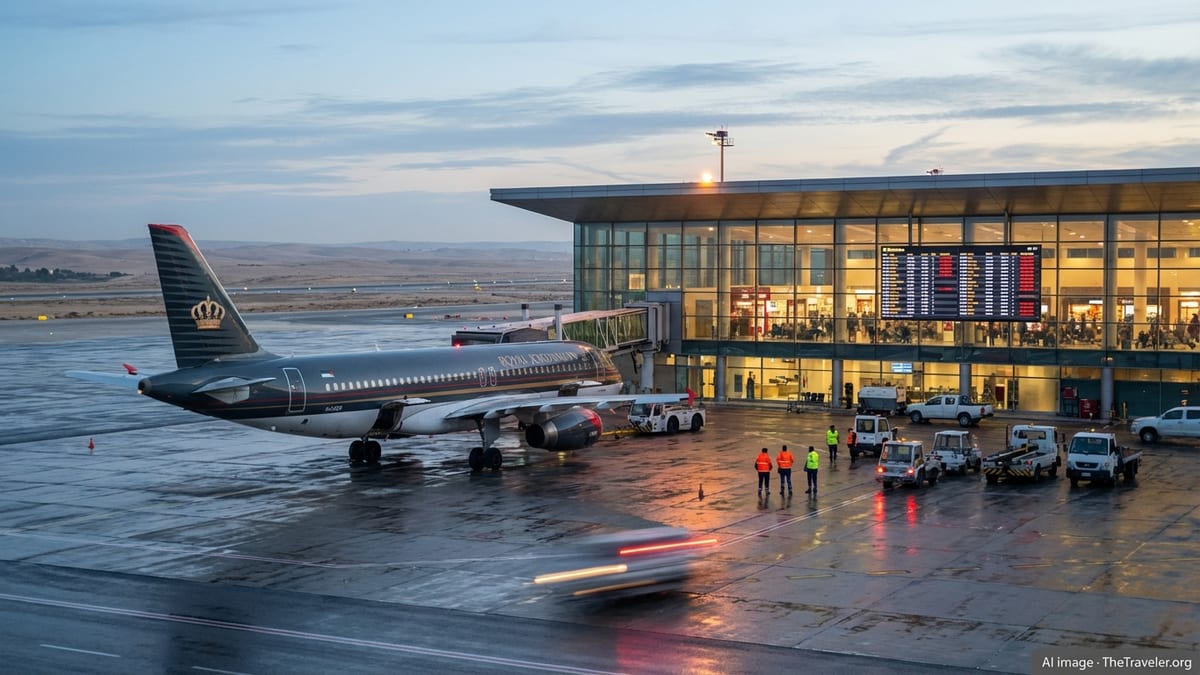
How the Regional Airspace Crisis Reached Royal Jordanian
The latest disruption follows coordinated US and Israeli strikes on Iran over the weekend, which triggered swift airspace closures across several Middle Eastern countries and prompted airlines to reroute or ground flights. Authorities in Iran, Iraq, Qatar and several Gulf states temporarily shut their airspace, while traffic in and out of neighboring hubs slowed sharply as carriers reassessed safety and routing options.
Royal Jordanian, Jordan’s flag carrier, has reacted by suspending flights to countries where airspace is closed or heavily restricted. The airline’s leadership has stressed that operational decisions are being taken in real time, route by route, with safety as the overriding priority. Flights that rely on now-closed corridors to reach regional destinations have been most affected, while some long-haul services have been able to continue with adjusted routings.
At the same time, Jordanian aviation officials say the country’s own skies remain open. Jordan’s Civil Aviation Regulatory Commission has reported that Jordanian airspace continues to operate, albeit at reduced traffic levels, as airlines adapt to the fast-changing regional picture. That means Royal Jordanian can still move aircraft and crews through Amman even as certain destinations remain temporarily out of reach.
Which Royal Jordanian Routes Are Currently Affected
According to recent statements from the airline and Jordanian authorities, Royal Jordanian has temporarily suspended flights to several regional destinations whose airspace has been closed or where access is severely restricted. These include routes to parts of the Gulf and the Levant that normally rely on overflight permissions now withdrawn in response to the security situation.
By contrast, the carrier says flights arriving from Europe, North America, North Africa and some regional markets continue to operate largely as scheduled, though minor delays and last-minute time changes are possible. Services on these longer routes are often able to be re-routed around restricted zones, adding time in the air but allowing the flights to operate.
The picture remains fluid. Some suspensions are tied to specific dates announced by foreign civil aviation authorities, while others are “until further notice” as governments and airlines wait to see whether the confrontation will escalate or ease. Travelers should expect that routes can switch quickly from operating to suspended, or vice versa, as airspace notices are updated.
Because of this volatility, two passengers booked on the same route a day apart may face very different realities: one may fly on time, while the other could see their flight rerouted, significantly delayed or canceled outright.
What This Means If You Have an Upcoming Royal Jordanian Flight
For passengers holding Royal Jordanian tickets over the coming days, the most important step is to verify flight status frequently, right up to the time of departure. The airline is updating schedules as new airspace information comes in, and gate agents and airport screens may reflect last-minute changes that were not visible when you first left home.
Travelers transiting through Amman should build in extra time for connections. Even if your long-haul flight is operating, the onward regional leg may be delayed or suspended, leaving you with an unplanned layover. Passengers with tight connections should be prepared for misconnects and consider rebooking onto itineraries that provide more buffer time where possible.
If your flight is canceled because of the airspace crisis, you can generally expect Royal Jordanian to offer rebooking onto a later service or an alternative route once it becomes available. In some cases, refunds or travel credits may be offered, particularly if there is no clear date for the route to resume. The exact options depend on your ticket type and the markets involved, so it is important to review the latest policy details with the airline or your travel agent.
Passengers should also factor in potential knock-on effects at destination airports, from longer immigration queues to limited ground transportation, as large numbers of travelers are re-accommodated on a compressed schedule.
Passenger Rights and How to Seek Assistance
Jordan’s Civil Aviation Regulatory Commission has emphasized that passengers affected by cancellations or major delays are entitled to care and assistance, including rebooking options, under existing aviation regulations. The regulator has urged travelers to first contact their airline or travel agent directly to request alternative arrangements when their flight is disrupted.
If you have difficulty obtaining support, Jordanian authorities encourage passengers to escalate by filing a formal complaint with the regulator. While processing times may be slower than usual because of the high volume of cases, documenting your situation can help ensure your claim is tracked and reviewed.
Travelers should keep boarding passes, booking confirmations, receipts for meals or accommodation, and any written communication from the airline. These documents can be important later if you seek reimbursement or submit a formal complaint. Given the exceptional security situation, compensation rules may not mirror those applied during ordinary operational disruptions, but regulators still expect airlines to provide a basic level of care.
For passengers connecting on foreign carriers to or from Royal Jordanian services, rights may also be governed by the rules of the country where your journey originates or the airline is based. That can affect your entitlement to cash compensation versus vouchers or rebooking only, so checking the relevant jurisdiction’s regulations is advisable.
Planning Ahead: Practical Advice for Travelers Heading to or via Amman
As the regional airspace crisis continues, travelers planning to fly with Royal Jordanian in the coming days should stay flexible. Consider avoiding non-essential trips to heavily affected destinations and, where possible, opt for routes that offer multiple daily frequencies or alternative carriers so you have more options if one flight is disrupted.
It is wise to add contingency time into your itinerary, especially if you are traveling for events that cannot be easily rescheduled such as weddings, conferences or medical appointments. Booking fully changeable or refundable fares, though more expensive upfront, can reduce stress if the situation deteriorates further.
Travel insurance that covers “travel disruption” or “travel delay” caused by airspace closures may provide an extra layer of protection, but travelers should read the fine print carefully. Some policies exclude coverage for events linked to war or large-scale military action, while others cover additional accommodation and rebooking costs but not lost vacation time.
For now, Royal Jordanian passengers can expect a patchwork of normal operations on some long-haul routes alongside continuing suspensions within the region. Until Middle Eastern airspace fully reopens and airlines can re-establish predictable schedules, anyone flying to, from or via Amman should monitor developments closely and be prepared to adjust plans at short notice.