

More news on this day
As regional tensions and fresh conflict once again unsettle the Middle East, Royal Jordanian is working to keep cabins full and routes intact, even as nervous tourists weigh whether it is still the right time to fly to Amman and explore Jordan’s headline sites from Petra to Wadi Rum.
Get the latest news straight to your inbox!
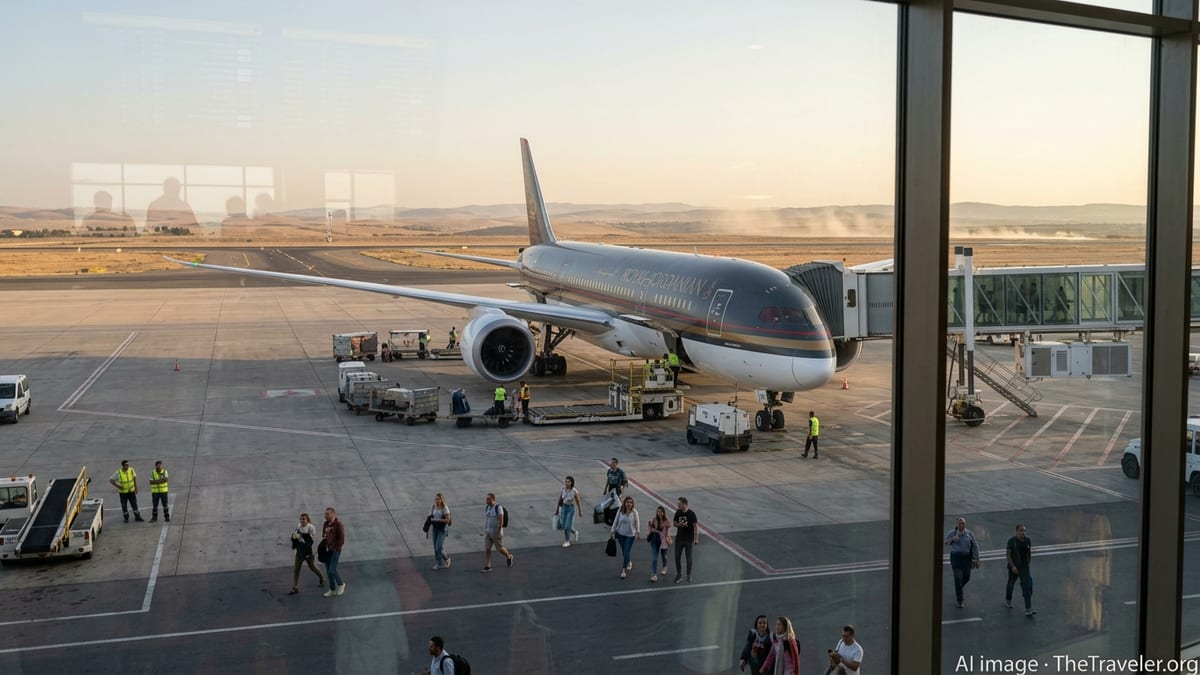
Airline Under Pressure, But Still Carrying Millions
Royal Jordanian has spent the past two years navigating overlapping shocks, from the Gaza war’s blow to regional tourism to fresh security concerns tied to the wider Iran–Israel confrontation. Publicly available financial results for 2024 show the carrier returned to an operating profit despite these headwinds, helped by cost controls and a strategy that leans heavily on inbound tourism to Jordan and connecting traffic across the Levant.
The airline reported carrying more than four million passengers in 2025 and has outlined plans to grow to around seven million travelers annually by 2028, according to recent Jordanian business coverage. That target assumes that demand gradually normalizes and that Jordan can reinforce its image as a comparatively stable gateway between Europe, the Gulf, and wider Asia, even when nearby countries are in the headlines.
Industry reporting has noted that the war in Gaza sharply reduced European leisure bookings into Jordan and forced Royal Jordanian to reroute certain flights to avoid conflict zones, raising fuel and operating costs. At the same time, strong demand from regional travelers and Jordanian expatriates has helped keep many aircraft relatively full, softening the blow of lost group tours and long-haul visitors.
Government-linked analyses describe Royal Jordanian as a strategic asset for Jordan’s tourism economy, which accounts for a notable share of national GDP. Keeping the flag carrier flying at scale is seen domestically as vital not only for connectivity but also for the survival of hotels, guides, and tour operators that rely on a steady flow of arrivals through Amman.
Nightly Airspace Curfew Reshapes Flight Schedules
For travelers looking at Royal Jordanian flights in March 2026 and beyond, the single biggest immediate change is Jordan’s nightly airspace curfew. Since early March, publicly available aviation notices and travel-industry summaries indicate that Jordanian airspace has been closed to most civil traffic from early evening until the following morning, a precaution linked to the risk of spillover from the Iran–Israel conflict.
Royal Jordanian has responded by compressing much of its operation into daytime hours, adjusting departure banks in Amman and retiming connections wherever possible. Regional travel blogs and booking platforms note that many flights that once departed late at night or arrived before dawn are now showing midday or afternoon timings, particularly on routes to Europe and the Gulf that previously relied on overnight slots.
Passengers are being advised in public guidance to expect schedule changes, longer connections, or occasional last-minute disruptions if the curfew window shifts or is extended. While Royal Jordanian is still selling tickets across its network, reports from recent travelers suggest that rebooking within the airline’s own system has generally been more straightforward than switching to foreign carriers that have trimmed or suspended service to Amman.
Industry observers caution that the curfew effectively reduces the number of daily takeoff and landing opportunities into Queen Alia International Airport, meaning that peak daytime periods can feel busier even if overall tourism numbers are below pre-crisis levels. For tourists, that translates into fuller flights at popular times, fewer red-eye options, and a premium on flexibility when choosing dates and times.
Tourism Demand Shifts, But Jordan Remains Open
Before the current round of tensions, Jordan’s tourism sector was showing clear signs of recovery from the initial impact of the Gaza war. National tourism statistics for 2025 indicated record half-year visitor numbers, helped by regional travelers from the Gulf and new air links, including Royal Jordanian’s planned growth into major South Asian markets.
The latest unrest has dented that momentum. Local media and regional business outlets report that major sites such as Petra, Wadi Rum, and the Dead Sea have seen a sharp drop in Western tour groups in recent weeks, with hotel occupancy in some areas sliding well below typical seasonal norms. Travel forums contain multiple accounts of visitors finding world-famous landmarks unusually quiet, a striking contrast to the crowds of just a few years ago.
Nonetheless, Jordan’s borders and airports remain open, and Royal Jordanian continues to function as the main bridge for international visitors. The airline’s network still connects Amman with major European gateways, North American cities, and regional hubs in the Gulf, giving tourists multiple one-stop options even as some foreign carriers temporarily reduce frequencies or suspend flights.
For travelers, this creates a mixed picture: fewer crowds and more space at key attractions on the one hand, and heightened uncertainty about flight reliability and last-minute changes on the other. Published travel pieces increasingly describe Jordan as calm on the ground yet affected by perceptions of regional instability, a gap that airlines and tourism boards are trying to narrow through reassurance campaigns and flexible booking policies.
Risk Calculus: How Safe Is It To Fly Royal Jordanian Now?
Most international governments currently advise travelers to exercise increased caution when visiting Jordan, citing the proximity of conflict zones and the possibility of cross-border incidents, rather than direct involvement in fighting. Recent events, including intercepted missile and drone strikes over Jordanian territory in late February 2026, have underscored that risk, even though the incidents have been brief and tightly contained.
Civil aviation authorities and air-defense systems have so far managed these episodes without long-term closure of Amman’s main airport, but the result has been short-notice airspace restrictions such as the new nightly curfew. Royal Jordanian, like other airlines, must adapt rapidly when military activity or security alerts arise, which can mean diversions, holding patterns, or re-routed flights for passengers already in the air.
Travel-industry commentary notes that Royal Jordanian has an incentive to maintain as robust a schedule as safely possible, given its role as the national carrier and its dependence on connecting passengers. At the same time, the airline is subject to international aviation safety rules, overflight restrictions, and decisions by Jordan’s civil aviation regulator, which can override commercial considerations and force cancellations when risk levels rise.
Prospective visitors are being encouraged by travel advisors and tour operators to think in terms of risk tolerance rather than guarantees. For many, the presence of a functioning national airline, open hotels, and normal life in Amman will feel reassuring. Others may see the possibility of airspace closures or missile debris, however remote, as unacceptable and choose to delay travel until the broader regional picture stabilizes.
Practical Advice for Tourists Booking With Royal Jordanian
With the situation in flux, practical planning has become as important as destination inspiration. Public travel guidance and recent first-hand accounts suggest that tourists flying Royal Jordanian should prioritize flexible tickets that allow date or routing changes at reasonable cost, and avoid itineraries that rely on tight self-made connections across different airlines or separate tickets.
Travelers are also advised in open sources to monitor Jordan’s civil aviation notices and their own government’s travel advisories frequently in the days leading up to departure. While Royal Jordanian communicates schedule changes through its website, app, and contact centers, some adjustments can happen close to departure time as the airline fits operations around the nightly curfew and any short-notice airspace alerts.
Once in Jordan, the primary impact of the wider conflict for most visitors is logistical rather than day-to-day security. Transport within the country, including domestic flights, roads, and tourism infrastructure, continues to operate, but travelers may find that multi-country itineraries combining Jordan with Israel, the Palestinian territories, Lebanon, or Egypt are more vulnerable to disruption than in the past.
For now, Royal Jordanian remains a central pillar of Jordan’s tourism recovery strategy, keeping aircraft relatively full in a difficult market and preserving vital links to the outside world. Whether those jets stay full in the months ahead will depend as much on travelers’ appetite for calculated risk as on any timetable the airline can load into its booking systems.