

When I pictured soaking in Budapest’s famous thermal waters, I imagined quiet steam, ornate tiles, and older Hungarians playing chess in the corner. The reality at both Rudas Thermal Bath and Széchenyi Baths in 2025 and 2026 was more complicated.
I had some magical moments, but I also dealt with crowds, confusing ticketing, and prices that were higher than I expected. After visiting both multiple times, at different times of day and in different seasons, I feel I can describe what each spa really offers now, and which one is likely to be better for you.
Atmosphere & Architecture: Ottoman Intimacy vs Grand Outdoor Spectacle
Walking into Rudas for the first time, I felt like I had stepped sideways in time. The core of the baths is a 16th‑century Ottoman octagonal pool under a low, domed ceiling pierced by small star‑shaped windows. The light that filters through is dim and slightly smoky, and the air smells strongly of minerals. It is intimate, slightly austere, and very much focused on bathing rather than entertainment. When it is quiet, the acoustics amplify every drip of water and low conversation. Those quiet moments are becoming rare, but when I caught them, Rudas felt like what I had always imagined a historic Turkish bath would be.
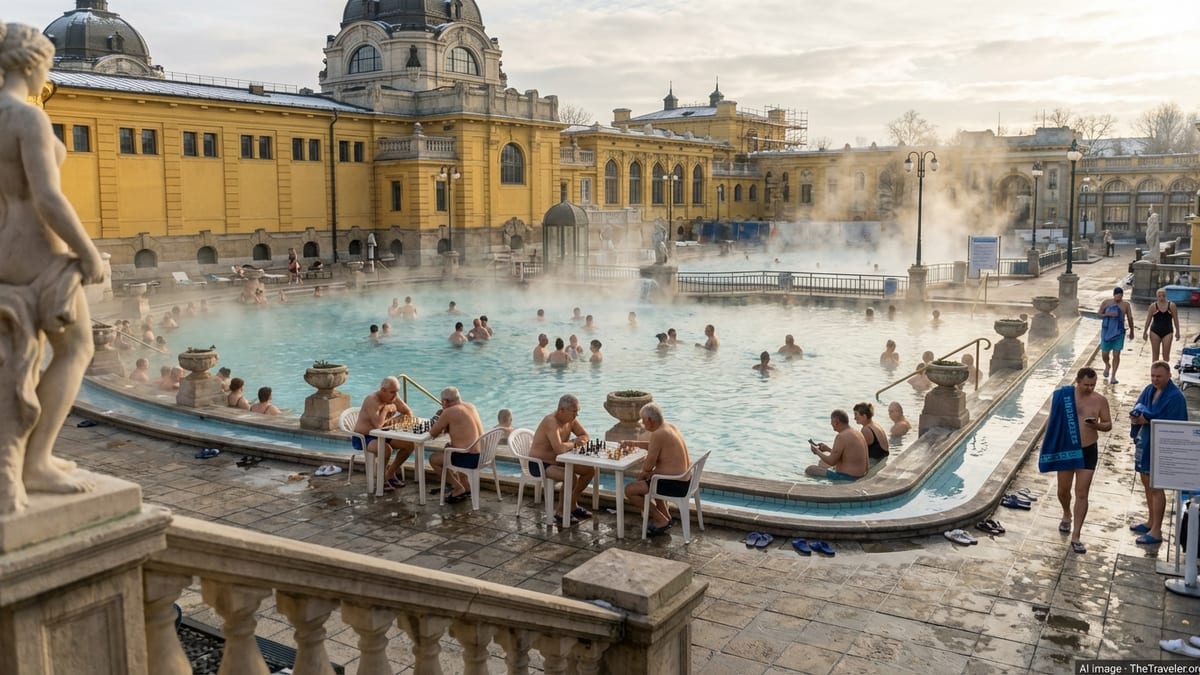
Széchenyi, by contrast, is all about scale and spectacle. The three huge outdoor pools framed by yellow Neo‑Baroque facades are the face of Budapest tourism. Even before I got in, I saw people posing for photos in every corner. It is beautiful in a theatrical way: clouds of steam over bright blue water, chess tables on the side, colonnades and statues surrounding the pools. Inside, the smaller thermal rooms feel quite dated and utilitarian; some tiles are worn and the layout is a bit of a maze. I would not call it a “luxury spa” in the modern sense. Its charm lies in its age and drama, not in sleek design.
Personally, I found Rudas more atmospheric in the traditional sense. Sitting in the central dome pool with just a few others, I actually forgot I was in a modern city. At Széchenyi, I never forgot I was in a tourist attraction, especially in summer. The upside is that Széchenyi’s outdoor area, especially on a cold winter evening when the air is frosty and the water is steaming hot, really is as stunning as the photos suggest. I just had to accept that I was sharing that beauty with a lot of people holding smartphones.
Location, Access & Practical Logistics
In practical terms, Rudas is better located for general sightseeing if you are staying near the center. It sits at the Buda end of the Elizabeth Bridge, right by the Danube. I walked there easily from the Castle District and from the Pest side around Váci Street by crossing the bridge. Public transport options are dense: several buses and trams stop within a couple of minutes’ walk. This made it very easy to squeeze in a morning or late‑night session without restructuring my whole day.
Széchenyi is further out in City Park, near Heroes’ Square. It is still easy to reach, but it is a dedicated trip. The M1 metro line has a stop right in front of the bath, and several buses run to the park. On the day I visited in peak summer, the metro was packed with people clearly heading to the baths. I did not find the walk from central Pest realistic right before bathing; it would have taken close to an hour and I would have arrived sweaty. For me, Széchenyi required planning an entire half‑day, while Rudas worked as more of a flexible add‑on.
Both spas now restrict entry for children under 14 in their thermal areas, following updated Hungarian regulations. That rule is strictly enforced. I watched families with younger children turned away at both entrances. If you are traveling with kids under 14, neither Rudas nor Széchenyi is currently a good fit unless you have a specific medical prescription arranged in advance. This is a major shift from older guidebooks that describe Széchenyi as family‑friendly.
Getting in is where the logistics can become frustrating. At Széchenyi, even with multiple entrances, the ticket hall felt chaotic during late morning and early afternoon. On my first visit I decided to “save” on pre‑booking and buy at the counter. I waited over 40 minutes in line. When I came back another day with an online fast‑track QR ticket, I was inside within minutes. At Rudas, the lines were shorter, but the staff at the main cashier moved methodically rather than quickly. Once inside, both places have decent signage for lockers and cabins, but Széchenyi’s internal corridors felt more confusing on my first visit, and I had to ask staff for directions more than once.
Tickets, Prices & Real Value For Money
The romantic image of “cheap” Budapest baths is out of date. By 2025 and into 2026, prices at both Rudas and Széchenyi have risen sharply compared to earlier years. For Széchenyi, a standard full‑day ticket with locker bought at the cashier now runs in the low five figures in forints on weekdays (around 13,000 HUF) and significantly more on weekends and in peak periods, with cabins a bit higher. Fast‑track online tickets with cabin and bundled extras push the price even further up. There are also “Good Morning” discounted tickets if you check in before 9 am on certain days, which I tried and found to be one of the few genuine savings still available.
Rudas is slightly cheaper but not dramatically so. A regular daytime ticket with access to the thermal section and wellness area is now roughly in the high four or low five figures in forints, with higher prices on weekends and during holidays. Night‑bathing sessions on Friday and Saturday, which include the famous rooftop pool, are priced at a premium. Once I added in a cabin instead of just a locker, plus a drink and snack afterwards, my Rudas visit total was not far off what I spent at Széchenyi.
In terms of perceived value, I felt I got more “experience per forint” at Rudas when I timed it well. The night bathing ticket, although pricier, bought me a very memorable few hours with rooftop views of the Danube and city lights. At Széchenyi, my daytime ticket bought me access to everything, but the sheer number of people diluted the sense of specialness. I had a better value experience at Széchenyi when I used the early morning discount: fewer people, lower price, and cooler air around the hot outdoor pool.
One decision moment for me was whether to pay for extras like massages and rental packages. At Széchenyi, massages book out quickly, and you must still buy a regular bath ticket on top. Once I did the math on a full‑day bath ticket plus a mid‑range massage, I was looking at a bill comparable to a spa afternoon in Western Europe. I skipped the massage there. At Rudas, I tried a shorter massage add‑on during a quieter weekday. While still not cheap, it felt more aligned with the calm atmosphere, and I left feeling like I had gotten something closer to a therapeutic experience rather than a conveyor‑belt service.
Crowds, Comfort & Overall Experience
Crowding is where the two baths diverge most clearly. Széchenyi, especially between late morning and late afternoon, is frankly overwhelmed. On one August visit, I would not have called it relaxing. Lockers were packed, showers were busy, and finding a bench or a hook that was not already taken felt like a scavenger hunt. In the main outdoor thermal pool there were so many people that I had to weave around groups taking photos just to move. The atmosphere veered more toward a resort pool than a traditional spa.
Rudas can also get busy, but the feel is different. The central domed Turkish pool area is smaller and more controlled. Even at its busiest in my experience, I could still find a spot to sit quietly. The wellness section and rooftop pool are another story; those get lively in the afternoons and very social at night. During one Friday night session, I heard more English, German, and Italian than Hungarian, and there were selfie sticks everywhere. Still, the overall density of people never matched what I experienced at Széchenyi on a summer weekend.
Comfort comes down partly to facilities. Neither bath is pristine in a showroom sense. At Széchenyi, some interiors are clearly worn. Tiles are chipped in places, locker areas feel functional rather than welcoming, and you will see rust stains and patched‑up corners. It did not bother me much once I recalibrated my expectations: I was in a century‑old working bath complex, not a brand‑new wellness resort. Rudas, after several rounds of renovation, feels fresher. The wellness and rooftop areas are more modern, and the contrast between the old Turkish core and new additions works visually.
I also need to mention renovations. Széchenyi started a phased renovation of its thermal sections in 2025. Different areas are closed at different times, with temporary barriers and construction noise in some parts. When I visited, most of the outdoor area was open, but a couple of indoor pools and changing sections were off limits. None of this ruined my visit, but it did contribute to a slight “under construction” feel. Rudas, by comparison, felt fully operational and consistent.
Gender Rules, Night Bathing & Seasonal Timing
One of the quirks of Rudas is its gender policy in the historic Turkish section. On some weekdays, the core thermal pools are male‑only or female‑only, with fully mixed bathing mostly on Thursdays afternoons, Fridays, and weekends, plus the night sessions. This created a real decision point for me when planning. I had to double‑check the schedule to avoid showing up on a day when I would not be allowed into the most atmospheric part of the complex. When I got the timing right, I appreciated the relative calm of those restricted‑access sessions, but I can see how the system can confuse first‑time visitors.
Széchenyi is far simpler on this front: it is mixed‑gender all the time. That makes it easier if you are visiting as a couple or group of friends who want to stay together. However, it also contributes to the party‑ish atmosphere at certain times. Saturday evening “sparty” events turn the outdoor pools into a full nightlife venue with DJs and light shows. I did not attend a sparty because I was more interested in traditional bathing, but I could hear the music while passing by another night, and it was clear that this is not about quiet therapy. If you want a classic soak, avoid Saturday nights at Széchenyi entirely.
Rudas’s night bathing sessions, on the other hand, struck a balance between social and serene. Every Friday and Saturday night, from late evening to the early hours, the baths reopen. I booked online in advance because these slots often sell out in summer and around holidays. The rooftop pool at midnight, with the Danube below and the bridges lit up, was the single most magical bath experience I had in Budapest. It was not empty and people were drinking and chatting, but the focus stayed on the view and the water instead of on partying for its own sake.
Season matters at both baths. In winter, soaking in hot water while the air stings your face is a joy. Széchenyi’s outdoor pools at 0 to 5 degrees Celsius felt perfect to me. In high summer, especially in the middle of the day, the experience at Széchenyi veered toward “overheated water park” with little shade, and I found Rudas more tolerable because of its shaded internal spaces. If I were planning another trip, I would prioritize Széchenyi very early in the morning in summer, and put Rudas at night or on a shoulder‑season weekday.
Facilities, Cleanliness & Rules You Actually Notice
Both spas enforce some rules that are easy to miss if you rely on older advice. One important current rule at Széchenyi is that flip‑flops or some kind of waterproof sandals are mandatory in the pool areas. I watched several people who arrived barefoot get stopped and redirected to buy overpriced plastic slippers at the on‑site shop. Towels are another constant issue. At various points, towel rental has been reduced or suspended; the safe assumption is that you should bring your own. The day I forgot and had to buy a branded towel, I regretted it when I saw the price tag.
Swimming caps are only required in the dedicated lap‑swimming pools at both complexes, not in the general thermal baths. I brought one but only needed it when I actually swam lengths. Lockers are adequate for most visitors, but I strongly prefer cabins at both venues. At Széchenyi, my cabin gave me a private space to change and store my bag that felt infinitely safer than a communal locker area jammed with tour groups. The cabin upgrade is a minor extra charge relative to the overall ticket price, and for me it was one of the easiest decisions to justify.
In terms of cleanliness, neither place is spotless, but both met my baseline hygiene expectations. In Széchenyi at peak times, the locker room floors got wet and a bit grimy despite staff efforts. I saw staff mopping, but they were outnumbered by the volume of people. The water itself always looked clear, and I did not see anything that made me feel unsafe, but it is not a minimalistic spa where every corner gleams. Rudas felt slightly cleaner overall, especially in the wellness zone and showers, though the very old stone in the Turkish core naturally looks a bit stained from centuries of mineral water.
Staff interaction is another subtle but important point. At both baths, the staff do their jobs but rarely go out of their way to be warm or chatty. English is spoken well enough at reception and information desks, but you will encounter some language barriers with attendants inside. At Széchenyi, I found the tone borderline brusque at times, especially when they were under pressure. At Rudas, staff felt marginally more relaxed and willing to answer questions, though this might simply be a function of smaller scale and slightly lower stress.
Who Each Bath Is Really Best For
After trying both more than once, I do not think there is a single “better” choice that fits every traveler. Instead, each bath suits different priorities. When friends ask me now, my first counter‑question is: what do you care about most, atmosphere or iconic status?
If you want the classic “I went to the famous yellow outdoor baths in Budapest” photo and you do not mind crowds, then Széchenyi still delivers. It is the most iconic, and once you are in the water and steam is rolling by, it is hard to deny its drama. It is also the simplest choice for mixed‑gender groups who want to stay together the entire time without thinking about gender‑specific schedules. However, I recommend booking online, going early in the morning, and being mentally prepared for worn edges and tourist‑driven prices.
If you are more interested in a historic, atmospheric soak and are willing to pay attention to schedules and rules, then Rudas is the better experience. I left Rudas feeling genuinely restored, especially after night bathing sessions and quieter weekday visits. The Ottoman dome, the contrast between ancient interior and modern rooftop, and the slightly lower level of chaos all combined into something closer to what I had hoped Budapest’s baths would be. The gender‑segregated timetable is a hassle, and the night sessions can feel almost too social if you are craving silence, but overall I found the balance there more satisfying.
Budget is less of a differentiator than it used to be. Both are now solidly mid‑to‑high‑priced by local standards. The value you get depends on how cleverly you time your visit and whether you avoid unnecessary extras. My personal ranking, in terms of likelihood to revisit, is Rudas first for night soaking and atmosphere, then Széchenyi specifically in winter or at opening time. I would not bother with Széchenyi in the middle of a summer Saturday again.
The Takeaway
Rudas Thermal Bath and Széchenyi Baths both gave me memorable Budapest experiences, but for very different reasons. Széchenyi is the grand postcard version of the city: big, loud, social, a bit frayed around the edges, and often overcrowded. When I caught it at the right time, especially on a cold morning with fewer people, I understood completely why it became an icon. When I went during peak hours, I felt like I was paying a premium to stand in line and dodge selfie sticks in hot water.
Rudas is more focused, more atmospheric, and more manageable, especially if you want to feel some connection with the city’s deeper bathing traditions. Its Ottoman‑era dome, modern wellness area, and rooftop pool create a layered experience that felt uniquely “Budapest” to me. The trade‑offs are the stricter schedules, higher night‑bathing prices, and fewer outdoor lounging options compared to Széchenyi’s vast courtyards.
If I were advising a first‑time visitor with limited time, I would suggest this: choose Széchenyi if you absolutely want that famous outdoor scene and do not mind treating it as a busy attraction. Choose Rudas if you want the more intimate, historic soak and do not care if your photos are less instantly recognizable. If you have the time and budget, doing both is still worthwhile, but I would do them in different ways: Széchenyi first thing in the morning or on a cold shoulder‑season day, Rudas at night or on a quieter weekday.
Despite the crowds, rising prices, and occasional frustrations, I do not regret visiting either. I just wish I had known in advance how much timing, expectations, and a few key choices would shape my experience. With that in mind, you can still find the magic beneath the steam at both Rudas and Széchenyi; you just have to be a bit more strategic than the brochures suggest.
FAQ
Q1. Which bath is better if I only have time for one, Rudas or Széchenyi?
For a first‑time visitor who wants the “famous” experience, Széchenyi is the obvious choice, especially if you go early in the morning to avoid the worst crowds. If you care more about atmosphere, historic architecture, and a calmer soak, I would choose Rudas instead. Personally, if I had to pick just one to revisit, I would go back to Rudas.
Q2. Is Széchenyi really as crowded as people say?
In peak season and around late morning to afternoon, yes. I experienced long ticket lines, packed lockers, and a very busy main outdoor pool. Early morning visits and off‑season weekdays are noticeably calmer, but you should not expect a quiet, secluded spa at any time of year.
Q3. Do I need to book tickets in advance for either bath?
For Széchenyi, I strongly recommend booking tickets online, especially in summer, on weekends, or if you want a massage. Buying at the counter cost me a long wait. For Rudas, I would definitely book in advance for night‑bathing sessions, which can sell out, and consider advance tickets for weekends; on quieter weekdays you can sometimes get away with paying on arrival.
Q4. How strict are the age restrictions for children?
Both Rudas and Széchenyi now effectively bar children under 14 from the thermal pools, unless there is a specific medical arrangement. I watched staff turn away families with younger kids at both locations. If you are traveling with children under 14, you should plan on alternative activities and not count on using these baths as a family outing.
Q5. What should I bring with me to the baths?
I always bring a swimsuit, flip‑flops or waterproof sandals, a towel, a refillable water bottle, and a small bag for personal items. At Széchenyi, flip‑flops are mandatory in pool areas, and towel rental has been unreliable, so bringing your own avoids surprise purchases. A swimming cap is only needed if you plan to use dedicated lap‑swimming pools.
Q6. Are the baths clean and safe?
Both baths met my basic expectations for cleanliness and safety, especially in the pools themselves. However, neither is spotless; you will see worn tiles, wet floors, and busy changing areas at peak times, particularly at Széchenyi. I never felt unsafe, but I always used a cabin or locker, kept valuables minimal, and wore flip‑flops around wet areas.
Q7. How do the night experiences compare at Rudas and Széchenyi?
Széchenyi’s main night offering is the Saturday “sparty,” which is a full party atmosphere with DJs and lights. I skipped it, because I was looking for relaxation. Rudas offers late‑night bathing on Fridays and Saturdays, which I did try. It felt social and lively but still centered on soaking, with the rooftop pool and city lights creating a special atmosphere. If you want a party, you go to Széchenyi; if you want a memorable soak with a night‑time vibe, you choose Rudas.
Q8. Is there a big difference between using a locker and a cabin?
Yes, at least in terms of comfort. Lockers are fine if you travel light and do not mind changing in communal areas. Cabins cost a bit more but give you privacy to change and a dedicated space for your stuff. At both Rudas and Széchenyi, I found cabins far more comfortable, especially when the baths were crowded.
Q9. How long should I plan to spend at each bath?
I found that two to three hours was enough at Rudas to enjoy the Turkish pools, wellness area, and rooftop, especially at night. At Széchenyi, a half‑day is more realistic if you want to explore both indoor and outdoor sections and build in time for queues, especially in summer. Longer stays are possible at both, but beyond three or four hours I found the heat and crowds tiring.
Q10. If I visit in winter, which bath is better?
In winter, both have strong appeal. Széchenyi’s outdoor pools in cold air are genuinely magical, and the photos from a frosty morning soak are hard to beat. Rudas, with its enclosed Ottoman dome and hot pools, feels deeply cozy when it is cold outside. If you enjoy outdoor soaking in crisp air, I would lean toward Széchenyi; if you want a cocooned, historic feel, Rudas might suit you better.