

More news on this day
Russia has joined Belarus and several key European destinations under heightened travel warnings, as governments update advisories to reflect rising security risks, mass protests and geopolitical uncertainty across the region in early 2026.
Get the latest news straight to your inbox!
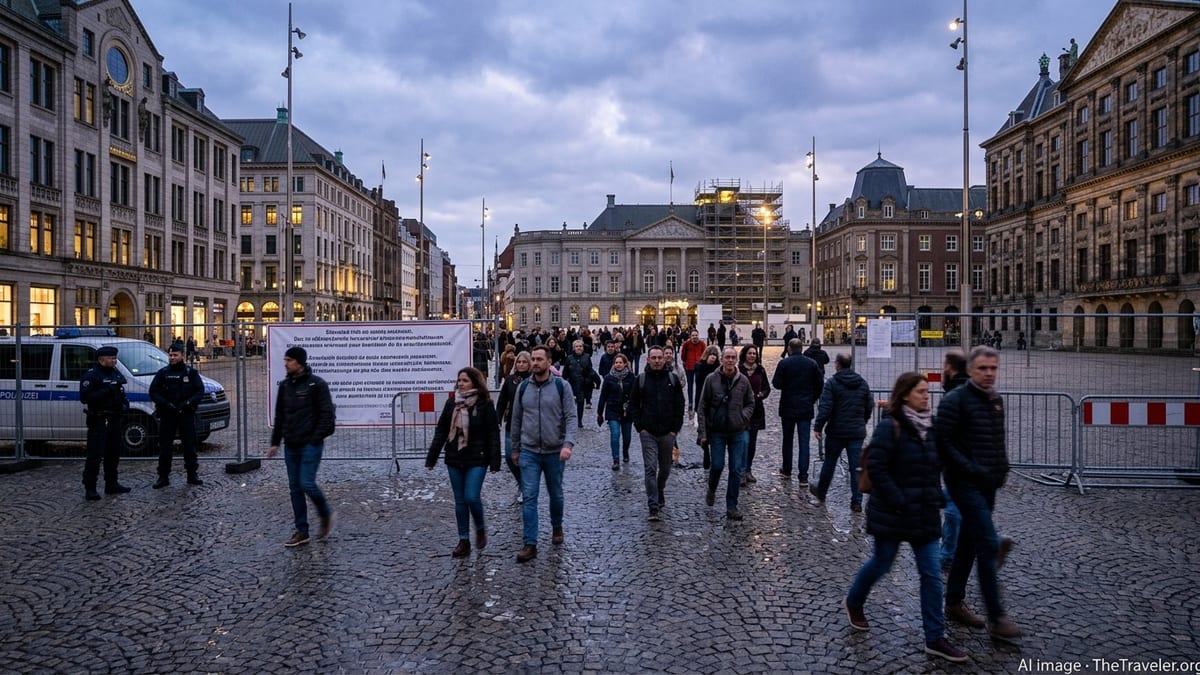
Russia Joins the Highest-Risk Travel Category
Recent updates to travel advisories place Russia among the most restricted destinations for foreign visitors, grouping it with countries where governments advise against travel due to armed conflict, political repression and unpredictable security conditions. Publicly available guidance for 2026 highlights Russia’s ongoing military operations, tensions with Western states and restrictions on foreign nationals as key factors behind the escalation in risk categorization.
Advisories typically cite the potential for arbitrary detention, limited consular support and sudden changes to exit and entry rules, all of which complicate travel planning for tourists and business travelers alike. Analysts note that Russia’s alignment with other high-risk jurisdictions reflects not only battlefield developments but also the widening impact of sanctions, information controls and strained diplomatic relations on day-to-day mobility.
Travel industry reports indicate that tour operators and global airlines have already reduced or suspended services to Russian destinations, redirecting capacity to alternative routes in Europe, the Middle East and Asia. Insurers are also reassessing coverage, with some policies excluding Russia or imposing premiums that effectively price many leisure trips out of reach.
Belarus Remains a Flashpoint on Europe’s Eastern Fringe
Belarus continues to appear on lists of highest-risk destinations issued by Western governments, which characterize the country as volatile due to its role in supporting Russia’s war in neighboring Ukraine and its own internal political climate. Updated official guidance through early 2026 reiterates “do not travel” language and references a pattern of arbitrary enforcement of laws and politically motivated detentions affecting both residents and foreign visitors.
Travel safety agencies in several countries warn that consular assistance in Belarus is heavily constrained, as embassies operate at reduced capacity or have suspended routine services. Public information also notes difficulties exiting Belarus without proper documentation and the possibility of sudden border closures or restrictions, particularly along the frontier with Ukraine and European Union member states.
Despite an ongoing visa-free regime that nominally facilitates cross-border visits from parts of Europe, security-focused advisories emphasize that easier entry does not equate to lower risk. Tourists are urged to consider that heightened surveillance, limited independent media and an opaque legal environment can quickly turn routine travel incidents into prolonged legal or administrative problems.
France and Germany Confront Terrorism Fears and Domestic Unrest
France and Germany, two of Europe’s most visited destinations, are under intensified scrutiny as security services respond to a mix of terrorism concerns, political violence and disruptive protest movements. In France, publicly available security briefs for March 2026 underline a moderate but persistent threat environment, highlighting the risk of attacks on crowded public places, major transport hubs and tourist landmarks. Reports also point to frequent demonstrations over economic conditions and domestic policy, which can lead to transport disruptions and confrontations with police.
French authorities have recently elevated internal alert levels in response to regional developments, including airstrikes and tensions involving Iran, with additional patrols deployed around diplomatic missions and sensitive sites. Coverage of the situation emphasizes that, while daily life in cities such as Paris, Lyon and Marseille continues largely as normal, visitors may encounter reinforced security checks, armed patrols and short-notice closures of public spaces.
Germany faces a slightly different but related risk pattern, combining concerns over politically motivated attacks, antisemitic incidents and infrastructure sabotage. High-profile car-ramming and stabbing attacks in recent years, along with a major arson incident targeting the Berlin power grid in January 2026, have contributed to perceptions of a more fragile security environment. Public reporting also notes a surge in demonstrations linked to migration policy, social inequality and international conflicts, prompting authorities to encourage residents and visitors to avoid large crowds where tensions might escalate.
Turkey, Cyprus and the Eastern Mediterranean in a Shifting Security Landscape
Beyond the European Union’s core, Turkey and Cyprus sit at the intersection of several active regional disputes and military flashpoints, leaving travel advisories subject to frequent review. Turkey’s proximity to conflict zones, its role in regional security operations and periodic incidents along its land borders and coastline lead many governments to differentiate sharply between tourist centers and areas near Syria, Iraq and other sensitive frontiers.
Publicly available guidance often encourages travelers to major resort areas such as Antalya, Bodrum and the Aegean coast to remain alert to localized security operations, while advising against non-essential travel to certain border provinces. Analysts note that although Turkey’s coastal tourism industry has shown resilience, the overall risk profile remains higher than in many Western European destinations, particularly when political tensions or economic pressures spill into street protests.
On Cyprus, the long-standing division between the Republic of Cyprus in the south and the Turkish-controlled north introduces a separate layer of complexity. Travel information typically underscores that crossing points on the UN-patrolled buffer line can be subject to changing procedures and spot checks. The island’s location near contested energy resources and Middle Eastern shipping routes also ensures that defense and surveillance activities remain prominent, even as coastal resorts continue to market themselves as safe havens for European holidaymakers.
Travelers Face a More Fragmented and Dynamic Risk Map
The accumulation of new and upgraded travel warnings for Russia, Belarus, France, Germany, Turkey, Cyprus and other European and near-European destinations illustrates a broader shift toward a more fragmented risk landscape. Instead of a simple division between “safe” and “unsafe” countries, current advisories parse risk city by city and region by region, distinguishing between stable tourist hubs and areas affected by protests, conflict spillover or infrastructure vulnerabilities.
Reports from consular services, security consultancies and travel insurers indicate that travelers are being urged to treat advisories as live documents rather than static labels, checking them repeatedly in the weeks and days before departure. Heightened attention to demonstration calendars, election periods and major international events is becoming a routine part of trip planning, especially in countries where street protests can disrupt public transport or trigger sudden curfews.
Travel industry observers note that this evolving environment does not mean European tourism is closing down, but rather that it is entering a period where flexibility and preparation are increasingly vital. Tourists are encouraged to build contingency time into itineraries, maintain up-to-date contact information with their home-country services, and stay informed through reputable news outlets and official public advisories as geopolitical tensions and regional conflicts continue to shape the European travel experience in 2026.