

More news on this day
Russia has joined Belarus, Haiti, Burkina Faso, Israel and a cluster of other destinations on the UK Foreign Office’s toughest travel warning lists, as new security flashpoints and airspace disruptions raise the risk of sudden travel chaos for holidaymakers and business travellers alike.
Get the latest news straight to your inbox!
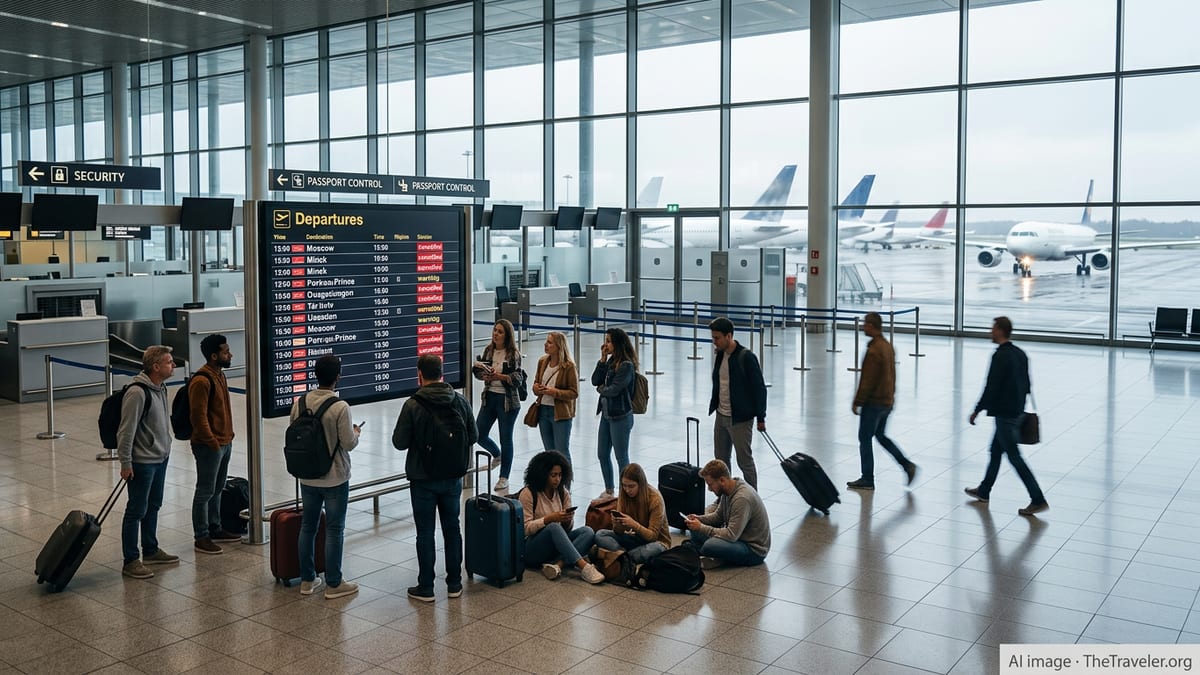
A Rapidly Expanding Map of High-Risk Destinations
Recent updates to UK Foreign, Commonwealth and Development Office (FCDO) travel advice show a widening group of countries where travel is either strongly discouraged or formally listed as “against all travel,” reflecting a world in which geopolitical shocks and internal instability are increasingly spilling over into tourism and aviation. Published summaries of the advice indicate that Russia, Belarus, Haiti, Burkina Faso and Israel now sit among the most restrictive categories, with travellers warned that visiting these destinations could invalidate insurance and sharply limit consular support if things go wrong.
Russia’s designation is closely tied to its ongoing invasion of Ukraine. Publicly available guidance stresses that risks range from military mobilisation to arbitrary enforcement of local laws, with several governments advising their nationals to leave while commercial routes remain available. Belarus, which has maintained close political and military ties with Moscow, is flagged for its proximity to the conflict and a heightened risk of detention or politically motivated scrutiny at the border and within the country.
At the same time, media round-ups of FCDO advisories highlight that dozens of other states and territories feature some form of “no-go” warning, whether for entire countries or specific border regions. Analysis by British outlets this month suggests that more than 70 destinations worldwide contain red or orange zones where the FCDO recommends against all or all but essential travel, underscoring how few regions are untouched by armed conflict, terrorism, rampant crime or state fragility.
For outbound UK travellers, this evolving patchwork of restrictions means itineraries that once seemed routine now carry a level of risk once associated mainly with active war zones. Travel risk consultants note that the number of full-country “do not travel” advisories has climbed steadily since the late 2010s, accelerated first by the pandemic and then by overlapping political and security crises.
Haiti and Burkina Faso: Security Crises Shut the Door on Tourism
Haiti represents one of the starkest examples of a destination where tourism has effectively collapsed under the weight of insecurity. Updated FCDO advice in March 2026 continues to warn against all travel to the Caribbean nation, citing what it describes as a volatile security situation marked by gang control over large parts of the capital, frequent kidnappings and severe disruption to essential services. The main international gateway in Port au Prince has periodically closed or restricted operations due to fighting near airport access roads and reports of gunfire around flight paths.
Independent travel safety platforms echo those assessments, characterising Haiti as “do not travel” for discretionary trips because of the risk of violent crime, carjackings and shortages of fuel, food and medical supplies. Airlines have repeatedly postponed the resumption of regular services, and many tour operators removed the country from their brochures several seasons ago. Analysts suggest that even if a UN-backed security mission gains traction, it may be years before tourism infrastructure and visitor confidence recover.
In West Africa, Burkina Faso has undergone a similar shift from niche adventure destination to near-blank spot on mainstream tourism maps. A series of military coups and an expanding insurgency linked to jihadist groups have triggered “against all but essential travel” or full “do not travel” advisories from multiple governments. Publicly available risk assessments point to roadside bombs, ambushes on highways and attacks on rural communities, dynamics that make overland travel particularly hazardous.
Neighbouring states, including parts of Mali and Niger, face comparable warnings, creating a contiguous belt of high-risk territory across the central Sahel. This has not only curtailed tourism within Burkina Faso itself but also disrupted trans-Saharan overland routes that once drew a small but steady stream of international travellers.
Israel’s Escalating Conflict and Airspace Disruption
Israel, long accustomed to fluctuating security assessments tied to its conflict with Palestinian territories, is now subject to some of the most severe travel warnings seen in years. According to recent travel-industry summaries of FCDO updates, the advisory was tightened again in March 2026 to advise against all travel to Israel and the Occupied Palestinian Territories, reflecting the regional fallout from the Gaza conflict and concerns about further escalation.
These warnings come alongside disruptions to commercial aviation in parts of the Middle East, as some carriers reroute flights to avoid potential missile and drone activity. Travel intelligence services report that sudden closures or restrictions of airspace have led to diversions, extended flight times and, in some cases, last-minute cancellations affecting passengers who were not travelling to Israel but were routed through nearby corridors.
Within Israel itself, risk mapping by international insurers and security analysts indicates that border regions and areas close to ongoing military operations carry particularly elevated danger, while major cities face intermittent rocket alerts and the possibility of targeted attacks. Even in periods of relative calm, the current level of uncertainty makes it difficult for tour operators to plan group itineraries or guarantee the continuity of services.
Such volatility can cascade across the wider region. Popular winter-sun destinations that rely on shared air corridors or hub connections may experience knock-on disruption when conflicts intensify, although many remain open to tourism. Travellers are increasingly advised to understand not only the risk profile of their final destination but also that of transit points and overflight zones.
Russia and Belarus: War-Linked Risks and Legal Uncertainty
Russia’s inclusion in the most restrictive tier of FCDO guidance is rooted in the ongoing war in Ukraine and the broader diplomatic rupture with Western states. Publicly available UK government information warns that travel to Russia carries risks linked to arbitrary detention, data scrutiny and rapidly changing regulations, particularly for those with dual nationality or professional ties that might be misinterpreted by local authorities. The prospect of further mobilisation, exit restrictions or sudden border closures adds another layer of unpredictability for foreign visitors.
Air connectivity has also been dramatically reshaped. Since 2022, many European and North American carriers have suspended direct routes to Russian cities, while Russia has in turn restricted its airspace to several Western airlines. Travellers who still choose to visit often rely on complex multi-leg itineraries through third countries, leaving them more exposed to cancellations and schedule changes when geopolitical tensions spike.
Belarus, closely aligned with Moscow and bordering both Ukraine and NATO member states, is subject to similar warnings. Travel advisories highlight the possibility of increased scrutiny at land borders, restrictions on media and online communications, and a heightened risk environment due to military deployments and exercises in the region. Human rights organisations have documented a sustained crackdown on political dissent and civil society, factors that further deter casual travel.
For tour operators that once marketed rail journeys and city-break combinations including Moscow, St Petersburg and Minsk, the current environment has effectively frozen these products. Industry reports indicate that most major European-based operators removed Russia and Belarus from their catalogues shortly after the invasion of Ukraine and have not announced plans to reintroduce them.
What ‘No-Go’ Really Means for Travellers
While the phrase “no-go zone” is widely used in headlines, official travel advice relies on more precise categories, typically distinguishing between “advise against all travel” and “advise against all but essential travel.” Consumer guidance explains that visiting destinations in either category can invalidate standard travel insurance policies, leaving travellers exposed to medical bills, evacuation costs and losses from cancelled trips.
Specialist insurers sometimes offer cover for high-risk destinations, but policies are often expensive and subject to strict exclusions. Travel law experts emphasise that package tour operators have a legal duty of care and may cancel or re-route itineraries when advice hardens, even if some travellers are willing to assume the risk. In practice, that means individual travellers may find it difficult to reach or move around in flagged countries, regardless of personal risk tolerance.
In addition to safety and insurance, there is a practical dimension to the new wave of warnings: transport capacity. Airlines may suspend services where demand collapses or operational risk rises, as seen in Haiti and parts of the Middle East. Even when airspace remains open, carriers can alter timetables with limited notice in response to security assessments, sanctions or rising fuel costs linked to longer detours.
For now, public information suggests the list of heavily restricted destinations is more likely to grow than shrink, given ongoing conflicts in Europe, the Middle East and the Sahel. Travel advisors recommend that anyone booking trips for late 2026 monitor FCDO updates regularly, pay close attention to the fine print of insurance policies and consider flexible or refundable options where possible, as new explosive situations can quickly turn a standard holiday plan into a logistical and financial ordeal.