

More news on this day
British travelers planning far-flung adventures in 2026 are facing a shrinking map of options, as Russia joins Saudi Arabia, Cameroon, Nigeria, Tunisia and Georgia among destinations flagged by the UK Foreign, Commonwealth and Development Office (FCDO) as carrying heightened levels of risk for visitors.
Get the latest news straight to your inbox!
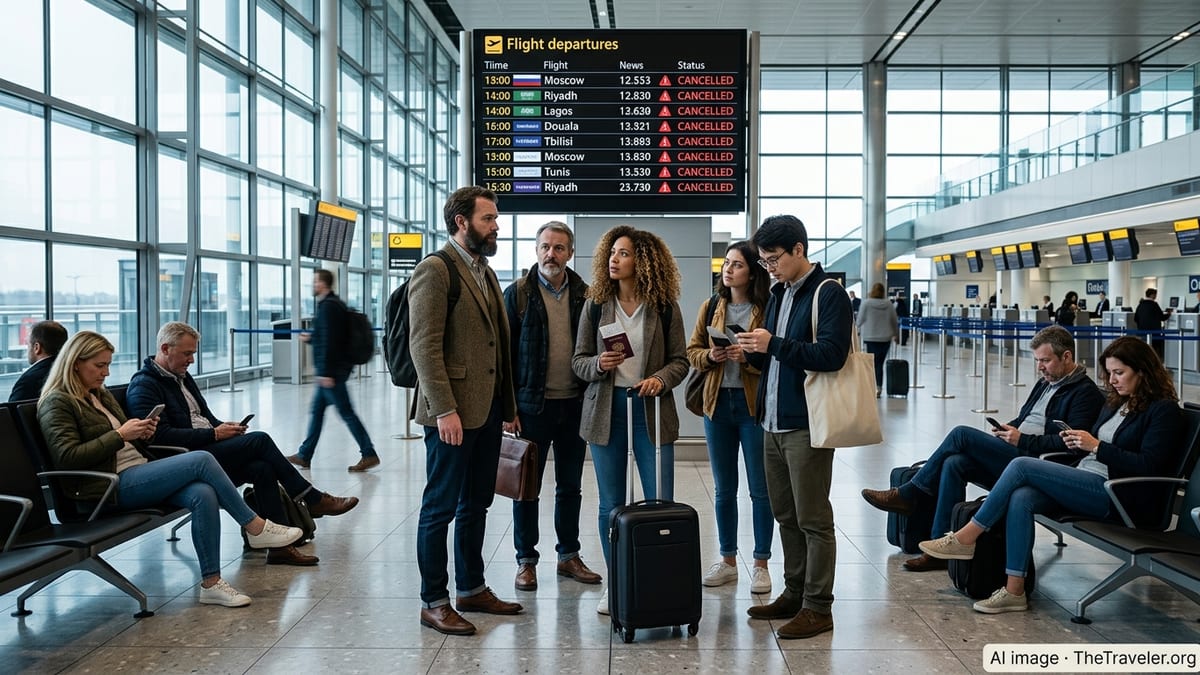
Russia Moves Into the Highest-Risk Category
Russia now sits in the group of destinations where the FCDO advises against all travel, citing risks linked to the continuing war in Ukraine, an unpredictable security environment and limited ability to assist British nationals on the ground. Recent updates to the official Russia travel advice emphasize that any trip would carry significant personal and legal risks for UK citizens, from arbitrary enforcement of local laws to disruption caused by sanctions and airspace restrictions.
Publicly available guidance underscores that the FCDO’s stance on Russia has hardened over time, evolving from selective warnings to a broad recommendation that British nationals avoid the country altogether unless their presence is considered absolutely essential. Travel insurance policies often treat this type of official advice as a trigger for exclusions, meaning that even well-prepared travelers could find themselves without cover if they ignore it.
Russia’s shift into the highest-risk bracket places it alongside long-standing conflict zones that have featured on the danger list for years. For many British travelers who once regarded city breaks in Moscow or St Petersburg as an alternative to Western Europe, this marks a decisive end to a certain kind of cultural city escape, at least for the foreseeable future.
Patchwork Warnings Across Saudi Arabia, Cameroon, Nigeria, Tunisia and Georgia
While Russia is broadly categorized as a destination to avoid, the picture is more nuanced in Saudi Arabia, Cameroon, Nigeria, Tunisia and Georgia. FCDO advice for these countries typically distinguishes between safer urban or coastal hubs and regions affected by insurgency, terrorism, civil unrest or unresolved territorial disputes.
In Saudi Arabia, travel advisories focus on areas near the border with Yemen as well as specific transport hubs that have seen security incidents in recent years. Elsewhere in the kingdom, tourism openings such as new visas and resort developments have encouraged visits, but travelers are still urged to monitor official updates closely and remain aware that the regional security situation can change quickly.
In Cameroon and Nigeria, the primary concerns highlighted by the FCDO include armed conflict, kidnapping and banditry in border regions and parts of the north. Urban centers and some tourism hotspots remain accessible in principle, yet the official guidance stresses that routes in and out can become volatile with little warning, and consular assistance may be constrained.
Georgia and Tunisia, popular with culture-focused and sun-seeking holidaymakers, are subject to more localized warnings. The FCDO’s mapping for these destinations typically pinpoints specific breakaway regions, contested areas or pockets of unrest where all travel, or all but essential travel, is discouraged. For visitors, this creates a patchwork landscape where certain resorts or cities may still be considered viable, but overland itineraries or off-the-beaten-track excursions demand much more scrutiny.
How FCDO Advice Can Derail Your Holiday Plans
For British holidaymakers, being on the FCDO’s danger list carries practical consequences that go far beyond a red warning on a map. Many mainstream travel insurance policies exclude cover for trips taken against FCDO advice, meaning that a medical emergency, theft or disruption in a “no go” destination could leave travelers paying the full cost themselves. Even where partial cover is available, policy wording is often restrictive and requires careful reading before any bookings are made.
Package tour operators and airlines also react to shifts in official guidance. When travel advice upgrades move a destination into an “all travel” or “all but essential travel” warning, companies commonly cancel or reroute services, consolidating capacity into lower-risk markets. For travelers, this can lead to last-minute itinerary changes, refunds in vouchers rather than cash, or the need to rebook at higher prices in safer destinations that are suddenly in higher demand.
There are further administrative hurdles to consider. Visa services for high-risk destinations may be limited or suspended, and some countries, including Russia, have tightened entry conditions for nationals of states viewed as unfriendly. At the same time, banks and payment providers can apply enhanced checks to transactions connected to sanctioned jurisdictions, complicating everything from hotel deposits to card payments on arrival.
What This Means for Your Next Adventure
For travelers who once stitched Russia, the Caucasus or parts of West and Central Africa into ambitious overland routes, the latest FCDO advice makes such itineraries far harder to justify. Journeys that might previously have linked Istanbul to Tbilisi and onward to the Russian Caucasus, or combined coastal Nigeria with neighboring Cameroon, now demand serious reconsideration. Overland crossings through flagged regions can instantly move an otherwise low-risk trip into a category that insurers and tour operators are unwilling to touch.
Even for those determined to proceed with complex trips, the planning burden has increased. Travelers are now encouraged to break routes into segments, checking risk levels region by region rather than relying on a single country label. That could mean redesigning an itinerary to fly over high-risk areas instead of crossing borders by road, or substituting destinations with nearby alternatives that offer similar culture or landscapes but with fewer security concerns.
The tightening of advice for Russia also reshapes the winter and city-break market. With Moscow and St Petersburg effectively off the table for most tourists, interest is likely to shift further toward other cold-climate capitals, from the Nordic countries and the Baltics to Central Europe’s historic cities. Likewise, travelers seeking desert experiences or Islamic heritage may look beyond Saudi Arabia’s more sensitive border regions to destinations such as Oman, the United Arab Emirates or stable parts of North Africa.
Staying Flexible in a World of Shifting Risk Maps
The expansion of the FCDO danger list underscores how quickly the global risk landscape can evolve, and how directly that affects individual travel plans. Geopolitical tensions, localized conflicts and sudden surges in crime can all prompt new or stricter warnings, sometimes with little advance notice. For British travelers, that reality argues strongly for flexibility: choosing refundable fares where possible, favoring accommodation with lenient cancellation terms, and avoiding non-refundable tours in regions where the security situation is fluid.
Monitoring FCDO updates has become a core part of responsible trip planning, not just a final checkbox before departure. Travelers who track changes over weeks or months can spot patterns, such as gradual tightening of advice in certain provinces or border areas, which may be an early signal that a broader warning could follow. Building that information into route planning can help avoid last-minute scrambles and the disappointment of a dream trip that becomes unviable.
For now, the addition of Russia to a list that already includes Saudi Arabia, Cameroon, Nigeria, Tunisia and Georgia in various high-risk categories is a stark reminder that the age of effortless globe-trotting is under strain. Yet it also highlights the value of careful research and flexible thinking. With thoughtful planning and a willingness to rethink destinations, British travelers can still find rewarding adventures, even as the official red lines on the map continue to shift.