

More news on this day
Russia’s next robotic missions to the Moon have been pushed back yet again, even as NASA’s Artemis II astronauts begin a new era of crewed lunar flights, underscoring how sharply Moscow’s exploration ambitions have diverged from Washington’s accelerating Artemis campaign.
Get the latest news straight to your inbox!
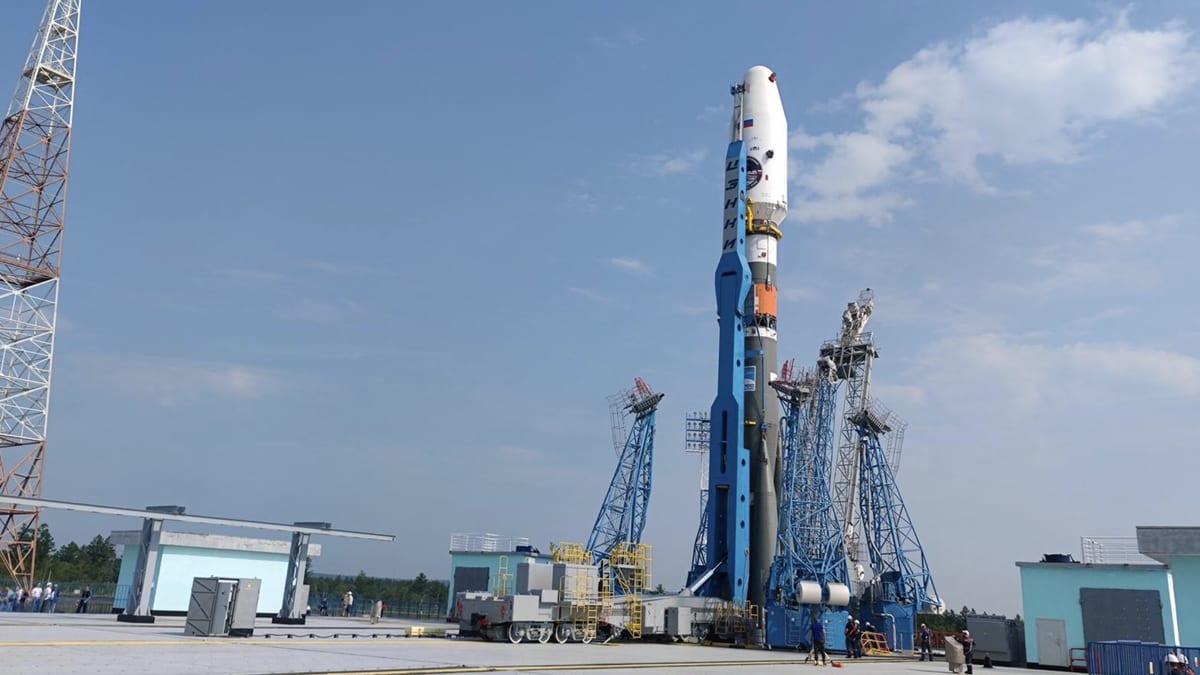
Russian Luna Schedule Drifts Into The Late 2020s
Publicly available information from Russian scientific bodies indicates that the country’s Luna-26 and Luna-27 missions have been delayed by at least a year, with target launch dates now sliding toward 2028. The shift follows years of technical and funding challenges that have slowed work on Russia’s post-Soviet lunar program.
Earlier planning documents and statements had pointed to a sequence in which Luna-26, an orbiter, would launch around 2027, followed by the Luna-27 lander and a sample-return mission, Luna-28, before the end of the decade. Recent coverage in Russian and international outlets suggests that those milestones are no longer realistic, with some estimates pushing the more complex missions into the 2030s.
The new delays come in the shadow of Luna-25, Russia’s first lunar probe in nearly half a century, which crashed during a landing attempt in August 2023 after years of postponements. Analysts note that the failure has likely prompted additional design reviews and caution, contributing to stretched timelines and a more conservative approach to subsequent flights.
Sanctions and broader economic pressures have added further strain. According to open budget data and expert commentary, Russia’s space agency Roscosmos has faced tightening resources and shifting priorities since 2022, complicating efforts to sustain a multi-mission lunar architecture that requires advanced instruments, new landing systems, and deep-space communications upgrades.
Artemis II Marks A New Phase Of Crewed Lunar Exploration
While Russia’s robotic plans stall, NASA’s Artemis II mission has moved into flight, sending four astronauts on a loop around the Moon in the first crewed lunar voyage in more than fifty years. Reports from NASA and major news outlets indicate that the Space Launch System rocket and Orion spacecraft lifted off from Florida’s Kennedy Space Center in early April 2026, following months of testing and a closely watched readiness campaign.
Artemis II is designed as a 10-day test flight that will stress Orion’s propulsion, navigation, life-support, and communications systems in deep space. The crew will not attempt a landing, but will instead fly past the lunar far side before returning to Earth, building on the uncrewed Artemis I mission that orbited the Moon in 2022.
The mission’s trajectory and milestones are being tracked closely because the results will directly shape the timetable for later Artemis flights. NASA’s most recent program updates, echoed in specialist aerospace coverage, outline a plan for a stepped approach in which data from Artemis II reduces risk for more complex docking, landing, and surface operations later in the decade.
For the United States, Artemis II also carries political and symbolic weight. It demonstrates that, despite years of delays, cost concerns, and technical audits, the country has restored the capability to send humans into lunar space, positioning itself as the clear pace-setter for crewed exploration at a moment when other major powers are struggling to keep long-term lunar projects on track.
Competing Visions: Robotic Science Versus Crewed Prestige
Russia’s current plans lean heavily on robotic probes aimed at mapping resources and testing technologies for potential future human missions. Luna-26 is expected to focus on remote sensing and relay functions in polar orbit, while Luna-27 is intended to explore the south polar region, assess volatile-rich regolith, and trial drilling and sample-handling systems that could one day support human outposts.
The United States, by contrast, is centering Artemis on crewed flights, with a supporting layer of commercial and international robotic missions. NASA’s latest architecture updates describe a campaign in which astronauts fly on government-owned Orion spacecraft and SLS rockets, then interface with commercially provided lunar landers and surface infrastructure. This blended model is meant to accelerate the pace of missions while distributing technical and financial risk.
Experts note that the gap is not purely one of budget size, although the disparity is substantial. It also reflects different strategic choices. Russia’s emphasis on a small number of flagship probes makes each failure or delay more consequential, especially in the wake of Luna-25. Artemis, despite its own schedule slips, benefits from redundancy across multiple providers and a wider network of partners contributing hardware, logistics, and science payloads.
For travelers and the broader public, these diverging approaches will shape how quickly new lunar imagery, surface data, and potential tourism-related concepts become reality. The steady cadence of Artemis flights promises regular windows of international attention on the Moon, whereas Russia’s more sporadic schedule risks relegating its efforts to the margins of global space coverage.
Budget Pressures Reshape Lunar Ambitions On Both Sides
Both Russia and the United States are recalibrating their lunar goals under tightening budget scrutiny, but with sharply different outcomes. Public reporting on Russian federal spending suggests that deep-space exploration has been forced to compete with military and domestic priorities, leaving less room for ambitious multi-mission lunar roadmaps.
In the United States, congressional and White House budget proposals have flagged the high per-launch cost of the SLS rocket and Orion spacecraft, prompting debate over how long they should remain central to Artemis. Recent program updates point to a shift toward greater use of commercial launchers and landers later in the campaign, even as SLS and Orion remain at the core of the early crewed flights.
NASA has responded by refining the Artemis architecture, adding an extra mission and standardizing vehicle configurations in an effort to streamline operations and reduce long-term costs. Official reference guides and inspection reports released over the past year highlight a goal of achieving a regular cadence of crewed lunar missions, potentially as often as once a year late in the decade if hardware and budgets hold.
The contrast with Russia’s increasingly distant launch dates is stark. Where the United States is moving from design reviews into an operational rhythm, Russia appears stuck in a cycle of replanning that risks leaving its Luna program technologically and scientifically outpaced, even before new commercial players from other countries enter the fray.
Geopolitics And The Future Of International Lunar Cooperation
The widening gap between Russia’s delayed Luna missions and NASA’s advancing Artemis flights has diplomatic implications as well as technical ones. Since 2022, Russia’s space partnerships with Western agencies have unraveled, limiting its access to shared infrastructure, components, and joint missions that once helped stabilize schedules and budgets.
At the same time, Russia has sought deeper cooperation with China through the proposed International Lunar Research Station, a long-term concept for a joint robotic and eventually crewed presence on the Moon. Publicly available statements and design studies describe a multi-phase plan stretching into the 2030s and 2040s, but concrete launch dates remain sparse, and the latest Russian delays cast further uncertainty over its near-term contributions.
By contrast, Artemis is explicitly framed as a coalition effort built around the Artemis Accords, a set of nonbinding principles that more than two dozen nations have signed. Partner agencies in Europe, Japan, Canada, and elsewhere are contributing modules, logistics, and technology, reinforcing the perception that the United States sits at the center of an expanding pro-lunar exploration bloc.
For the global travel and tourism sector that looks ahead to commercial lunar flybys, surface visits, and spaceport-style gateways, this evolving landscape matters. The more that Artemis translates into regular, visible missions, the more it normalizes the idea of the Moon as a destination. Russia’s slowing Luna program, in contrast, risks turning what was once a leading spacefaring nation into a more distant observer of a new era in lunar travel and exploration.