

More news on this day
Russia’s newest delays to its Luna Moon program are widening the gap with the United States, just as NASA’s Artemis II mission carries astronauts around the Moon and reshapes the schedule for future American landings.
Get the latest news straight to your inbox!
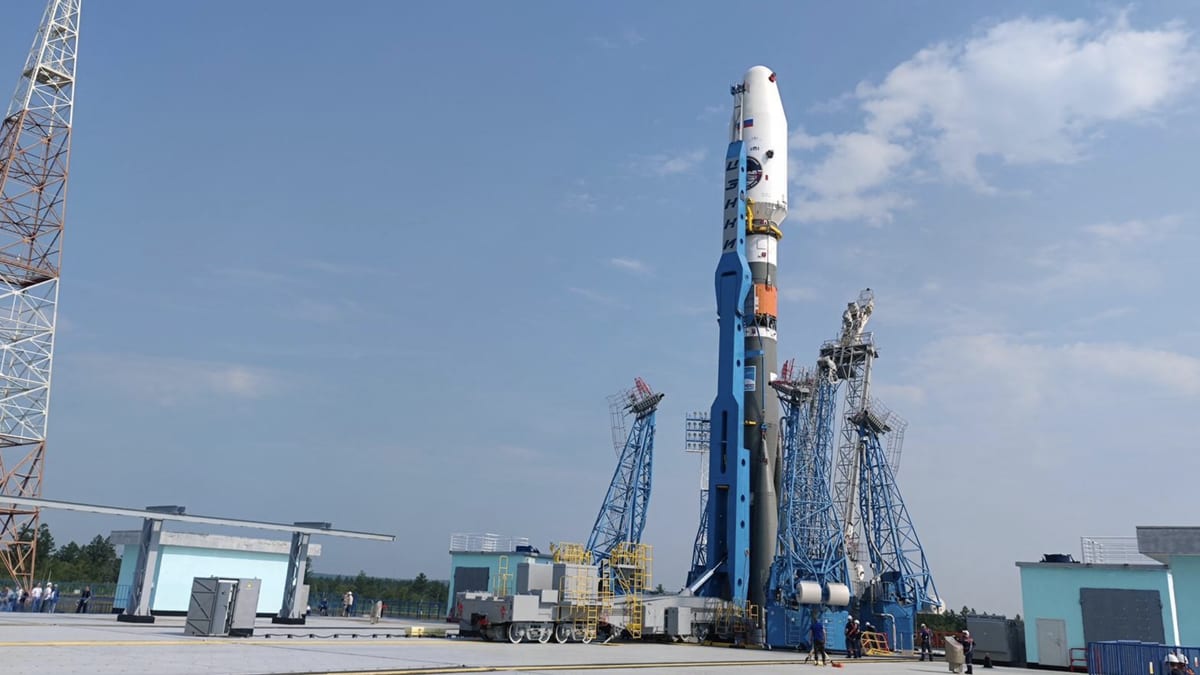
Russia Pushes Back Luna Missions Into The Next Decade
Recent statements from Russian scientific and space institutions indicate that the country’s next robotic missions to the Moon have been pushed further into the future, deepening a long pattern of postponements. The Luna-26 orbiter, originally discussed for the mid-2020s, is now widely reported as unlikely to launch before 2028, with the Luna-27 lander and subsequent sample-return concepts sliding toward the early and mid-2030s.
Publicly available mission timelines compiled by international research organizations and specialist media show a gradual retreat from earlier targets announced by Russia’s space agency after the Soviet-era Luna program was revived on paper more than a decade ago. Luna-26 and Luna-27 were initially billed as the cornerstones of a new polar exploration campaign, designed to scout resources and test landing technologies near the lunar south pole.
The failed Luna-25 lander, which crashed during a descent attempt in August 2023 after years of delay, continues to cast a shadow over those ambitions. Post-incident assessments summarized in Russian and international coverage describe technical shortcomings, cost pressures and sanctions-related technology constraints, factors that have contributed to further program slippage.
Analysts following Russia’s civil space sector note that the country remains formally committed to continued lunar exploration, but the widening gaps between planning documents and revised schedules suggest a prolonged period of retrenchment. For now, the next generation of Russian robotic craft is expected to remain on the ground while other nations press ahead with their own lunar timelines.
Artemis II Marks A New Phase In U.S. Lunar Exploration
While Russia’s plans drift, the United States has entered a new operational phase with NASA’s Artemis II mission, the first crewed voyage beyond low Earth orbit since the Apollo program. The mission, launched on April 1, 2026, is sending four astronauts on a roughly ten-day loop around the Moon, testing the Space Launch System rocket and Orion spacecraft in deep space for the first time with a human crew.
Mission updates released by NASA and widely covered by outlets such as the Associated Press and Space.com describe Artemis II as a critical shakedown flight. The astronauts are conducting systems checks, communications demonstrations and scientific observations as Orion arcs through cislunar space and performs a close lunar flyby.
The flight is a culmination of years of development and schedule revisions. Earlier target dates in 2024 and 2025 were pushed back as engineers resolved issues with Orion’s life-support hardware and addressed unexpected heat-shield erosion seen on the uncrewed Artemis I return in 2022. By early 2026, the agency and its partners had cleared enough technical hurdles to move ahead with the long-awaited crewed test.
For NASA, a successful Artemis II is intended to validate the core transportation architecture that will underpin all subsequent human missions to the Moon and, eventually, to Mars. The mission’s progress is therefore being closely watched by policymakers, industry and international partners that have tied their own lunar strategies to the program’s trajectory.
Shifting U.S. Roadmap For Lunar Landings
Even as Artemis II proceeds in flight, the United States has been revising the rest of its lunar campaign. NASA announcements and policy briefings in early 2026 outline a reshaped sequence in which the original Artemis III landing concept has been reconfigured, with an interim mission in 2027 focused on testing systems in Earth orbit rather than touching down on the lunar surface.
According to updated program descriptions and independent analysis from science and policy publications, the first crewed landing of the modern era is now expected to occur no earlier than 2028, under a mission designation that follows the restructured Artemis III. The changes reflect both technical realities, including development timelines for commercial human landing systems and refueling infrastructure, and budgetary constraints that have affected hardware deliveries.
Congressional research reports and inspector general reviews released over the past year have repeatedly flagged the aggressive nature of earlier NASA schedules, particularly around the integration of SpaceX’s Starship-derived lander. These assessments pointed to likely delays in demonstrating uncrewed landings and complex orbital refueling campaigns, leading observers to anticipate that formal timelines would eventually shift.
The new roadmap formalizes that expectation, placing greater emphasis on incremental testing, sustained lunar-orbit operations and the construction of supporting infrastructure such as the Gateway outpost. For the United States, the overarching objective remains a long-term human presence in lunar space, even if individual milestones arrive later than first advertised.
Diverging Capabilities And Strategic Perceptions
The contrast between Russia’s extended delays and the current U.S. flight around the Moon has sharpened perceptions of a widening gap in national space capabilities. While both programs have grappled with cost overruns and technical challenges, NASA’s ability to field an active crewed mission places the United States at the center of a growing network of lunar partnerships, from Europe and Japan to Canada and emerging space players.
Publicly available data on launch cadence and spacecraft development indicate that Russia’s civil space program is operating with fewer resources and greater supply chain hurdles than during its Soviet peak. Western sanctions, reduced commercial launch revenue and competition from private launch providers have all weighed on its ability to execute complex deep-space missions on tight timelines.
By contrast, the Artemis program is anchored by a mix of federal funding and commercial contracts that, despite periodic political debates, have so far sustained a broad industrial base. The presence of a crewed Orion spacecraft now orbiting the Moon provides a visible demonstration of that investment at a moment when other nations, including China and India, are also accelerating their own lunar agendas.
For travel and exploration enthusiasts, this divergence matters because it will shape which destinations, technologies and partnerships define the next generation of deep-space journeys. The emerging landscape suggests that international visitors to future lunar gateways, bases or tourism concepts are more likely to pass through U.S.-led or jointly operated infrastructure than through Russian-led stations, at least in the near to medium term.
A New Competitive Landscape For Future Lunar Travel
Beyond the immediate headlines, the evolving timelines point to a more complex and competitive lunar environment later in the 2030s. If Russia’s revised Luna missions eventually proceed, they could still play a role in mapping resources, testing technologies in polar regions and contributing data for future multinational ventures, including potential crewed bases or commercial tourism ventures near the south pole.
In the shorter term, however, momentum is gathering around Artemis and a cluster of related initiatives. Commercial lunar landers funded through U.S. programs, robotic scouts from India, Japan and other nations, and plans for new orbital platforms all point toward a diversified ecosystem in which multiple actors offer transportation, habitation and science services around the Moon.
Observers of this emerging market suggest that delays and realignments are likely to remain a feature rather than a bug of lunar planning, given the unprecedented technical and financial demands involved. Still, with Artemis II now flying and further U.S. missions in advanced development, the center of gravity in human lunar exploration appears firmly anchored on the American side, even as other space powers, including Russia, work to regain their footing.