

More news on this day
A well-known Russian aviation blogger has been killed along with his passenger after their ultralight aircraft was reportedly struck by an air defense missile in the Moscow region, an incident that is raising fresh questions about the risks of flying near sensitive military sites during Russia’s ongoing war in Ukraine.
Get the latest news straight to your inbox!
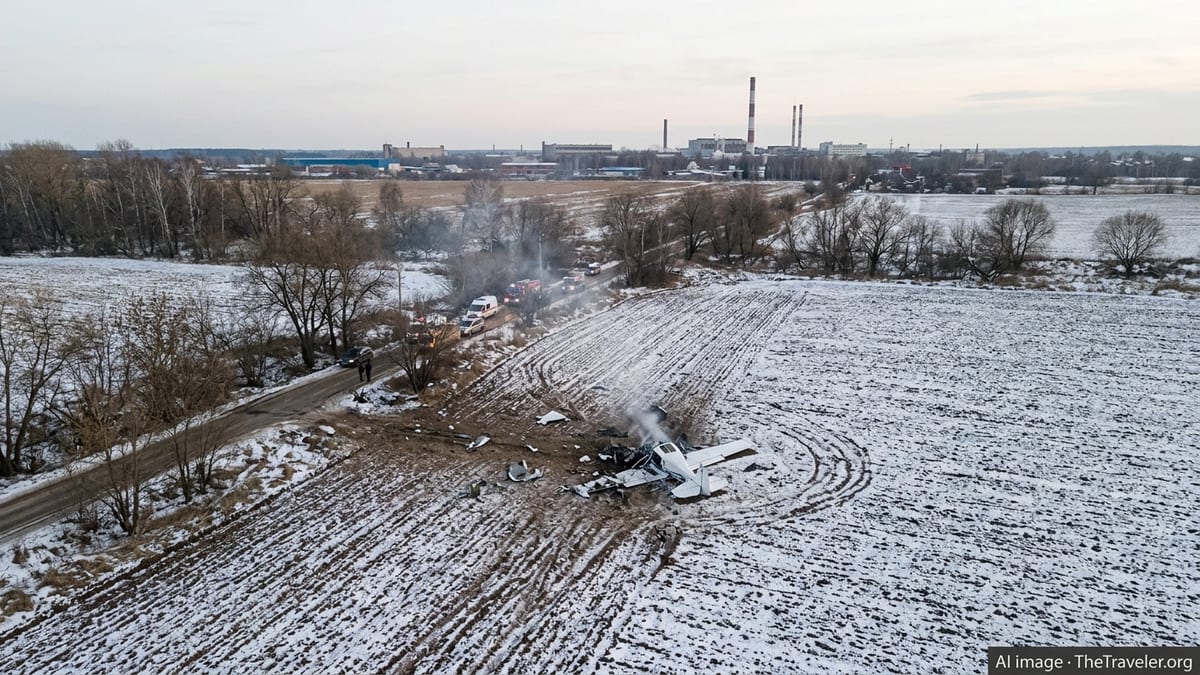
Ultralight flight ends in deadly misidentification
Reports from independent Russian outlets and aviation-focused channels indicate that blogger Pavel Koshkin died when his Czech-built Alto NG ultralight crashed near Kolomna, southeast of Moscow. A second person on board, identified only as Vadim, was also killed in the incident.
Publicly available information describes how the small aircraft was on a recreational flight when it entered an area of heightened military alert. The crash site lies in a region that hosts defense-related industrial facilities, including a plant associated with the production of Iskander ballistic missiles, which have been widely used in Russia’s campaign in Ukraine.
Initial accounts circulating in Russian and international media state that air defense forces appear to have misidentified the ultralight as a possible Ukrainian drone during a period of intensified drone activity around the capital. The aircraft reportedly broke apart in midair before impacting the ground, consistent with a missile strike rather than a mechanical failure or controlled emergency landing.
Analysts who examined photographs and video of the wreckage cited damage patterns suggesting the use of a short-range surface-to-air system, with several reports pointing specifically to the Tor air defense platform, which is designed to target low-flying aircraft and drones.
Drone war spills into civilian airspace
The deadly incident unfolded against a backdrop of frequent drone alerts and reported strikes deep inside Russian territory. In recent months, Moscow and surrounding regions have seen repeated attempts by unmanned aircraft to hit infrastructure, prompting a more aggressive posture by air defense units guarding key facilities.
According to open-source reporting on the night of the crash, Russian officials claimed dozens of drones had been intercepted in the wider Moscow area. In such conditions, radar operators and commanders may have been primed to interpret any small, slow-moving radar return as a potential threat, particularly near critical sites.
Observers note that this environment significantly raises the risk for legitimate civil aviation activities, especially small general-aviation aircraft that resemble drone profiles in size and speed. Even with transponders operating and flight plans filed, aircraft can be vulnerable if coordination between civil aviation authorities and military units is incomplete or overwhelmed by the tempo of air defense activity.
The case of the ultralight near Kolomna underscores how the evolving air defense posture over Russia, shaped by the conflict in Ukraine, is creating an unpredictable patchwork of restrictions and potential hazards for private pilots who until recently viewed such flights as a relatively routine pastime.
Questions over procedures, identification and warnings
The reported presence of a functioning transponder and a filed flight plan has quickly become a focal point of discussion in Russian-language aviation communities. Commentators argue that if those details are confirmed, it would indicate that civil and military systems did not effectively share or act on the information that the aircraft was a registered, non-military flight.
Specialists in air defense and civil aviation note that robust identification procedures typically rely on multiple layers of verification, including radar tracks, transponder codes, radio communication, and established no-fly zones. When those layers fail to align, the likelihood of misidentification increases, particularly in tense security environments where decision times are compressed.
Publicly accessible commentary from aviation analysts suggests that operators of short-range systems like Tor often work with limited situational awareness beyond their immediate sector. If communication links to broader command-and-control networks are imperfect, crews may rely heavily on their own radar picture and standing orders to engage suspicious targets approaching sensitive installations.
The circumstances reported around the Kolomna crash highlight unresolved questions about what warnings, if any, were communicated to the ultralight’s pilot, and whether civil aviation channels were informed about temporary danger areas or active air defense operations along the aircraft’s intended route.
Impact on Russia’s general aviation and travel confidence
The death of a prominent aviation blogger in such conditions has sent a chill through Russia’s small but active general aviation community. Enthusiast pilots, flight clubs, and training operators already face tighter regulations, restricted airspace, and growing uncertainty as military priorities increasingly shape the country’s skies.
For travelers and aviation hobbyists, the incident reinforces a perception that flying light aircraft in parts of Russia has become significantly riskier since the full-scale invasion of Ukraine. While commercial airline operations to and from Moscow-area airports remain strictly controlled and heavily monitored, the buffer that once separated private flying from front-line military concerns appears to be eroding.
Travel industry observers caution that, beyond the immediate tragedy, repeated episodes involving air defenses and civilian or civilian-style aircraft could undermine broader confidence in Russian airspace. Internationally, Russia has already faced scrutiny for earlier cases in which military or proxy forces shot down passenger jets or damaged civilian aircraft during armed conflicts.
In this latest case, the loss of a well-known figure in the aviation blogging community adds a personal dimension that resonates with many aspiring pilots and aviation-focused travelers, who often rely on such content creators for insights into destinations, regulations, and the pleasures and challenges of flying light aircraft.
Heightened risks near dual-use and strategic facilities
The location of the crash, in proximity to a facility linked to missile production, reflects a wider trend in which areas once regarded as ordinary industrial zones have taken on heightened strategic importance. As Ukraine’s forces target logistics hubs, depots, and weapons factories far from the front lines, Russian defenses are increasingly concentrated around these so-called dual-use sites.
Travel planners and risk analysts emphasize that this shift complicates traditional assessments of where it is safe to fly or travel. Regions that previously attracted little attention from security services can, almost overnight, become heavily militarized due to changes in the wider conflict.
For aviation-minded visitors and local pilots alike, the Kolomna incident serves as a stark reminder that accurate, up-to-date information on temporary flight restrictions, active military zones, and evolving security priorities is now essential. Without clear, widely communicated boundaries between civil and military airspace, the margin for error narrows dramatically.
As investigations proceed and more details emerge through open reporting, the crash is likely to fuel debate within Russia and abroad about how to balance the demands of air defense with the safety of civil aviation, particularly in regions far from any formally declared front line yet firmly embedded in the broader geography of war.