

More news on this day
Ryanair is set to deepen its footprint across Europe and North Africa in 2026, with Albania joining Morocco, Slovakia, Poland, Malta, Italy and Croatia among the key growth markets targeted through new routes, extra aircraft and expanded seasonal schedules.
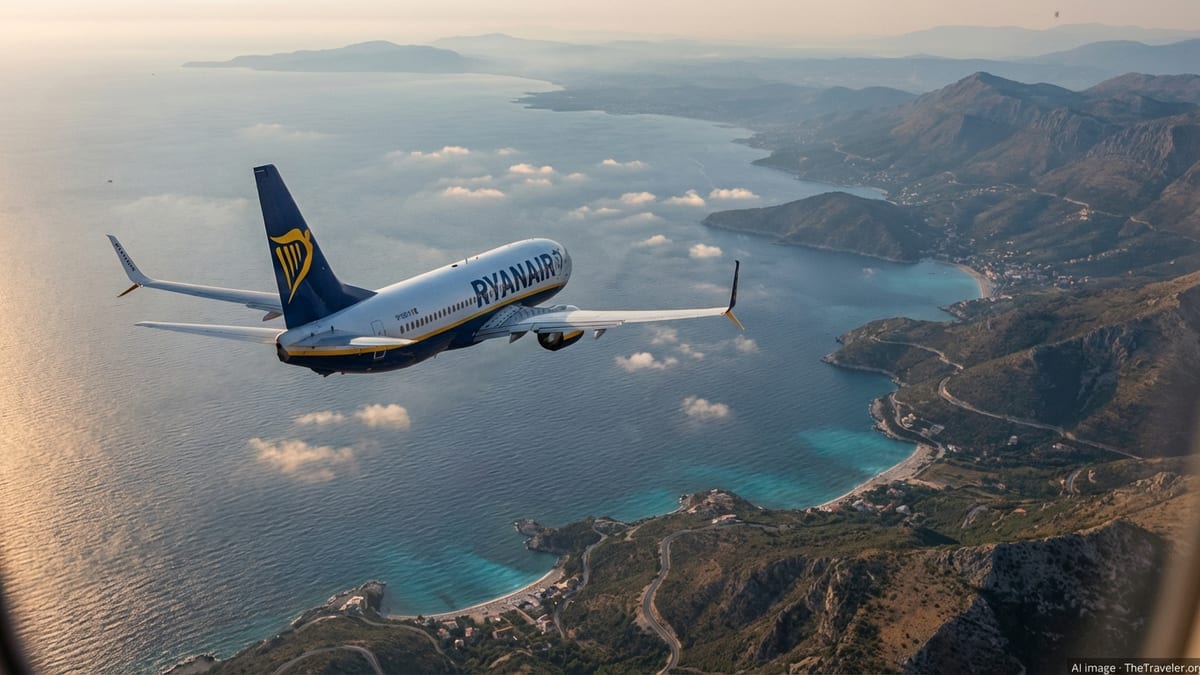
Albania Steps Into the Spotlight With New Tirana Base
Albania is at the heart of Ryanair’s 2026 expansion, with the carrier preparing to open a new three-aircraft base at Tirana Airport from April 2026. The move follows rapid traffic growth since Ryanair entered the Albanian market in late 2023 and reflects how quickly the country has risen from niche destination to mainstream Mediterranean rival. The airline plans around 450 weekly flights across 33 routes from the Albanian capital, positioning Tirana as one of its fastest-growing city operations.
The base comes with a planned 300 million dollar investment, including three Boeing 737-800 aircraft and more than 3,000 direct and indirect jobs tied to its operation. Ryanair has signalled that, subject to maintaining low airport charges and zero aviation taxes, it could eventually grow the Tirana base to six aircraft and over five million passengers annually. That long-range ambition underlines the strategic importance the airline now places on Albania as a gateway to the Adriatic and its increasingly popular Riviera.
Among the 10 new routes feeding the Tirana base are services to major Western European markets such as Birmingham and Dublin, as well as a “network within the network” of new links into Italy and Malta. Routes to Milan, Naples, Pescara, Trieste, Turin and Verona are designed to tap into strong visiting friends and relatives traffic, while also making it easier for Italian holidaymakers to reach Albanian coastal resorts. The new Tirana to Malta service will additionally tie Albania into Ryanair’s wider central Mediterranean network.
Morocco Gains New Capacity as North Africa Demand Surges
Beyond Europe, Ryanair’s 2026 plans highlight Morocco as a central pillar of its North African strategy. The carrier has already identified Rabat as a growth focus for 2026, planning a two-aircraft base that will expand the Moroccan capital’s network to around 20 routes. These services will connect Rabat more intensively with European cities and complement existing Moroccan operations from hubs such as Marrakech, Agadir and Fez.
The emphasis on Morocco reflects strong leisure demand for winter sun from Europe as well as the country’s growing appeal for city breaks and cultural tourism. By adding aircraft and routes at Rabat in parallel with broader capacity increases across the country, Ryanair will be able to offer more point-to-point options to coastal and inland destinations. That should bring shorter journey times and lower fares for travellers who previously relied on indirect connections via larger hubs.
For Ryanair, Morocco’s combination of tourism growth, relatively low operating costs and expanding airport infrastructure makes it an attractive counterpart to Albania on the network map. As the airline adjusts schedules for 2026, additional services from European cities to Moroccan destinations are expected to feature more prominently in both winter sun and shoulder season programming.
Slovakia and Poland Strengthen Ryanair’s Central European Network
In Central Europe, Slovakia and Poland are set to benefit from Ryanair’s incremental growth strategy, which prioritises secondary airports and regional cities. In Slovakia, the airline has confirmed a record summer schedule for Bratislava that includes a third based aircraft and capacity growth of around 25 percent. For the 2025 and 2026 seasons, Bratislava will see a network of roughly two dozen routes, including newer links to Bari, Gdansk, Milan Malpensa, Skiathos and Zadar.
The additional aircraft and routes at Bratislava are closely tied to Slovak government reforms that cut air traffic control and airport access costs. Those policy moves have made it easier for low-cost carriers to grow capacity, and Ryanair has quickly translated that into more flights and new destinations. As the 2026 season approaches, Bratislava is expected to act as a key Central European node feeding traffic towards Croatia, Italy and Mediterranean holiday markets.
In Poland, Ryanair continues to build on an already substantial presence. Its 2025 schedule offers some 20 million seats across about 300 routes, and incremental changes planned for 2026 will consolidate Poland’s role as a central pillar of the airline’s Eastern European operations. Services from regional airports such as Katowice, Gdansk, Krakow and Wroclaw will continue to link Polish travellers with Adriatic destinations in Croatia and Italy, as well as North African routes in competition with other low-cost carriers.
Malta and Italy See Fresh Aircraft and Routes Ahead of Summer 2026
Further south, Ryanair is doubling down on Malta and Italy ahead of summer 2026, positioning both markets as core beneficiaries of its fleet deployment. In Malta, the airline is already the largest carrier and has committed to adding an eighth based aircraft for summer 2025, alongside new routes to Glasgow and Rzeszow and increased frequencies to popular European cities. That growth will carry through into 2026, building on a record schedule that targets close to five million passengers annually.
Malta’s importance within Ryanair’s network is reinforced by investments beyond pure capacity, including a maintenance facility and an expanded local office for operational and back-office staff. With Albania and Croatia drawing more attention from beach-seeking travellers, Malta’s role is increasingly that of a year-round Mediterranean hub, connecting northern European cities with sunshine destinations and serving as a stepping stone for multi-country itineraries.
In Italy, 2026 is shaping up to be another year of record activity. Ryanair recently confirmed plans for a third based aircraft at Turin Airport for summer 2026, bringing the local network to 32 routes and over 380 weekly flights. Two of those routes will be new, including a direct link from Turin to Tirana that integrates northern Italy more closely with the Albanian base. Additional flights on existing routes from Turin to destinations such as Malta, Marrakech and various Italian cities underline how the carrier is using its Italian bases to radiate capacity across the Mediterranean.
Combined with investments at airports such as Milan, Naples and regional gateways in Sicily, Ryanair’s 2026 Italian programme is designed to knit together domestic, Adriatic and North African destinations. Italy thus serves both as a source market for outbound leisure travellers and a transit node feeding traffic into emerging hotspots including Albania and Morocco.
Croatia Remains a Strategic Adriatic Destination
Croatia, one of the earliest Adriatic success stories for low-cost carriers, continues to feature prominently in Ryanair’s 2026 network planning. While Albania has captured recent headlines as an up-and-coming “Maldives of Europe” alternative, Croatia’s established resorts and coastal towns remain mainstays of the airline’s summer programme. Routes to cities such as Zadar, Pula and Dubrovnik are already part of Ryanair’s network from several Central and Eastern European airports, including Katowice in Poland and Bratislava in Slovakia.
These routes are expected to see continued strong demand as travellers seek reliable, short-haul beach holidays with well-developed tourism infrastructure. For Ryanair, Croatia offers predictable seasonal flows and relatively mature markets that complement the more rapidly developing Albanian coast. By maintaining a robust presence in Croatia while adding capacity to newer Adriatic destinations, the airline spreads risk and offers customers a broader range of price points and experiences.
The interplay between Croatian and Albanian routes is likely to intensify in 2026, particularly for travellers from Central Europe who can choose between long-established Croatian seaside towns and newer Albanian Riviera spots. Ryanair’s scheduling decisions, including frequencies and timing of flights, will play a role in shaping how that competition and coexistence unfolds during the peak summer months.
New Routes Reshape Leisure Travel Patterns Across the Region
The combined effect of these expansions is to redraw the leisure travel map across Europe’s southern and eastern flanks. With Albania, Morocco, Slovakia, Poland, Malta, Italy and Croatia all seeing new or reinforced Ryanair routes in 2026, passengers can expect more direct options that bypass traditional hubs. That shift is particularly significant for regional airports, which gain new international links without relying on connections through major capitals.
For holidaymakers, the practical outcome is greater flexibility. Travellers from the United Kingdom, Ireland, Germany, Scandinavia and Central Europe will be able to choose between classic Mediterranean favourites and emerging coastal destinations while keeping journey times and fares low. Multi-stop itineraries that combine, for example, an Italian city break with a week on the Albanian coast or a Moroccan cultural tour become easier to plan when more point-to-point routes are available.
The new and expanded routes also have implications for seasonality. By adding capacity not just in July and August but across shoulder months such as April, May, September and October, Ryanair is encouraging travellers to consider off-peak trips. That can help spread visitor numbers more evenly through the year, offering local tourism economies a more stable revenue base and reducing peak-season pressures on infrastructure.
Economic and Tourism Impact for Destination Countries
The economic stakes behind the 2026 route changes are considerable. In Albania, Ryanair’s Tirana base is projected to support thousands of jobs in aviation, tourism and related services, as airports, hotels and local businesses respond to higher visitor volumes. Similar effects are anticipated in Morocco, where new capacity at Rabat will disperse tourism flows beyond better-known destinations and stimulate investment in hospitality and transport services.
In Malta and Italy, additional aircraft and increased frequencies are expected to strengthen year-round tourism. For Malta in particular, which has leaned heavily on air connectivity to support its island economy, Ryanair’s larger presence reinforces commitments to employment, training and maintenance capabilities. Italy, with its dense network of regional airports, gains not only more inbound tourist traffic but also enhanced domestic links that can help balance demand between popular cities and lesser-known areas.
Central European markets also stand to benefit. Slovakia’s decision to reduce aviation-related charges has already prompted Ryanair to expand its Bratislava operation, and continued traffic growth in 2026 is likely to support more than a thousand local jobs. In Poland, the scale of the airline’s operation feeds into airport revenue, retail, ground handling and regional tourism, helping smaller cities capture some of the economic gains traditionally concentrated in capital hubs.
Competitive Pressures and What Travellers Should Watch
The 2026 route developments take place in an increasingly competitive landscape, with rival low-cost carriers simultaneously boosting their own schedules in Central and Eastern Europe. In Poland, for example, another major budget airline has announced dozens of new routes for winter 2025 and summer 2026, many of them overlapping with Ryanair on links to Italy, Croatia and other leisure destinations. This competition is likely to keep fares keen, at least in the early stages of route launches.
Travellers considering Albania, Morocco, Slovakia, Poland, Malta, Italy or Croatia in 2026 will want to track how schedules evolve over the coming months. Early promotional fares, particularly around the launch of new bases or aircraft deployments, can offer significant savings, while added frequencies often create more convenient departure times. As airports and tourism bodies promote their enhanced connectivity, the countries linked by Ryanair’s new and expanded routes look set to feature prominently on Europe’s travel agenda for the year ahead.