

More news on this day
Ryanair is set to expand its presence at Pisa International Airport in summer 2026 with two new seasonal routes to Bratislava and Rabat, strengthening the Tuscan gateway’s role as a low cost hub for both European city breaks and North African escapes.
Get the latest news straight to your inbox!
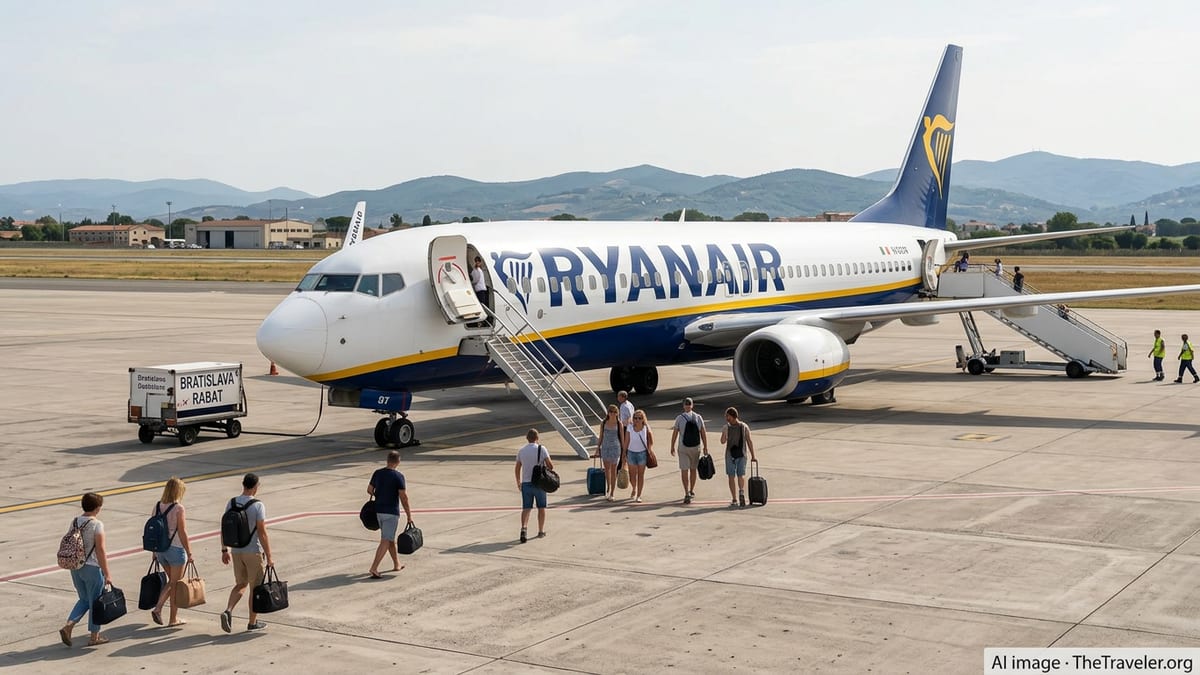
New City Pairings for Tuscany, Central Europe and North Africa
The new Pisa to Bratislava and Pisa to Rabat services, scheduled to operate during the peak summer 2026 season, will add fresh city pairings to Ryanair’s network and broaden travel options for passengers across three regions. While detailed timetables and frequencies are still being finalized, the airline is positioning the routes to capture high leisure demand during the main holiday months.
The Pisa to Bratislava link will connect Tuscany with the Slovak capital, offering Italian travelers easy access to the Danube city’s historic center, café culture and rapidly growing reputation as an affordable city break destination. For Slovak and regional travelers, the route opens a direct gateway to the beaches of the Tuscan coast and the hill towns of central Italy without the need to connect via larger hubs.
The Pisa to Rabat service will deepen Ryanair’s presence in the Morocco market while giving Tuscan passengers a new alternative to more established Moroccan destinations. Rabat, with its Atlantic coastline, historic medina and administrative role as the country’s capital, is expected to appeal to travelers looking for a mix of culture, gastronomy and milder summer temperatures compared with inland cities.
By linking Pisa directly with both Bratislava and Rabat, Ryanair is targeting a blend of inbound and outbound leisure traffic, as well as visiting friends and relatives, at a time when demand for short and medium haul city trips remains robust across Europe.
Pisa Airport Consolidates Its Role as a Low Cost Gateway
Pisa International Airport has emerged over the past decade as one of central Italy’s key low cost gateways, drawing tourists who pair Florence, Lucca and the Tuscan countryside with coastal stays along the Tyrrhenian Sea. Ryanair’s decision to invest further capacity in Pisa for summer 2026 reflects the airport’s importance within the carrier’s Italian network and the continuing appeal of Tuscany as a destination.
The introduction of the Bratislava and Rabat routes fits into a broader pattern of incremental growth at Pisa, where low fare carriers have used flexible seasonal scheduling to match peaks in leisure demand. Additional summer routes allow the airport to smooth its traffic mix and diversify beyond traditional northern European markets that have long dominated inbound tourism to the region.
Airport officials are expected to highlight the connectivity boost for local businesses, hoteliers and tourism operators, who increasingly depend on direct international services to attract independent travelers. The new flights are also likely to support regional mobility, giving residents of western Tuscany more choice for both short breaks and longer holidays without traveling to larger airports further afield.
For Ryanair, strengthening the Pisa program is consistent with its strategy of building up secondary European airports where quick turnarounds and competitive costs support high aircraft utilization. Additional city pairs out of Pisa also provide more options for passengers to mix and match itineraries around Italy and neighboring countries during the busy summer period.
Bratislava Gains Another Seasonal Link to Southern Europe
The Bratislava service from Pisa will join a growing roster of seasonal southern European links from the Slovak capital, where demand for sun destinations has been driving airline planning in recent years. With many Slovak travelers already familiar with the Italian coast through routes to cities such as Rome or Milan, the direct Pisa option adds convenient access to a different slice of Italy’s coastline and countryside.
Travel industry observers in Central Europe expect the route to attract a combination of families, young travelers and city break visitors drawn by Tuscany’s mix of culture, beaches and food. The schedule is likely to be tailored around weekend-friendly departure times, making it easier for Bratislava based passengers to plan short breaks without taking extended time off work.
The link may also stimulate inbound tourism to Slovakia from Italy, particularly among travelers who are increasingly seeking out lesser known European capitals. Bratislava’s compact old town, riverside setting and proximity to wine regions and hiking areas have become key talking points for tourism boards aiming to differentiate the city from larger neighbors.
As airlines and airports across the region compete for capacity allocations for summer 2026, securing a direct link from Pisa reinforces Bratislava’s position on the route maps of major low fare carriers and underscores the airport’s ambition to grow as a regional gateway.
Rabat Route Underscores Rising Demand for Morocco
The decision to pair Pisa with Rabat underlines the continued rise of Morocco as a favored destination for European travelers seeking a mix of culture, coastal escapes and relatively short flight times. While cities such as Marrakech and Agadir have long held strong brand recognition, Rabat has been gaining ground as an alternative that combines historic districts with a more relaxed pace and government quarter landmarks.
From a network planning perspective, adding a Rabat route from Pisa allows Ryanair to distribute holiday traffic across several Moroccan cities, helping alleviate pressure on the busiest gateways and offering more tailored options based on traveler preferences. Passengers departing from Tuscany will be able to choose between multiple Moroccan experiences, from inland cultural trips to Atlantic seaside stays.
The connection is also expected to support visiting friends and relatives traffic between Italy and Morocco, a market segment that has shown resilience and growth even during periods of broader economic uncertainty. Competitive fares and direct flights can be particularly important for these travelers, who often plan multiple trips a year for family reasons.
Tourism stakeholders in Rabat are likely to welcome the new link as part of a broader effort to distribute international arrivals more evenly across the country, reduce seasonality and encourage travelers to explore beyond the best known hotspots.
What Summer 2026 Travelers Can Expect
Although full schedules and precise launch dates will be published closer to the start of the summer 2026 season, passengers can expect both new routes to follow Ryanair’s standard model of point to point service with a focus on low base fares and optional paid extras. The airline typically opens sales several months in advance, allowing travelers to secure lower prices for early bookings.
In practical terms, the Pisa to Bratislava and Pisa to Rabat flights are likely to operate several times per week at peak, with frequencies adjusted according to booking patterns as the season progresses. Travelers planning extended holidays in Tuscany or Slovakia may opt to combine the new services with existing routes to other cities, creating open jaw itineraries that start and finish in different destinations.
For local tourism operators in all three cities, the announcement offers an early signal to prepare packages and marketing campaigns that highlight the new direct links. Hotels, tour providers and regional tourism boards often tie promotions to newly opened routes, using them as a hook to reach fresh audiences in overseas markets.
As airlines across Europe finalize their summer 2026 schedules, Ryanair’s additional capacity at Pisa with new connections to Bratislava and Rabat underscores the continued importance of flexible, seasonal point to point networks in shaping how and where travelers choose to spend their holidays.