

More news on this day
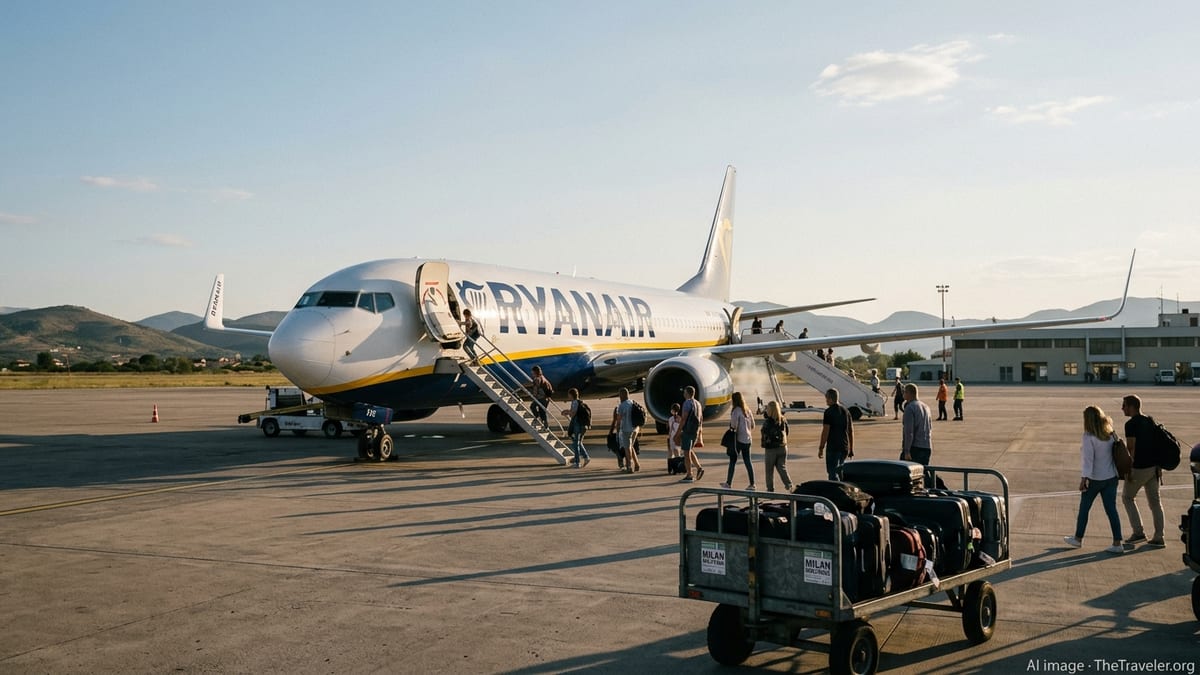
Ryanair is expanding its European network with a new direct service between Tirana and Milan Malpensa, positioning Albania’s capital alongside established city pairs such as Copenhagen, Athens, Bilbao, London, Paris and Kraków on the carrier’s Milan route map, and deploying its Boeing 737-800 and 737-8 aircraft on the link.
Get the latest news straight to your inbox!
New Link Strengthens Albania–Italy Air Connectivity
The upcoming Tirana–Milan Malpensa route adds another high-demand Italian connection for passengers using Tirana International Airport Nënë Tereza. Publicly available schedule information indicates that Ryanair plans to begin operating between the Albanian and Italian cities from late March 2026, using its core Boeing 737 family to serve the busy leisure and visiting-friends-and-relatives market between the two countries.
The link to Milan Malpensa is set to complement existing services by other carriers and broaden the mix of low-cost options available on one of Albania’s most important international corridors. Italy remains among the largest outbound and inbound markets for Albania, and additional capacity on a major Northern Italy hub is expected to appeal to both Albanian diaspora communities and Italian travelers looking for short-break trips to Tirana.
For Milan Malpensa, the new route reinforces the airport’s role as a growing base for budget airlines targeting secondary and emerging European destinations. Recent network updates have highlighted Malpensa’s expanding roster of routes into Central and Eastern Europe, with Tirana now joining that list as part of a wider shift toward high-growth markets in the Balkans.
Tirana Joins a Network of Major European Cities
With the launch of the Tirana–Milan Malpensa service, Albania’s capital will stand alongside destinations such as Copenhagen, Athens, Bilbao, London, Paris and Kraków on Ryanair’s Malpensa network. According to timetable data and recent network summaries for the Italian hub, these cities are already established points in the airline’s Milan operations, giving the new Tirana service an immediate context within a broader European web of city links.
This positioning is significant for Tirana, which has seen rapid growth in international connectivity over the past few years. Joining a roster that includes major Northern European, Mediterranean and Central European gateways aligns the Albanian capital more closely with mainstream city-break and leisure circuits used by travelers across the continent.
For passengers in cities like Copenhagen, Athens or Kraków, the strengthening of Malpensa as a low-cost hub can make Tirana more visible as a one-stop option via Milan. While Ryanair is not structured as a traditional connecting carrier, many travelers informally build self-connections through its large bases, and the addition of Tirana is likely to feed into that pattern.
Boeing 737-800 and 737-8 at the Core of the Operation
Fleet information released by the airline and industry databases shows that Ryanair continues to rely on a single-type narrowbody strategy based on the Boeing 737 family. The carrier operates large numbers of Boeing 737-800 aircraft and is progressively introducing the newer Boeing 737-8 variant, often referred to in the market as the 737-8-200 within the Ryanair Group.
Using both the 737-800 and 737-8 on the Tirana–Milan Malpensa route fits the airline’s wider deployment strategy. The 737-800, with around 189 seats, has long been the workhorse of its European network. The 737-8, configured with a higher-density cabin, offers additional seats and improved fuel efficiency on short to medium-haul sectors such as the flight between Albania and Northern Italy.
Industry reports on Ryanair’s fleet modernization note that the newer 737-8 aircraft are being rotated across bases and high-volume routes to maximize cost and emissions efficiencies. Applying this mix on the Tirana–Malpensa service allows the airline to adjust capacity to match seasonal demand, from quieter midweek periods to peak summer and holiday travel dates.
What the Route Means for Travelers and Regional Tourism
The direct Tirana–Milan Malpensa service is expected to create new travel opportunities for both leisure and business passengers. On the Albanian side, easier access to Milan offers a convenient gateway to Northern Italy’s economic heartland, fashion and design industries, and extensive rail links to cities such as Turin, Verona and Bologna. For Italian travelers, Tirana’s growing reputation as a value-oriented city-break destination, with a mix of Ottoman, communist-era and contemporary architecture, becomes more accessible.
Tourism bodies and local industry observers in both markets have been emphasizing the role of affordable air connections in sustaining visitor growth. Additional low-fare seats typically stimulate demand, and the presence of Ryanair on the Tirana–Malpensa corridor is likely to place further competitive pressure on fares while increasing schedule choices for passengers.
Regional tourism dynamics may also benefit from the way Malpensa links into a wider European network. Travelers from cities such as London, Paris or Copenhagen who already fly to Malpensa on Ryanair could find it easier to add a stop in Tirana to multi-city itineraries. Even without formal through-ticketing, the combination of frequent flights and relatively short sector lengths can encourage travelers to build flexible, low-cost routes through Northern Italy and the Western Balkans.
Growing Competition and Capacity in the Albanian Market
The new Ryanair connection to Milan Malpensa arrives at a time of heightened competition in Albania’s aviation market. Published coverage over the last two years has pointed to strong growth from low-cost carriers at Tirana, with multiple airlines adding routes and basing aircraft at the airport as demand for outbound and inbound travel has risen.
Increased capacity has coincided with notable structural changes in the country’s airline landscape, including the suspension of Air Albania’s operations in late 2025. As a result, international low-cost groups have taken a more prominent role in providing connectivity, particularly on routes to Italy, Germany and the United Kingdom.
Within this environment, Ryanair’s decision to add a Tirana–Milan Malpensa route using its standardized Boeing 737-800 and 737-8 fleet underlines the strategic importance of Albania in the broader European low-cost market. The move is likely to support continued passenger growth at Tirana International Airport and further integrate the Albanian capital into established travel flows across Western, Central and Southern Europe.