

More news on this day
Travelers flying through Portugal faced mounting disruption on March 12 as Ryanair, Lufthansa and Qatar Airways grounded around 20 flights and triggered waves of delays on major routes to and from Lisbon and Porto, straining the country’s crucial air links at the start of the spring tourism build-up.
Get the latest news straight to your inbox!
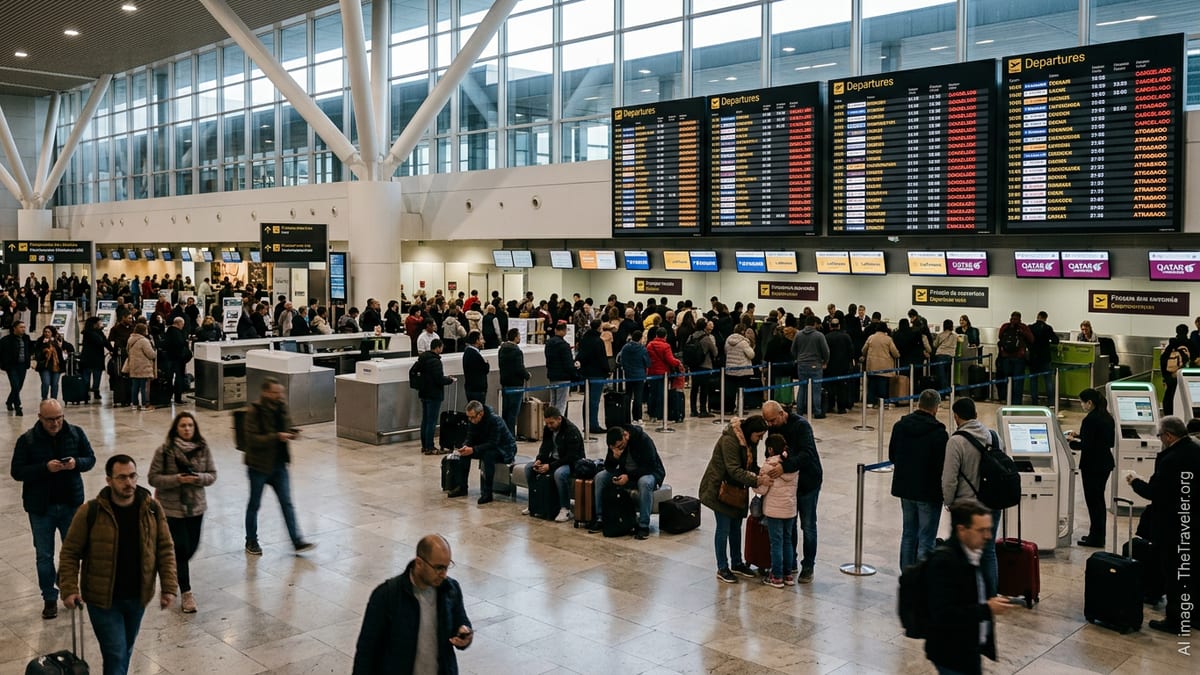
Grounded Flights Snarl Lisbon and Porto Hubs
According to airport and airline operational data reviewed on Thursday, roughly 20 flights operated by Ryanair, Lufthansa and Qatar Airways serving Lisbon and Porto were cancelled or failed to depart as scheduled, while many more ran late. The knock-on impact rippled across domestic connections between Lisbon and Porto as well as key European and long haul routes, leaving passengers queueing at service desks and crowding departure halls as schedules were hastily redrawn.
Morning departures were hit first, with several short haul links to major European hubs including Frankfurt and Madrid among those grounded, cutting off onward connections for business and leisure travelers. By early afternoon, delays had built into backlogs of more than an hour on some routes, with aircraft and crews out of position and turnaround times stretched well beyond normal operating windows.
At Lisbon’s Humberto Delgado Airport, one of southern Europe’s busiest gateways, departures boards showed clusters of cancellations and rolling delay estimates next to the logos of Ryanair and Lufthansa. In Porto, passengers on Qatar Airways’ onward services reported extended waiting times for rebooking and uncertainty over when regular operations would resume.
Airport staff described an unusually volatile day of operations, with additional customer service teams drafted onto the terminal floor to handle rebookings, distribute refreshment vouchers and manage long lines at information counters.
Airspace Tensions and Operational Constraints Feed Disruption
The turmoil in Portugal is unfolding against a broader backdrop of operational stress across European aviation. Sector analysts point to a combination of factors affecting Ryanair, Lufthansa and Qatar Airways, including weather-driven congestion, staffing constraints and ongoing rerouting around sensitive airspace in the Middle East that has lengthened flight times on some long haul services.
Qatar Airways, already operating a constrained schedule on several routes due to security-related airspace restrictions, has warned that further adjustments remain possible as the situation evolves. That has added volatility to its long haul operations into Europe, with Lisbon and Porto among the destinations feeling the effects as aircraft and crews are rebalanced across the network.
Lufthansa has also been contending with operational pressures, from tight staffing and ground handling bottlenecks at some European hubs to a heavy schedule of reconnecting passengers whose earlier flights were delayed or rerouted. When late running inbound flights fail to arrive on time in Lisbon or Porto, subsequent departures are forced into rolling delays or cancellations to reset the timetable.
For Ryanair, the latest troubles come on top of a period marked by tensions over airport charges and air traffic control performance across Europe. While the carrier continues to advertise one of the lowest cancellation rates in the region, concentrated clusters of delays and cancellations on busy days can still cause acute pain for passengers on popular Portuguese routes.
Passengers Face Long Queues, Missed Connections and Costly Alternatives
Travelers caught in Thursday’s disruption described hours-long waits at check in and transfer counters in both Lisbon and Porto as they scrambled to secure new itineraries. With multiple flights grounded by three different carriers, available seats on alternative services quickly became scarce, forcing some passengers into overnight stays or costly last minute hotel and rebooking options.
Families returning from winter sun breaks, business travelers with meetings across Europe and long haul passengers connecting between transatlantic or Middle Eastern flights and domestic Portuguese legs were all among those affected. Some reported missing cruise departures and rail connections, while others found themselves rerouted through secondary European hubs, extending journeys by several hours.
Under European air passenger rights rules, travelers on flights departing from EU airports or operated by EU carriers are generally entitled to rerouting or refunds when their flights are cancelled, as well as care such as meals and accommodation during long waits. However, the sheer volume of affected travelers on a single day can slow the delivery of that assistance, with service teams and call centers struggling to keep pace with demand.
Consumer advocates in Portugal urged passengers to retain boarding passes, booking confirmations and receipts for food, transport and accommodation bought during the disruption, warning that formal claims may need to be submitted after the immediate operational crisis passes.
Tourism and Business Travel Confidence Tested
The latest wave of disruption comes at a sensitive moment for Portugal’s tourism and business travel sectors. Lisbon and Porto have both positioned themselves as year round city break and conference destinations, relying on reliable, high frequency air links to major European capitals and global hubs to sustain growth in visitor numbers.
Industry groups warned that repeated clusters of cancellations and delays risk undermining confidence among tour operators, conference organizers and independent travelers who count on seamless connections through the two airports. Airlines’ decisions to ground flights or adjust schedules can reverberate through hotel bookings, car rentals and restaurant trade, particularly when disruption hits close to weekends or key holiday periods.
Hoteliers in central Lisbon reported a mix of unexpected cancellations from guests unable to reach the city and sudden same day bookings from stranded travelers forced to stay overnight. In Porto, local tourism operators said last minute changes to arrival times had already led to the rescheduling of wine tours and river cruises for groups arriving late from connecting flights.
Business associations called for closer coordination between airlines, airports and government agencies to improve contingency planning, arguing that clear, early communication about schedule changes is key to reducing the wider economic fallout when travel chaos strikes.
Airlines Under Pressure to Improve Communication and Resilience
The performance of Ryanair, Lufthansa and Qatar Airways during the turmoil is likely to face close scrutiny from regulators and passenger groups. While airlines often cite air traffic control limitations, security concerns or extreme weather as reasons for cancellations, travelers increasingly expect robust contingency planning and transparent, timely communication when things go wrong.
On Thursday, some passengers complained of conflicting messages between airport displays, mobile apps and text notifications, with flights first shown as delayed, then suddenly cancelled, or new departure times shifting repeatedly. Others reported difficulty reaching airline call centers or securing assistance via chat and social media channels at peak times.
Aviation analysts say improving resilience may require additional investment in spare aircraft capacity, more flexible crew rostering and enhanced coordination between airlines and air traffic control providers, particularly on congested corridors over Europe and the Middle East. For carriers with significant exposure to Portuguese routes, smoothing operations in Lisbon and Porto will be essential to maintaining their reputations with both local travelers and international visitors.
As airlines work to restore normal schedules into the weekend, passengers booked to fly to or from Lisbon and Porto over the coming days are being urged to monitor their bookings closely, arrive early at the airport and prepare for the possibility of further last minute changes while the system absorbs the latest wave of disruption.