

More news on this day
Hundreds of travellers were left stranded in Ireland and across Europe on Saturday as Ryanair suffered a massive operational meltdown, with 754 flight delays and 11 cancellations reported in a single day, disrupting journeys through Vienna, Helsinki, Milan, Madrid and a string of other key hubs already weakened by a week of severe winter weather.
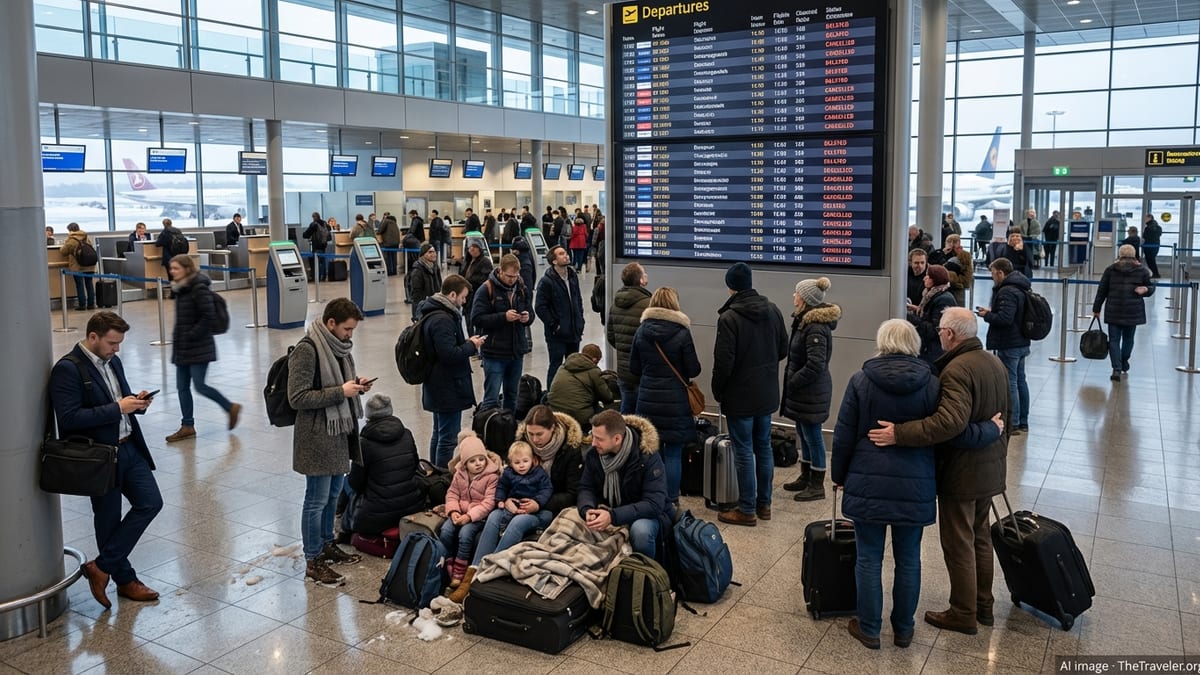
Ryanair Hit By One Of Its Worst Single-Day Disruptions
Ryanair, Europe’s largest low cost carrier, entered the weekend under intense pressure as delays and cancellations cascaded across its network. Aviation disruption figures for Saturday 21 February indicate that the airline logged 754 delayed services and 11 outright cancellations, an unusually high tally for a single operator in one day and one that immediately spilled over into terminals and departure halls across the continent.
The problems were most acutely felt in Ireland, where Ryanair is headquartered and where many of its crews and aircraft are based. Passengers departing Dublin and other Irish airports reported rolling delay estimates, long queues at customer service desks and difficulty securing clear information on revised departure times. With aircraft and crews stuck out of position across Europe, even flights that appeared unaffected by the morning’s weather quickly became caught in the knock on effects.
The disruption came at the end of a bruising week for European aviation. A powerful winter pattern that began disrupting schedules on 19 February had already caused thousands of delays and more than 200 cancellations across major markets, stretching airline resources and leaving little margin to absorb fresh shocks. By Saturday, Ryanair’s dense short haul network, which typically enables rapid turnarounds and efficient aircraft utilisation, had become a vulnerability as minor delays compounded into systemwide congestion.
While most Ryanair services eventually operated, the sheer volume of delayed flights meant that for many travellers the practical reality was a missed connection, a lost weekend break or an unplanned overnight stay in an unfamiliar city. In departure lounges from Dublin to Vienna, snaking lines formed at ticket counters as staff tried to rebook passengers onto later departures or alternative routings with limited spare capacity available.
Irish Travellers Bear The Brunt As Weather And Operations Collide
Irish travellers were among the hardest hit by Saturday’s disruption, both because of Ryanair’s deep footprint in Ireland and because the country sits at the western edge of several of the carrier’s highest frequency routes. When poor weather and air traffic congestion ripple east to west, delays often reach Irish airports later in the day, catching outbound rotations that depend on punctual aircraft arrivals from continental Europe.
Throughout Saturday, departure boards at Dublin showed clusters of late running Ryanair flights to central and southern Europe, some pushed back repeatedly as arriving aircraft circled or diverted amid low visibility and snow across the region. Passengers bound for leisure destinations in Spain and Italy, as well as those connecting via European hubs to long haul services, faced particularly acute uncertainty as initial 30 minute delays stretched into several hours.
At Ireland’s regional airports, where frequencies are lower and alternative carriers more limited, the impact of even a single cancellation was magnified. Travellers in cities such as Cork and Shannon reported being told the next available Ryanair departure might be the following day, forcing many to seek last minute rail or bus links to Dublin in the hope of securing seats on oversubscribed evening services.
Local travel agents and consumer advocates in Ireland said they were inundated with calls from customers seeking clarification on their entitlements under European passenger protection rules. While airlines are generally not obliged to pay compensation for delays caused by extraordinary weather, they are required to provide care including meals and accommodation when passengers are left waiting for extended periods, a commitment that can prove logistically challenging during large scale disruption.
Vienna, Helsinki, Milan And Madrid Turn Into Bottlenecks
Ryanair’s woes were closely intertwined with a wider European travel crisis that had already left airports struggling to keep up. Vienna, Helsinki, Milan and Madrid were among the hubs that experienced some of the most severe operational strain, with freezing temperatures, snow and fog cutting runway capacity and slowing down ground handling activities ranging from de-icing to baggage loading.
In Vienna, which has been at the heart of this week’s weather related turmoil, authorities were still grappling on Saturday with the after effects of heavy snowfall that had immobilised runways and forced scores of delays and cancellations across multiple airlines. Ryanair’s services to and from the Austrian capital were repeatedly pushed back as airport crews worked to clear stands and taxiways, creating queues of aircraft waiting for slots to depart.
Helsinki faced its own challenges, with snow showers and icy conditions compounding earlier days of disruption. Although local carriers are accustomed to harsh Nordic winters, the combination of reduced flight visibility, de-icing bottlenecks and knock on crew duty time limitations limited the number of flights that could operate on schedule. Ryanair’s services linking Helsinki to central European cities became entangled in wider air traffic control restrictions that slowed traffic flows across northern Europe.
Further south, Madrid and Milan contended with freezing overnight temperatures and residual weather systems that disrupted early morning operations, triggering a domino effect throughout the day. High demand weekend flights between Ireland, Italy and Spain were hit particularly hard, with many Ryanair sectors operating hours behind schedule. Travellers headed to city breaks in Madrid or Milan Bergamo reported missing prebooked tours and hotel check in windows as arrival times slipped later into the evening.
Passengers Stranded Across Europe Describe Long Waits And Sparse Information
Across Ryanair’s network, the common experience for many passengers on Saturday was one of prolonged waiting and limited clarity. In Dublin, Vienna and Madrid, frustrated travellers could be seen clustered around departure boards and customer service counters, checking phone apps and listening for announcements that often contained only incremental updates.
At Irish airports, some passengers reported being given paper vouchers for refreshments while others said they were pointed toward online forms to claim expenses retrospectively. With catering outlets themselves facing crowds of delayed customers, queues for food and drink stretched down concourses. For families travelling with small children or elderly relatives, the lack of quiet rest spaces and the uncertainty over boarding times added an extra layer of stress.
In continental hubs, language barriers and the involvement of multiple airlines made the picture even more complex. Travellers who had booked itineraries involving Ryanair sectors connecting to other carriers at major airports such as Vienna found themselves bounced between customer service desks. While some were eventually reprotected onto later flights, others were advised to purchase new tickets and pursue refunds and compensation after the fact.
Social media channels filled with images of crowded terminals and complaints about inadequate communication. Passengers questioned why more preemptive cancellations had not been implemented earlier in the day, which might have allowed travellers to adjust plans before heading to the airport. Aviation analysts noted, however, that predicting the precise trajectory of winter weather systems is notoriously difficult, and airlines face a delicate balance between maintaining schedules and cancelling flights outright.
Winter Weather Piles On Top Of Existing Operational Pressures
Saturday’s crisis did not emerge in isolation. For more than a week, European carriers have been wrestling with a combination of harsh winter storms, air traffic control constraints and lingering staffing tightness in key ground operations. On Thursday, a powerful weather system sweeping across the Netherlands, the United Kingdom, Germany, Spain, Italy, Belgium and Austria contributed to more than 200 flight cancellations and over 2,700 delays, according to regional disruption tallies.
Vienna, Amsterdam, London and Munich emerged as hotspots of disruption during the earlier phase of the crisis, with snow and freezing rain repeatedly closing runways and forcing airlines to thin out schedules. On Friday, a fresh wave of delays and targeted cancellations hit Austria, Romania, France, the UK and Spain, further straining airline and airport resources as crews and aircraft were left out of position and maintenance windows compressed.
Within this broader context, Ryanair’s scale and high utilisation model made it especially exposed to rolling shocks. The airline operates a dense timetable of short haul flights with relatively brief turnarounds, a strategy that drives down unit costs but leaves little slack when severe weather slows operations. Even minor delays in de-icing or boarding can propagate swiftly through the network, especially when air traffic control introduces flow restrictions to manage congestion around affected hubs.
Industry observers also point to the cumulative impact of earlier strikes and infrastructure bottlenecks across Europe in recent months. Air navigation service disruptions in France and labour disputes in parts of the transport sector have reduced overall system resilience, meaning that when a strong winter front hits, there is often fewer options to reroute traffic or absorb delays without significant knock on effects.
Questions Raised Over Ryanair’s Disruption Management And Support
The scale of Saturday’s delays has reignited debate over how low cost carriers manage major disruption events. Ryanair, like many budget airlines, relies heavily on digital communication through its app and website, pushing updates to passengers’ phones as departure times change. While this approach can work well in routine operations, several travellers caught up in the latest chaos said messages were slow to update or conflicted with information displayed on airport departure boards.
Consumer advocates argue that airlines have a responsibility not only to notify customers of delays but to provide realistic estimates that allow people to make informed decisions about onward travel and accommodation. When revised times are repeatedly pushed back in short increments, passengers may stay in the terminal for hours rather than exploring alternatives such as rail journeys, overnight stays or rebooking with other carriers.
Ryanair’s handling of care obligations also came under scrutiny. Under European regulations, airlines must provide assistance such as meals, refreshments and hotel rooms when significant delays occur, regardless of whether the underlying cause is within their control. Delivering that support at scale during a mass disruption can be complex, and reports from some airports suggested that capacity constraints at partner hotels and caterers left gaps between policy and reality.
Industry analysts note that the airline is far from alone in facing such criticism. Full service carriers and low cost rivals alike have been challenged to maintain service standards during this winter’s volatility. Nonetheless, for a carrier that carries more passengers than any other airline in Europe, the visibility of Ryanair’s failures and the volume of affected customers have elevated calls for clearer contingency planning and stronger customer support mechanisms.
Knock On Effects Likely To Persist Into The New Week
Although weather forecasts across much of Europe point to a gradual easing of the most severe conditions, aviation experts warn that the operational hangover from this week’s storms is likely to persist for several days. With aircraft and crews still scattered away from their planned rotations, airlines including Ryanair face a delicate task in rebuilding normal schedules without triggering fresh waves of disruption.
Passengers scheduled to fly over the coming days are being urged to monitor flight status updates closely, check in online as early as possible and allow extra time at the airport in case of congested security and check in lines. Those with flexible itineraries have been advised by some travel agents to consider rebooking to later dates where possible, easing pressure on peak travel windows as airlines work to normalise operations.
For travellers already displaced by Saturday’s disruptions, the priority will be simple: getting home or reaching long planned holidays and family events. With hotel capacity tight near major hubs and many later flights already heavily booked, some passengers are likely to face extended stays far from their original destinations. Rail and coach operators across the affected countries reported higher than usual weekend demand as people sought alternatives to the air network.
In the medium term, the episode is expected to feed into broader discussions about how Europe’s aviation system can build greater resilience to extreme weather, which is projected to become more frequent and unpredictable. Proposals range from investments in improved de-icing and snow clearance infrastructure at key airports to enhanced cross border air traffic coordination and revised crew rostering practices that leave more slack to absorb shocks.
Ryanair’s Reputation Tested As Peak Travel Season Approaches
Ryanair has weathered operational controversies in the past, from timetable overhauls and labour disputes to punctuality challenges at specific airports. Its low fares and extensive route network have so far allowed it to retain a strong following among cost conscious travellers, even as satisfaction scores have fluctuated. The events of this week, however, arrive at a sensitive moment as millions of Europeans begin to firm up their plans for spring and summer travel.
How the airline communicates and compensates following Saturday’s disruption will play a significant role in shaping perceptions ahead of the busy Easter and early summer period. Clear guidance on rebooking options, transparent information about entitlement to refunds and care, and visible efforts to improve resilience will all be watched closely by passengers and regulators.
Industry competitors are unlikely to gain significant immediate market share from Ryanair as a result of a single storm driven episode, particularly given that many have struggled with their own disruptions. Yet persistent headlines about stranded travellers and chaotic scenes at airports can erode trust over time, encouraging some customers to diversify their airline choices even within the low cost segment.
For now, what began as a severe winter weather event has evolved into a broader test of Ryanair’s operational robustness and customer care. Hundreds of travellers across Ireland and the wider network remain in limbo, while the airline, airports and regulators sift through the data and experiences of the past days to determine what lessons can be learned before the next bout of extreme conditions hits Europe’s skies.