

More news on this day
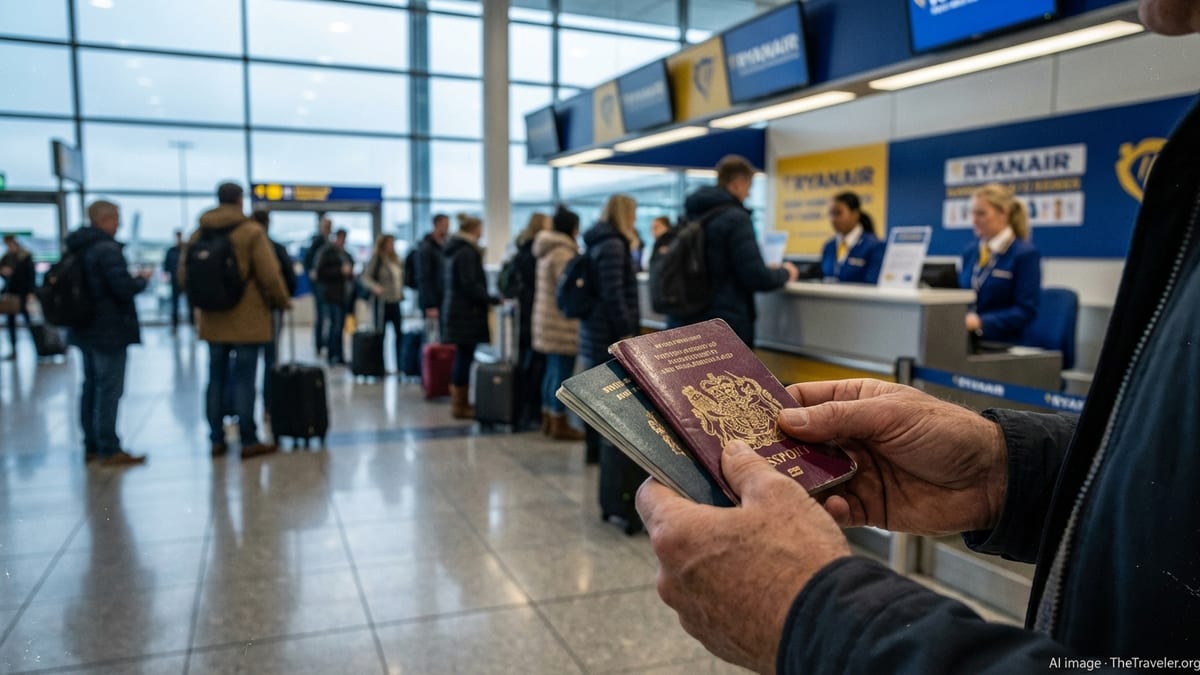
Ryanair has confirmed it will accept expired British passports as proof of citizenship for some dual nationals flying to the United Kingdom, offering a last-minute lifeline to travellers caught out by sweeping new entry rules that come into force on 25 February 2026.
What Has Changed for British Dual Nationals
From 25 February 2026, British citizens who also hold another nationality will no longer be able to enter the UK using only their non-British passport, even if that passport is from a visa-exempt country such as the United States, Canada or an EU member state. Instead, they are expected to travel either on a valid British passport or on a foreign passport that carries a certificate of entitlement confirming their right of abode.
The change is part of the wider rollout of the UK’s Electronic Travel Authorisation system, which requires most visa-free visitors to obtain digital pre-clearance before travelling. British citizens, including dual nationals, are not eligible for an ETA or a standard UK visa on the basis of their second nationality, which has created a hard requirement for UK-specific documentation at check-in.
Until now, many dual nationals routinely boarded flights, ferries and trains to the UK on their other passport, relying on border officials to confirm their status on arrival. Under the updated regime, carriers face fines if they transport passengers who do not have the correct paperwork, shifting the main enforcement point to the airline or ferry desk rather than the border hall.
Ryanair’s Confirmation on Expired Passports
Against that backdrop, Ryanair has confirmed it will accept expired British passports as proof that a traveller is a British or Irish national in certain circumstances. The airline says its staff will be allowed to board passengers to the UK if they are satisfied that the traveller holds British or Irish citizenship or another immigration status granting the right to enter.
The clarification follows Home Office guidance that carriers may, at their own discretion, treat an expired British passport as alternative documentation showing a passenger’s status as a British citizen. Crucially, this is not a blanket override of the new rules but a narrow concession aimed at preventing immediate travel disruption for people whose British passport has lapsed.
Ryanair’s stance is significant because it is one of the largest short-haul carriers serving the UK, particularly on routes from European destinations where many British dual nationals live and work. For those who have already booked flights but cannot renew or obtain a British passport before the 25 February deadline, the airline’s confirmation could mean the difference between travelling and being stranded abroad.
Home Office Guidance and Carrier Discretion
The Home Office has stressed that the legal requirement for dual nationals remains clear: they should travel with a valid British passport or a certificate of entitlement attached to a foreign passport. However, officials have acknowledged the scale of concern among British citizens overseas who have imminent plans to visit family, attend weddings or deal with emergencies and who may not have time to secure new documents.
In response, the government has said carriers can, if they choose, accept an expired British passport as evidence that the traveller is British. This does not remove the underlying requirement for proper UK documentation, and the government continues to “strongly recommend” that dual nationals obtain or renew a British passport for future travel.
Border Force officers will still assess each person’s right to enter the UK on arrival and may conduct additional checks where documentation is not current. That means a traveller boarding with an expired passport accepted by the airline could still face questions, delays or even refusal of entry if officials are not satisfied with the evidence presented.
How the New Rules Interact With the ETA Scheme
The tightening of rules for dual nationals is closely tied to the expansion of the UK’s Electronic Travel Authorisation scheme, which mirrors systems used in the United States and Canada. Under the ETA model, most foreign nationals who previously entered the UK visa-free will need to secure digital clearance before boarding, with details checked against security and immigration databases.
British and Irish citizens remain exempt from the ETA requirement, but that exemption has created a gap for dual nationals who might otherwise have tried to travel to the UK using their non-British passport and an ETA. Officials say that once a person acquires British citizenship, they can no longer rely on a previous immigration status or on the general visa-free arrangements tied to their other nationality.
Requiring a British passport or certificate of entitlement for dual nationals is intended to remove ambiguity at the border and ensure that UK systems accurately reflect who is entering as a British citizen and who is arriving as a non-British visitor. For airlines and ferry companies, this translates into a more rigid set of checks before boarding, backed by potential financial penalties if they get it wrong.
Costs, Certificates and Emergency Options
For many affected travellers, cost has been a central concern. A standard adult British passport is significantly cheaper than a certificate of entitlement, which runs into several hundred pounds and must be renewed each time a new foreign passport is issued. That has led some dual nationals who primarily use another nationality’s passport to delay obtaining a British document, only to find themselves under time pressure as the February deadline approaches.
The government has pointed out that emergency travel documents are available in urgent cases, such as funerals or serious family illness, typically allowing a single journey back to the UK. These documents carry an additional fee and require applicants to prove both their identity and their need to travel at short notice.
Ryanair’s willingness to recognise expired British passports as proof of status may offer a more straightforward route for some passengers with imminent departures. Yet it does not eliminate the longer-term need to regularise documentation. Travellers who rely on an expired passport for a one-off journey will still be expected to renew their British passport or seek a certificate of entitlement before making further trips.
Who Is Affected and Who Is Exempt
The new rules apply broadly to British dual nationals of all ages, regardless of where they live. Children born abroad to British parents, naturalised British citizens and those who registered as British citizens through descent or other routes are all subject to the updated entry requirements if they travel on documents other than a British passport.
Irish citizens are a notable exception. Thanks to long-standing arrangements between the UK and Ireland, people who are solely Irish citizens can continue to travel on their Irish passport without needing an ETA or additional UK-specific documentation. British and Irish dual nationals are still expected to travel on either their British or Irish passport, or show proof of right of abode if they choose to use a different document.
The shift is especially sensitive for the large communities of British dual nationals in countries such as Spain, Portugal, France, Canada, Australia and New Zealand, where many have settled for work or retirement. Some report only learning of the impending change in recent weeks, despite the policy having been flagged on government sites since 2024, and now fear cancelled trips or costly last-minute paperwork.
Potential for Confusion at Airports and Borders
Travel groups and immigration lawyers have warned that the combination of new digital systems, carrier liability rules and discretionary acceptance of expired passports could produce confusion at airports in the early weeks of implementation. Check-in agents must weigh the risk of fines against the Home Office’s signal that they may accept expired British documents in certain cases.
Passenger experiences may vary not only between airlines but even between different flights and airports, depending on staff training and individual judgment. Some travellers could be allowed to board on the strength of an expired passport, while others might be turned away and advised to seek emergency documentation or rebook their journeys until they can present a valid British passport.
At UK arrival halls, officials will likely see a spike in dual nationals presenting mixed documentation or explaining complex citizenship histories. While Border Force has procedures for confirming nationality and right of abode, the extra checks may slow queues, particularly during busy travel periods when large numbers of British citizens return from overseas homes or holidays.
What Travellers Should Do Now
For dual nationals planning travel to the UK after 25 February 2026, the safest course is to apply for or renew a British passport well in advance of departure. Those who cannot do so before an imminent trip should contact their airline to understand what documentation will be accepted at check-in and, if necessary, explore whether an emergency travel document is appropriate.
Ryanair’s confirmation that it will accept expired British passports for some dual nationals may ease pressure in the short term, particularly on popular leisure routes from Europe. However, travellers should not assume that the same policy applies across all carriers or that an expired document will always be sufficient. Requirements may evolve as airlines gain experience with the new system and as the government refines its guidance.
Ultimately, the message from both officials and travel operators is that British citizenship now needs to be clearly documented before passengers reach the airport. For dual nationals used to relying on another passport, Ryanair’s move offers a narrow but welcome bridge into the new era of UK border control, rather than a permanent substitute for keeping British paperwork up to date.