

More news on this day
UK holidaymakers will gain a fresh low-cost gateway to western Sicily this spring, as Ryanair launches a new direct route from Bournemouth to Trapani, unlocking easier access to the island’s little-known beaches, historic port towns and distinctive Sicilian culture.
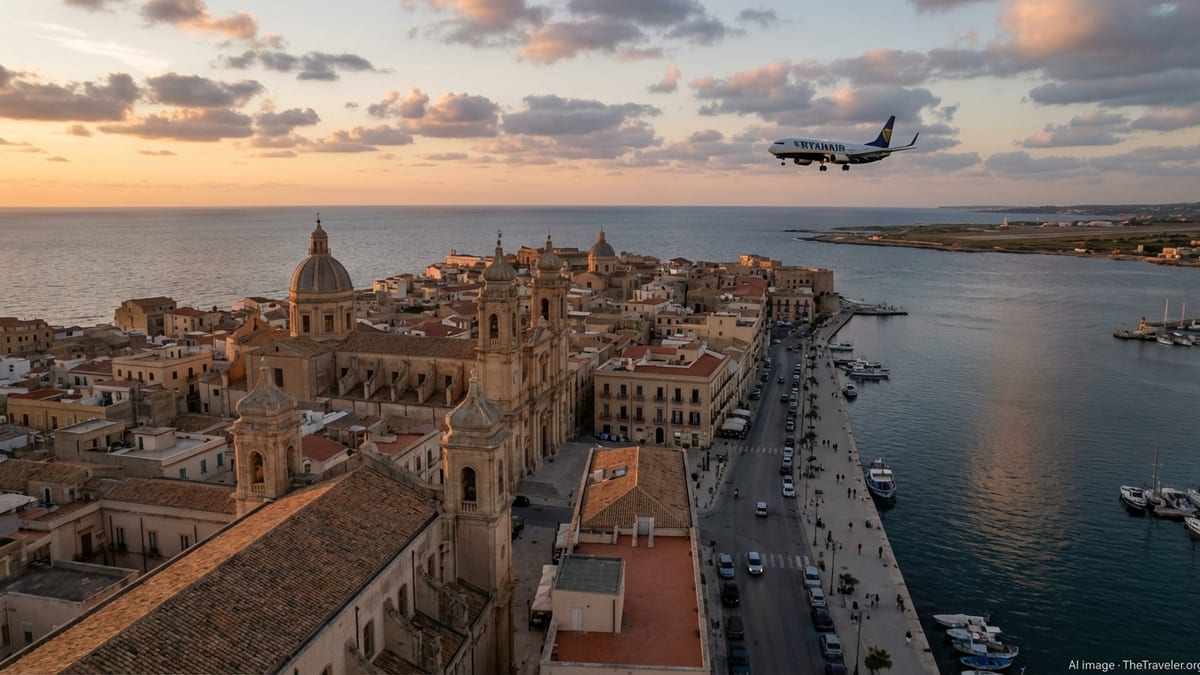
New South Coast Link to Sicily’s West Coast
Ryanair has confirmed that flights between Bournemouth Airport and Trapani Birgi Airport will begin on 31 March 2026, forming part of the carrier’s expanded summer schedule from the south-coast hub. The service is planned as a non stop flight of around three hours, placing one of Sicily’s most atmospheric corners within easy weekend-break range for travelers across southern England.
The Irish low fares airline will operate the Bournemouth–Trapani route twice weekly, with departures scheduled on Tuesdays and Saturdays. The timetable is aimed at both short beach escapes and longer holidays, giving passengers flexibility to plan three-, four- or seven-night stays on the island without the need for complex connections or overnight travel.
Promotional launch fares have been pitched aggressively to stimulate demand. Early example fares show one-way tickets on selected dates in April starting from under £20, with typical lead-in prices from just under £30 on the wider summer schedule. That pricing positions Trapani as one of the more affordable Mediterranean options from a regional UK airport in 2026.
The new services are underpinned by Ryanair’s investment in two based aircraft at Bournemouth and a growing network of 20 summer destinations from the airport. For the airline, Trapani is part of a broader push to link secondary UK airports with sun and city destinations, while for local tourism officials in Sicily it represents a direct line into the British leisure market at a time of record interest in Italian beach escapes.
Trapani: A Historic Port Between Two Seas
Set on a narrow peninsula that separates the Tyrrhenian Sea from the Mediterranean, Trapani has long been known to Italians as the “city on two seas.” Its compact old town curls along the waterfront, framed by stone bastions, pastel facades and church domes that hint at centuries of maritime trade, Spanish influence and Arab-Norman heritage.
Recent urban renewal projects have helped restore the historic seafront, particularly along the Mura di Tramontana, where a coastal promenade now runs beside the city walls. From here, visitors gaze out over clear, shallow waters that double as a local beach, with small coves, rocks and sandy pockets providing an easy swim on the edge of the old town.
Inside the centro storico, Baroque churches and palazzi line narrow streets such as Corso Vittorio Emanuele, where ceramic shops, cafes and family-run trattorias occupy ground-floor arcades. Landmarks include the Cattedrale di San Lorenzo and the Torre di Ligny, a coastal watchtower that now houses a small museum and offers panoramic views over the sea and the Egadi Islands offshore.
Trapani is also famed for its salt flats and windmills to the south of the city, remnants of a centuries-old sea salt industry. The geometric pans, which turn pink and orange at sunset, have become one of western Sicily’s most photographed landscapes, yet remain less crowded than better-known sights on the island’s eastern coast.
Affordable Gateway to Beaches and Islands
The arrival of new Ryanair capacity at Trapani Birgi Airport is expected to strengthen the city’s role as a low-cost hub for exploring western Sicily’s coastline. Beyond the narrow city beach, visitors are within easy reach of longer sandy stretches such as San Giuliano near Trapani and the more remote coves around Marsala and Castellammare del Golfo, all accessible by car or regional bus.
From the port, frequent hydrofoils cross to the Egadi Islands, a small archipelago known for crystal-clear water, snorkeling and quiet fishing villages. Favignana, the largest island, offers bike-friendly lanes, turquoise bays and low-key seaside trattorias, making it a popular day trip or overnight add-on for travelers basing themselves in Trapani.
Inland, vineyards, olive groves and low hills frame a countryside dotted with hill towns and archaeological sites. Erice, a medieval village perched high above Trapani and linked by cable car, provides cooler air in summer and sweeping views over the city, salt pans and coastline. The combination of coastal relaxation and easy side trips has helped establish the area as a more laid-back alternative to Sicily’s busier resorts.
Importantly for budget-conscious travelers, accommodation and dining in Trapani remain competitive compared with major Italian hotspots. Mid-range hotels, guesthouses in historic buildings and self-catering apartments offer a spectrum of price points, while casual seafood restaurants and street-food staples such as arancini and panelle keep day-to-day costs relatively low.
Cultural Draws from Easter Rituals to Everyday Life
While the new route is likely to attract beachgoers, local tourism officials are keen to emphasize Trapani’s cultural calendar and everyday Sicilian rhythms. The city is particularly renowned for its elaborate Holy Week processions, culminating in the Processione dei Misteri, a 24-hour religious procession held on Good Friday that sees life-size wooden sculptures carried through the streets by local confraternities.
Outside major festivals, daily life unfolds at a slower, southern Italian pace. Mornings tend to center on neighborhood bars, where residents take espresso and sweet pastries standing at the counter, while evenings bring a passeggiata along the waterfront and lively aperitivo hours in the old town’s squares. For many visitors from the UK, this immersion in local ritual and routine is as compelling as any single monument.
The city’s cuisine reflects both its coastal setting and layered history. Dishes such as busiate pasta with pesto alla trapanese, made from tomatoes, almonds and basil, showcase local ingredients, while couscous di pesce nods to North African influences. Fresh fish markets and bakeries provide additional windows into regional food culture, from tuna-based specialties to cannoli filled with ricotta.
Museums and small cultural institutions round out the offering, including collections devoted to coral craftsmanship, maritime history and sacred art. Together with modern street art and contemporary galleries emerging in former warehouses, they give travelers multiple ways to connect with Trapani’s evolving identity beyond its postcard views.
Strategic Hub for Wider Sicilian Exploration
For UK travelers using Bournemouth as a departure point, the new Trapani route offers more than a single-city break. The airport lies within an hour and a half’s drive of several major Sicilian destinations, allowing visitors to combine beach time in the west with longer circuits around the island.
Palermo, Sicily’s regional capital, is roughly an hour to the east by road, making it feasible as either a day excursion or an additional overnight stay. To the south and southeast, archaeological sites such as Selinunte and Segesta, along with wine-producing areas, can be reached on organized tours or self-drive itineraries, turning Trapani into a practical starting point for exploring Sicily’s cultural and natural heritage.
The timing of the route’s launch for summer 2026 is also aligned with infrastructure upgrades at Trapani Birgi Airport and ongoing improvements to coastal promenades and port facilities. Local authorities hope that better air links from the UK, alongside new routes from markets such as Poland, will spread visitor numbers more evenly across the island and extend the season for businesses in the west.
With twice-weekly flights, competitive fares and a mix of city, coast and countryside experiences, the Bournemouth–Trapani connection positions western Sicily as a realistic option for spontaneous getaways as well as longer, more immersive trips. For many UK travelers, the city on two seas is about to move from map’s edge curiosity to accessible Mediterranean favourite.