

More news on this day
A viral video of a social media influencer removed from a Ryanair flight has ignited a wave of online criticism, with many travelers dismissing her tearful complaint as a textbook case of entitled behavior at 35,000 feet.
Get the latest news straight to your inbox!
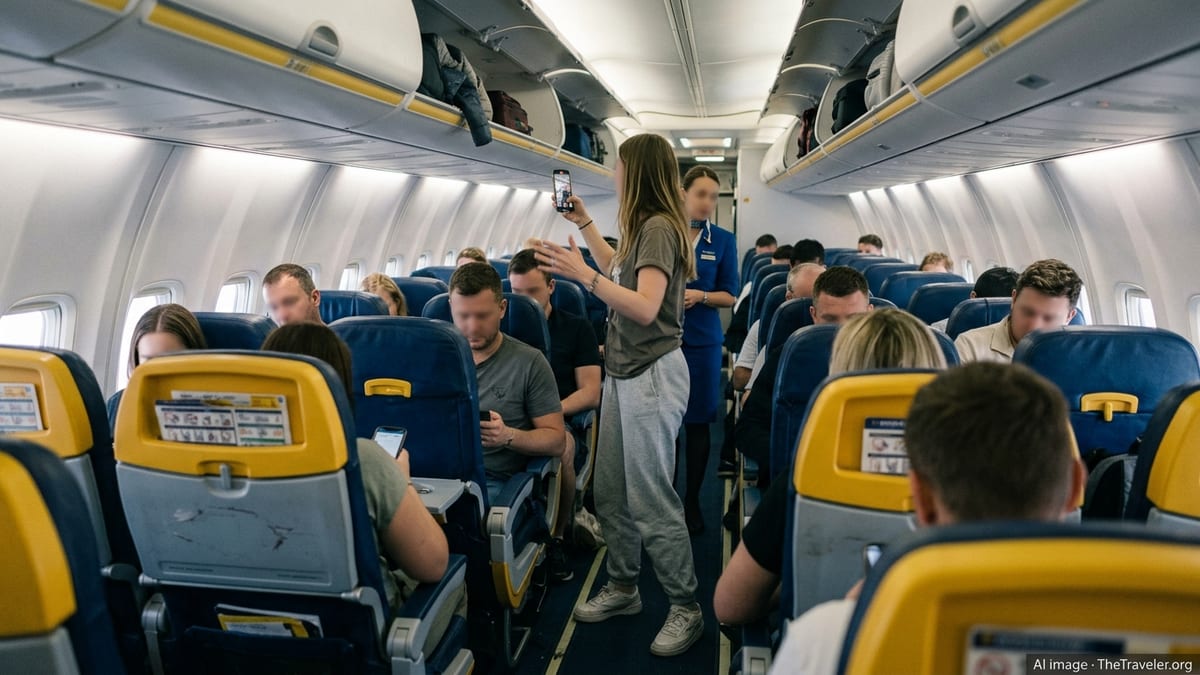
Viral Clip Shows Influencer Removed After Clash With Staff
The incident centers on a short-haul Ryanair service operating in Europe, where a content creator documented herself arguing with ground and cabin staff before being escorted off the aircraft. Screen recordings and reuploads shared across social platforms show the passenger disputing instructions, insisting she had been treated unfairly and declaring she would never fly with the low cost carrier again.
In the video, the influencer appears to record staff up close while challenging their decisions over boarding and seating procedures. As events escalate, crew members can be seen directing her to leave the aircraft, with the passenger continuing to film and narrate the confrontation for her followers. The clip cuts to a later segment in which she appears visibly upset, claiming she had been singled out and humiliated.
Details such as the exact route and departure airport have not been formally confirmed, but publicly available posts place the event on a recent European leisure flight, a core part of Ryanair’s network. The airline itself has not issued a detailed statement about the specific removal, consistent with its usual practice of keeping responses brief in individual passenger disputes.
Ryanair, Europe’s largest budget airline by passenger numbers, has long been known for strict enforcement of rules around check in, boarding times and cabin conduct, a factor that often surfaces in social media disputes involving the carrier.
Online Reaction: Little Sympathy for the Passenger
While many viral airline clips provoke debate over customer service standards, reaction in this case has been heavily one sided. On platforms such as TikTok, X and Reddit, commenters have largely framed the episode as an example of an influencer expecting special treatment, only to discover that standard airline procedures apply to everyone on board.
Users dissecting the video pointed to the passenger’s decision to film staff faces, her refusal to de escalate and her focus on content over cooperation. Numerous comments described the behavior as disruptive to other travelers who were simply trying to depart on time, with some frequent flyers suggesting that crew had limited options once the situation became confrontational at the aircraft door.
Discussions on aviation and travel forums also highlighted a growing fatigue with staged or semi staged conflict content from self described creators. Several posts suggested that attempts to turn minor travel frustrations into viral moments are increasingly backfiring, as online audiences become more skeptical of one sided narratives recorded from a single smartphone camera.
Instead of rallying around the passenger, many viewers applauded the crew’s calm demeanor in the footage and expressed relief that the situation was resolved before takeoff rather than in the air, where disruptive conduct can lead to diversions and substantial delays.
Ryanair’s Social Media Persona Amplifies the Story
The story gained additional traction after Ryanair’s own social media team appeared to reference the incident with characteristic sarcasm. The airline is known for its tongue in cheek online voice, frequently reposting or riffing on viral clips that mention its brand, and has previously drawn attention for meme style responses to customer complaints.
In this case, travel watchers noted that the carrier leaned into the narrative of entitlement, echoing the view that filming confrontations and naming individual employees on camera crosses a line. The airline’s posts were widely shared by users who viewed them as a lighthearted but pointed reminder that staff are not props in social media content.
Ryanair’s approach underscores how airlines increasingly treat viral conflict as both a reputational risk and a marketing opportunity. While the company avoids detailed public discussion of individual passengers, its social media accounts frequently respond in broad terms, framing disruptive behavior as out of step with the expectations of the wider traveling public.
The carrier’s willingness to engage also helped the story jump from niche internet forums into broader travel and lifestyle coverage, as outlets picked up on the unusual dynamic of an airline refusing to play the traditional customer service villain in a viral dispute.
Broader Concerns Over Filming Airline Staff
Beyond the immediate backlash, the episode has revived debate about passengers filming airline workers during confrontations. In the influencer’s clip, staff identities are clearly visible, and subsequent discussion noted that she appeared to share the name of at least one employee while urging followers not to patronize the carrier in the future.
Critics argued that broadcasting front line workers’ faces to a large audience, particularly when they are enforcing company policy, raises safety and privacy concerns. Travel industry commentators pointed out that aviation staff already face heightened stress due to increased passenger volumes and stricter security procedures, and that viral call out culture can compound those pressures.
Online, many users said that while filming can, in some situations, provide valuable documentation of potential misconduct, it can also be selectively edited to support a narrative of victimhood. In this case, viewers who watched the widely shared clips concluded that key context favored the crew, not the passenger, challenging the influencer’s portrayal of events.
The conversation reflects a wider tension in modern travel between the desire to capture and share every experience and the practical need to maintain order and safety in tightly regulated environments such as airports and aircraft cabins.
Entitlement, Low Cost Travel and the Limits of ‘Main Character’ Energy
The Ryanair removal also feeds into a long running discussion about expectations on low cost carriers. Budget airlines typically advertise bare bones fares while enforcing strict cutoffs for check in, boarding and baggage rules. Regular passengers accustomed to these conditions expressed little surprise that a perceived pushback against staff direction resulted in the loss of a seat.
Commentary around the viral clip often used the language of “main character energy,” describing the influencer as assuming that her personal schedule and filming priorities took precedence over aircraft turnaround times and the experience of other travelers. Many commenters contrasted that attitude with the reality of high density, short haul operations, where every delay can ripple through an airline’s daily schedule.
Several posts from self identified crew members and frequent flyers emphasized that removal from a flight is typically a last resort, triggered when a passenger’s behavior is judged likely to compromise safety, compliance or cabin harmony. Publicly available incident lists for recent years show that such removals, while still relatively rare, often stem from refusals to follow instructions, disputes over seating and efforts to continue arguments once onboard.
As the online conversation moves on, the episode stands as another example of how quickly public opinion can turn against travelers who attempt to convert routine operational disputes into viral grievances. For many observers, the key lesson from this Ryanair saga is that in the age of constant recording, the camera does not guarantee sympathy, especially when the audience decides it is pointed in the wrong direction.