

More news on this day
Trapani, the wind-brushed "city on two seas" at the western tip of Sicily, is stepping into the Mediterranean spotlight again as Ryanair’s latest low-cost gateway, promising more frequent flights, cheaper fares and easier access to one of Europe’s most evocative coastal regions.
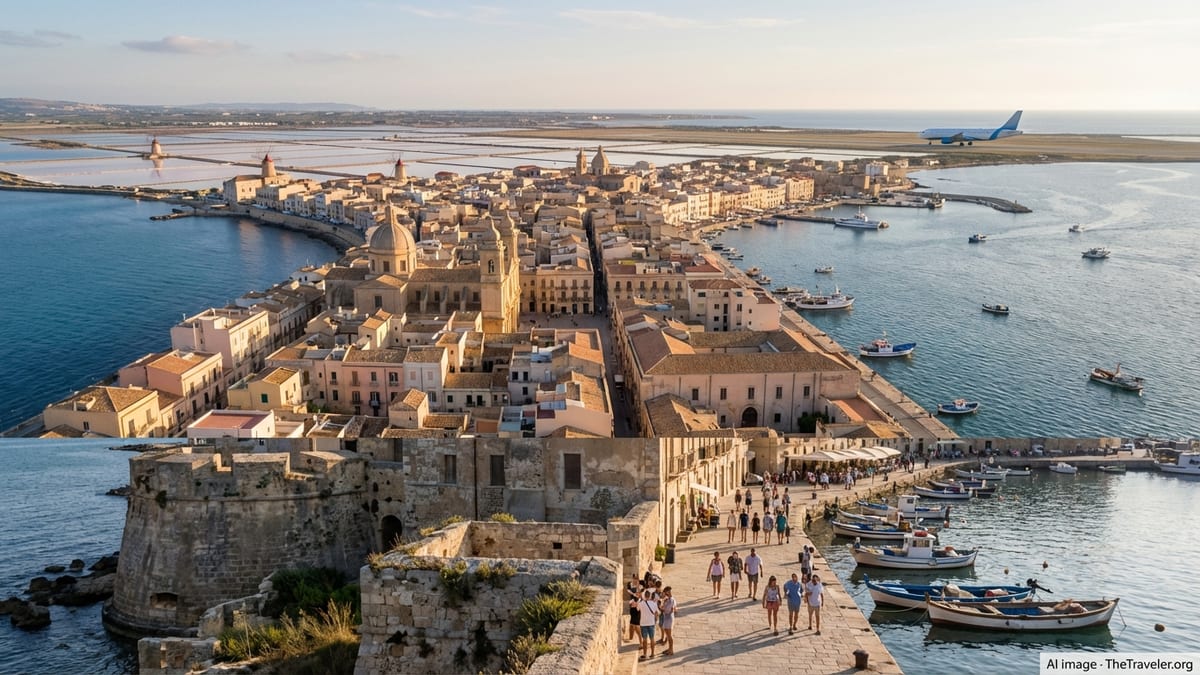
Ryanair Bets Big on Trapani With New Base and Routes
Ryanair has confirmed Trapani–Birgi Vincenzo Florio Airport as its newest Italian base from January 2026, marking a major return for the low-cost carrier to western Sicily. The move follows a decision by the Sicilian regional government to abolish a municipal surcharge at the island’s smaller airports, a measure designed to attract more airlines and boost year-round connectivity. For Trapani, it signals a shift from peripheral outpost to frontline Mediterranean hub.
The airline is stationing two aircraft at Trapani, representing an investment valued at around 200 million dollars and supporting hundreds of local jobs in aviation and tourism services. A record Summer 2026 schedule will see 24 routes served from Trapani–Marsala, including six new connections to Stockholm, Bournemouth, Bari, Lublin, Saarbrücken and Verona. Ryanair forecasts the base will handle about 1.2 million passengers a year, an increase of roughly one third on current traffic, underlining the scale of its commitment.
The expansion restores Trapani’s position in the Ryanair network after years of fluctuating service levels. The airline first developed the airport as a focus city in the late 2000s before pulling back in 2017, a move that sharply reduced passenger numbers. The 2026 base announcement effectively rewrites that chapter, putting Trapani back on itineraries for cost-conscious travelers across northern and eastern Europe.
Recent announcements point to a rapidly growing route map. New summer flights from Bournemouth in southern England to Trapani are due to begin at the end of March 2026, operating twice weekly, with early promotional fares starting below typical European low-cost averages. From Poland, Ryanair is also adding Lublin–Trapani services as part of a record schedule from the eastern Polish city, where demand for Mediterranean sun routes is rising.
Trapani: Historic Port Turned Affordable Mediterranean Gateway
For travelers lured by Sicily’s blend of baroque streets, Arab-Norman heritage and empty golden beaches, Trapani offers a compact introduction. Its old town stretches along a narrow peninsula between two seas, with pastel facades, church domes and the stone bastions of Spiaggia delle Mura di Tramontana facing the Tyrrhenian waters. Inland, salt pans, vineyards and low hills frame the city in a landscape that feels far removed from the busier resorts of eastern Sicily.
The city itself remains priced attractively for visitors arriving on budget flights. Mid-range hotels and guesthouses in and around the historic center typically undercut rates in Palermo and Catania, especially outside peak August weeks. Local tourism officials say the return of a major low-cost base is expected to lengthen the traditional season, making shoulder months in spring and autumn particularly good value for long weekends and extended stays.
Trapani–Birgi Airport lies about 15 kilometers south of the city and handled just over one million passengers in 2025, according to airport operator data, with capacity projected to rise as the Ryanair base ramps up. Ground transport options include shuttle buses and car rentals, while a new rail stop for the regional train network is under development to improve direct links between the terminal and the city. For visitors, the shorter transfer times compared with larger hubs mean more of a short break is spent on the waterfront rather than on the road.
Nearby, the medieval hilltop town of Erice, reached by cable car from the outskirts of Trapani when weather conditions permit, provides a panoramic counterpoint to the port. The Egadi Islands, accessible by fast ferry, offer crystalline waters and unhurried fishing villages that have long been favorites of Italian holidaymakers but remain relatively little known among international travelers.
New Low-Cost Links Across Europe Open Up Western Sicily
The decision to base aircraft in Trapani is part of a wider Ryanair reshuffle within Europe, as the carrier consolidates operations at airports where fees and local incentives support budget-friendly fares. In western Sicily, this has translated into a dense mesh of both domestic and international routes that give travelers more options to reach the region without connecting through larger hubs.
From the United Kingdom, the launch of Bournemouth–Trapani flights adds a new direct link from England’s south coast to Sicily, complementing existing services into Palermo and Catania from other airports. Early schedules indicate two flights per week, timed for short breaks and week-long stays, with introductory fares advertised at price points designed to attract first-time visitors to the destination.
In central and eastern Europe, Ryanair is weaving Trapani into a network of sun routes aimed at emerging city markets. From Lublin in eastern Poland, a newly announced twice-weekly summer service to Trapani sits alongside flights to Bergamo, Dublin and London, giving Polish travelers a direct path to western Sicily’s beaches and archaeological sites. Additional routes from German, Scandinavian and Italian regional airports further expand the catchment, making it possible to plan budget itineraries that combine Trapani with other Mediterranean stops.
Local tourism stakeholders argue that the renewed connectivity could help rebalance Sicily’s visitor flows. Western destinations such as Marsala, Mazara del Vallo and the wine-producing countryside around them have historically seen fewer international arrivals than the island’s eastern hotspots. With Trapani now marketed across Ryanair’s sales channels, hoteliers and tour operators are preparing for a more diverse mix of guests and longer stays that go beyond a single city break.
Stretching Your Euro in Trapani and Western Sicily
The combination of low-cost flights and comparatively modest local prices positions Trapani as one of the more budget-friendly corners of the Mediterranean for 2026. Dining remains accessible, with seafood-focused trattorias and neighborhood bars offering multi-course meals and aperitivo spreads at costs that typically undercut mainland Italian city centers. Market stalls and bakeries selling arancini, panelle and cannoli provide further options for travelers watching their budgets.
Accommodation ranges from restored palazzi in the old town to modern seafront hotels and agriturismi in the countryside, many of which are preparing targeted offers tied to new flight arrivals. Travel agents in source markets report growing interest in combining low fares with self-catering apartments, particularly among families and small groups looking to split costs while retaining flexibility over itineraries.
Beyond Trapani itself, public buses and regional trains link to nearby attractions such as the wine cellars of Marsala, the Greek ruins at Segesta and the long sandy arc of San Vito Lo Capo, although many visitors still opt for rental cars to reach more remote coves and hiking trails. With more international arrivals expected, local authorities face renewed pressure to ensure that tourism growth remains sustainable, from managing coastal access to safeguarding the delicate salt-pan ecosystems that have become signature images of the province.
For now, the dominant mood among local businesses is one of cautious optimism. The hope is that by pairing low headline fares with an authentic, relatively affordable destination, Trapani can capture a share of travelers who might otherwise head to better-known Mediterranean resorts. As more Ryanair aircraft begin lining up on the tarmac at Birgi, western Sicily appears set to reclaim its place on the budget traveler’s map.