

Ryanair is reconfiguring Europe’s low-cost flight map for Summer 2026, rolling out a wave of new routes and capacity boosts across bases from Tirana and Rabat to Malta, Shannon, Gdańsk, Poznań, Bratislava, Turin and Glasgow in a coordinated push that is already rattling competitors and delighting price-conscious travelers.
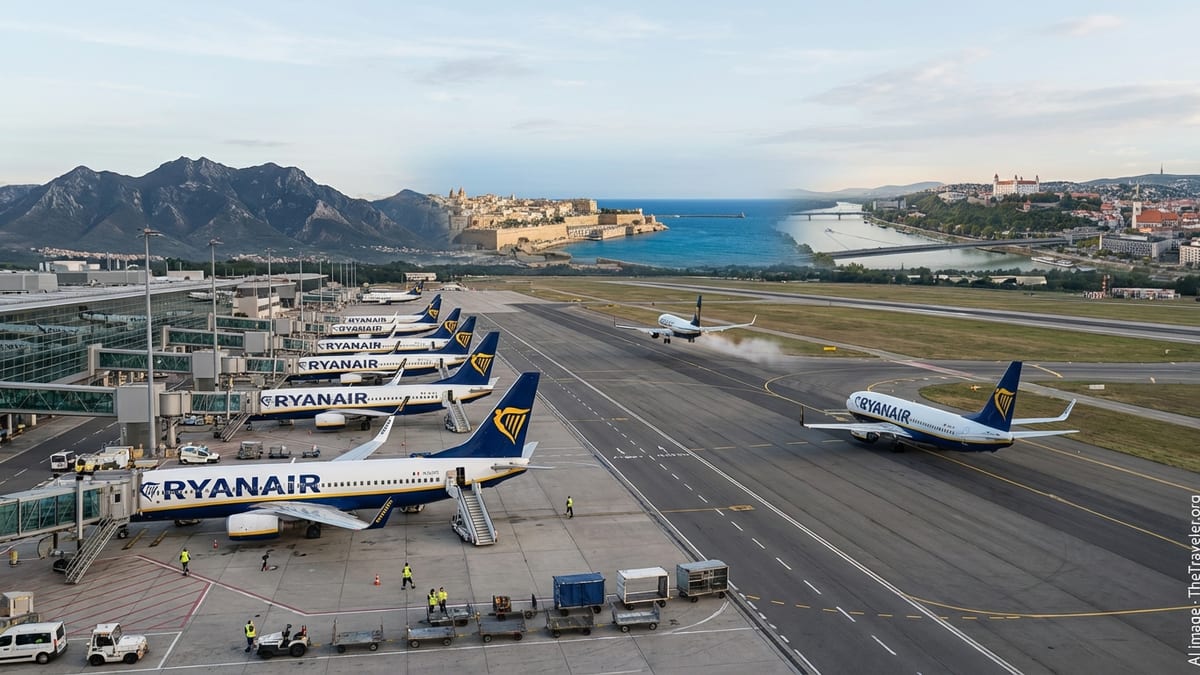
A Pan-European Expansion That Targets Secondary Cities
The Irish carrier’s Summer 2026 plans amount to one of its most ambitious seasonal overhauls in years, with a clear strategic focus on fast-growing secondary cities and leisure markets. Rather than concentrating on Europe’s largest hubs, Ryanair is layering new connectivity onto mid-sized airports where demand is rising and airport incentives remain attractive.
Executives at the airline have framed the season as a record-breaking expansion, underpinned by additional based aircraft, double-digit capacity growth and an aggressive seat-sale strategy designed to lock in bookings well before the peak holiday months. For travelers, that means a flood of fresh options to mix beach, culture and city breaks across the continent.
At the heart of the push are new point-to-point links that often bypass traditional hubs altogether. By connecting cities such as Gdańsk to Tirana, or Shannon to Poznań and Malta, the airline is betting that Europe’s appetite for more direct, low-cost and time-efficient routes will continue to outpace the broader market.
The move also reflects a wider trend among low-cost carriers to deepen their presence in emerging tourism hotspots and regions rebounding strongly from the pandemic-era slump. For airports from the Baltics to the western Mediterranean, Ryanair’s interest can translate quickly into higher passenger volumes and renewed investment.
Tirana Emerges as a Star of the 2026 Network
Few destinations capture Ryanair’s 2026 ambitions better than Tirana. Albania’s capital has vaulted into the airline’s list of standout cities, highlighted by Ryanair itself as one of its top destinations for 2026 on the back of surging passenger interest and an expanding route map.
New links are being added both to and from Tirana, notably from northern and central Europe. Schedule filings and recent announcements confirm that Gdańsk in Poland and Malta will gain new direct services to Tirana for Summer 2026, strengthening the Albanian capital’s status as a bridge between the Adriatic, the Balkans and the Baltic Sea region.
For Tirana, the effect is twofold. On the outbound side, Albanians gain more affordable access to key European leisure markets, including Mediterranean islands and Polish coastal cities. Inbound, Ryanair’s growing footprint is set to bring a new wave of city-break visitors drawn by the city’s mix of Ottoman, Italian and modernist architecture, café culture and nearby mountains and beaches.
Tourism officials in Albania have been keen to diversify away from a purely summer beach narrative, and Ryanair’s deeper commitment to Tirana feeds directly into that strategy. The addition of more city-pair options, particularly from countries where low-cost air travel is entrenched, could extend the visitor season and encourage longer stays.
Record Schedules for Gdańsk and Poznań Signal a Polish Power Play
In Poland, Ryanair is doubling down on coastal and regional markets. Gdańsk is the standout, with the carrier committing to base a sixth aircraft at the airport for Summer 2026. That investment supports a record schedule from the Pomeranian hub, including 43 routes, five of them newly launched, and a forecast 16 percent increase in capacity compared with the previous summer.
Among the most eye-catching additions from Gdańsk is a new connection to Tirana, alongside fresh links to Bucharest, Dubrovnik and Palermo, plus extra frequencies on high-demand sun routes such as Alicante, Barcelona, Malaga and Malta. The strategy ties Poland’s Baltic coast more closely to southern Europe’s beach and city destinations, while also enhancing links to southeastern Europe.
Poznań, too, features in Ryanair’s 2026 story, both as origin and destination. While some Polish routes have seen seasonal reshuffles and cancellations in recent months, new capacity is being introduced via Shannon, which gains a direct Poznań service in its own record summer schedule. For western Poland, that opens up convenient access to Ireland’s Atlantic coast and strengthens business and diaspora links.
The evolving Polish network underscores Ryanair’s long-standing belief in the country as a growth engine. With relatively low airport charges, strong outbound leisure demand and a sizable labor market tied to western Europe, Poland remains central to the carrier’s pan-European grid, and Summer 2026 will further entrench that position.
Shannon and Malta Secure Major Capacity Boosts
On Europe’s western and southern fringes, Shannon and Malta stand out as beneficiaries of substantial Ryanair investment in Summer 2026. In Ireland, the airline is basing a fourth aircraft at Shannon, lifting capacity by around 15 percent and supporting what airport and airline executives describe as a record schedule of around 30 routes.
New routes from Shannon include services to Rome, Madrid, Warsaw and Poznań, as well as increased frequencies on popular sun corridors such as Alicante, Lanzarote, Manchester, Malta and Reus. For the wider Midwest region of Ireland, this growth promises more direct holiday options and reduced reliance on Dublin for European connections.
Further south in the central Mediterranean, Ryanair’s Maltese operation is scaling up again. The airline is maintaining a ninth based aircraft at Malta into Summer 2026, part of a multi-year investment that executives have valued at hundreds of millions of dollars. The move is paired with four new routes from the island to Gothenburg, Newcastle, Palma and Tirana, lifting Malta’s Ryanair network to around 70 routes and pushing expected annual traffic toward six million passengers.
The decision to sustain and grow Malta’s base reflects strong demand for the island’s mix of culture, beaches and English-language tourism, but it also positions Malta as a strategic central hub in Ryanair’s southern European operations. With Palma and Tirana newly added to the map, the island’s connectivity to both Spanish and Balkan markets is set to deepen.
Bratislava, Turin and Glasgow Ride the City-Break Wave
While sun-and-sea destinations dominate many of the headline route launches, Ryanair’s Summer 2026 blueprint also leans heavily into Europe’s booming city-break market. Bratislava, Turin and Glasgow all emerge as key nodes in this strategy, targeting weekend travelers and short-stay visitors keen on culture, food and nightlife.
In Slovakia, Ryanair will operate a record 33 routes from Bratislava for the Summer 2026 timetable. Airport officials describe the schedule as unprecedented in the airport’s history, building on two decades of partnership with the carrier. The route list includes ten new destinations, reinforcing Bratislava’s status as a low-cost gateway to Central Europe at a time when the city is gaining fresh attention for its revitalized old town and Danube riverfront.
Turin, long overshadowed by Milan in northern Italy, is another city poised to benefit from new capacity as airlines, including Ryanair, respond to surging interest in alpine and cultural travel. While detailed route announcements from Turin for Summer 2026 continue to emerge, industry schedule data points to stronger links between northern Italy and key markets in the UK, Ireland and central Europe, leveraging Turin’s role as both a gateway to the Alps and a baroque city-break destination in its own right.
In Scotland, Glasgow features among the airports slated to gain new or expanded Ryanair services for the coming summer. Additional capacity from the city is expected to focus on southern European leisure destinations and city-pairings that appeal to both outbound holidaymakers and inbound visitors discovering Glasgow’s cultural scene. The overall effect is to knit Glasgow more tightly into the airline’s ever-denser European city-break web.
Rabat and North Africa Step Further Into the Spotlight
Ryanair’s 2026 plans are not confined to Europe alone. The airline has steadily expanded its network into North Africa over the past decade, and Summer 2026 is expected to bring additional emphasis on Morocco and neighboring markets. Rabat, the Moroccan capital, has been flagged by industry analysts as one of the likely beneficiaries of this trend.
While the airline has not yet detailed a full list of new Rabat routes for Summer 2026, schedule filings and previous growth patterns suggest a combination of fresh links from secondary European cities and increased frequencies on existing services. The shift reflects strong European demand for shorter-haul winter-sun and shoulder-season escapes, in which Morocco, with its temperate climate and competitive pricing, plays an important role.
For Rabat’s tourism economy, more Ryanair capacity would mean additional visitors drawn not only to the city’s historic medina and Atlantic coastline but also to wider itineraries that combine Morocco’s imperial cities and coastal resorts. For the airline, the city forms part of a broader North African strategy that balances leisure demand with visiting-friends-and-relatives traffic from Europe’s sizable Moroccan diaspora.
As Ryanair continually looks for high-yield, mid-haul opportunities that fit its single-aisle fleet, North African capitals such as Rabat, along with coastal cities elsewhere in the region, are likely to remain firmly in its sights well beyond Summer 2026.
Competitive Shockwaves for Legacy and Low-Cost Rivals
The scale and spread of Ryanair’s Summer 2026 expansion is already sending ripples through Europe’s airline industry. For full-service carriers, the proliferation of new point-to-point links in markets like Gdańsk, Shannon, Bratislava and Malta means additional pressure on connecting traffic that might otherwise flow through legacy hubs such as Frankfurt, Paris or Amsterdam.
Low-cost rivals, too, face a fresh round of competition on routes where Ryanair can deploy additional aircraft and sharpen pricing. With the airline touting what it calls its largest-ever summer seat sale for 2026, featuring millions of discounted seats across sunshine and city destinations, pressure on fares is likely to intensify on overlapping routes, at least during the initial booking window.
Some of Ryanair’s recent network decisions have involved pruning weaker-performing routes in order to redeploy capacity to higher-growth markets, especially in countries where airport fees or taxes have climbed. The Summer 2026 map therefore represents not just expansion but a strategic rebalancing toward airports and regions that the carrier believes offer better long-term returns.
For passengers, the immediate impact is overwhelmingly positive: more choice, more direct routes and, at least initially, lower prices as airlines jostle for market share. For airports and tourism boards, however, Ryanair’s growing leverage raises familiar questions about how to secure stable long-term partnerships while still benefiting from rapid bursts of traffic growth.
What Travelers Can Expect on the Ground This Summer
For travelers planning Summer 2026 trips, the practical implications of Ryanair’s new-season strategy will become clearer as additional timetables are loaded and more route announcements are finalized. What is already evident is a broadening of options for mixing lesser-known cities with established holiday favorites, often in a single itinerary.
A passenger might now combine a city break in Bratislava with a beach escape via Malta or Palma, or link a cultural weekend in Gdańsk to an adventurous exploration of Tirana and the Albanian Riviera. Irish travelers from the Shannon catchment area will have a wider palette of direct routes into mainland Europe, while residents of Malta and Poland gain new paths into northern and western Europe without backtracking through major hubs.
Industry analysts expect booking patterns to closely track Ryanair’s promotional calendar, with early-bird deals on new routes drawing in price-sensitive travelers and stimulating fresh demand. As capacity ramps up in places like Shannon, Gdańsk and Malta, airport operators are fast-tracking investments in terminal infrastructure, sustainability projects and ground transport links to absorb the additional traffic.
If the airline executes its Summer 2026 plan as outlined to date, the season will serve as another stress test for Europe’s aviation recovery, highlighting where infrastructure keeps pace with low-cost growth and where bottlenecks persist. For now, as new city pairs appear on booking engines week by week, Ryanair’s latest expansion is reshaping the travel possibilities for millions of Europeans long before the first peak-season aircraft takes off.