

More news on this day
Ryanair is gearing up for a pivotal Summer 2026 season, unveiling a wave of new routes across Europe and North Africa anchored by fresh bases in Tirana and Rabat, expanded schedules from key Polish and Italian cities, and a sharpened focus on fast‑growing leisure and migrant travel markets.
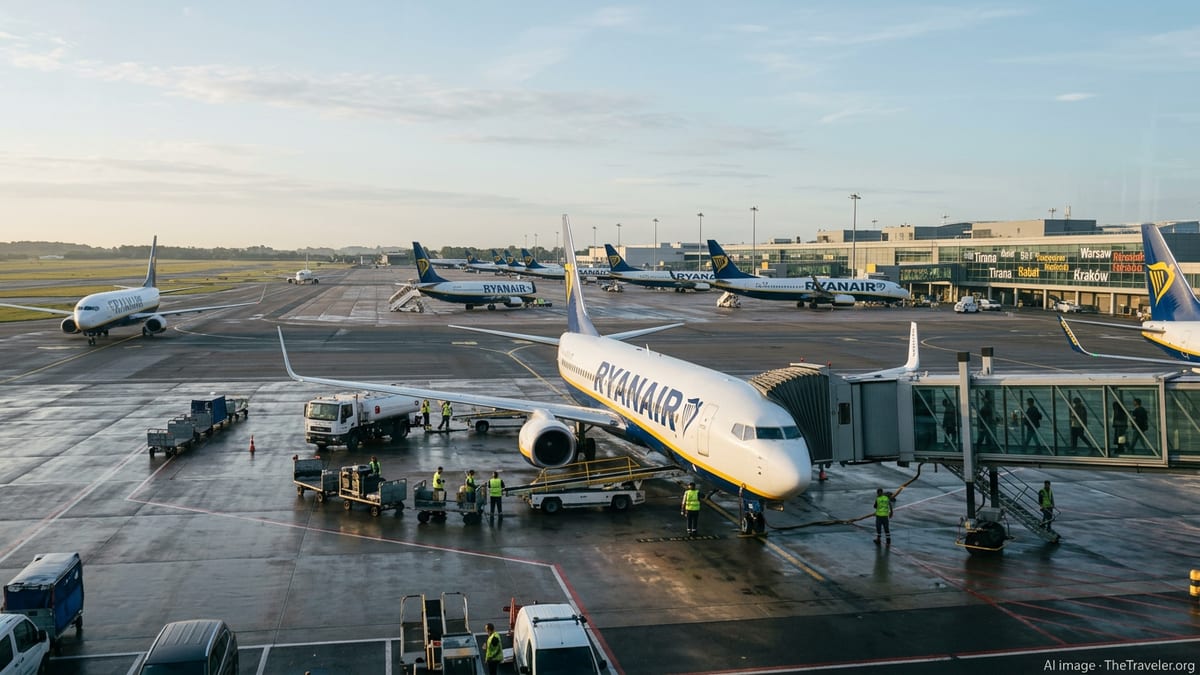
New Bases in Tirana and Rabat Anchor Network Growth
Ryanair’s strategy for Summer 2026 is built around two headline-grabbing base openings that signal where the airline sees its next phase of growth. In Albania, the carrier is set to deepen its relatively recent entry into the market by opening a full operational base at Tirana International Airport, building on rapid traffic growth since its first routes launched in late 2023. A similar move in Morocco will see Rabat elevated from a growing spoke to a fully fledged base, underlining the Moroccan capital’s rising profile as both a leisure and political hub.
According to recent corporate communications, the Tirana base will feature three aircraft and 10 new routes as part of a 33-route network from the Albanian capital, helping lift Ryanair’s annual Albanian traffic to around 4 million passengers. The airline has repeatedly highlighted Albania’s low airport charges and pro-growth aviation policy as a central reason for shifting capacity away from higher-cost markets in Western Europe. Those dynamics are expected to shape the carrier’s S26 deployment as it continues reallocating aircraft to more cost-competitive airports across the continent.
In Rabat, Ryanair plans to base two aircraft from April 2026, creating its fifth Moroccan base and adding 20 routes in total, including seven new connections to major European cities. The investment, valued at around 200 million dollars, is projected to boost Rabat’s Summer 2026 capacity by approximately 45 percent and forms part of a record schedule covering 13 airports in the kingdom. Morocco is a key pillar of Ryanair’s North African strategy, with the airline positioning itself as a key partner in the country’s tourism ambitions in the run-up to the 2030 World Cup.
Together, the new bases in Tirana and Rabat reflect Ryanair’s broader focus on secondary and emerging destinations where airport fees are lower, incentives are generous and governments are keen to trade traffic growth for lower fares. The airline has publicly signalled that this approach will continue into Summer 2026, with more than 100 new routes on sale across Europe and North Africa and capacity shifted away from markets where costs are rising faster than demand.
Expanded Connectivity From Poland: Warsaw and Kraków in Focus
Central and Eastern Europe will again play a central role in Ryanair’s summer growth story, with Poland remaining one of the airline’s most important markets. Warsaw Modlin, already an established base for the carrier, is expected to see a reinforced schedule in Summer 2026 as Ryanair targets both outbound leisure travellers and inbound visitors drawn by competitive prices and a weak local currency against the euro. While some individual routes have been trimmed or discontinued for Summer 2025, such as services to selected UK regional airports, capacity is being reoriented rather than withdrawn.
Kraków, one of Ryanair’s key regional Polish bases, is also set to benefit from the airline’s broader S26 rebalancing. Airport schedule documents and airline planning data for Summer 2025 point to a steady build-up of services linking Kraków with Italy, Spain and other sun destinations, a pattern analysts expect to continue into 2026 as the carrier chases resilient outbound holiday demand. The city’s growing appeal as both a city-break destination and a gateway to southern Poland is likely to keep it high on Ryanair’s priority list.
Industry observers note that Ryanair is simultaneously pruning weaker or higher-cost operations elsewhere in its Polish network, while adding or upgrading frequencies on core routes from Warsaw and Kraków to major Western European markets. For passengers, that is likely to mean better choice on popular city pairs but fewer marginal connections to secondary airports. The approach mirrors Ryanair’s broader European strategy for 2026, which favours depth on proven routes over broader but thinner coverage.
Polish travellers also stand to gain from Ryanair’s expanding reach into North Africa. With the airline sharpening its focus on Morocco and other Mediterranean markets, additional seasonal links from Warsaw and Kraków to sun-and-sea destinations are widely expected to feature in the S26 timetable, feeding both classic holiday traffic and the growing market for multi-country European–North African itineraries.
Rabat’s Rise as a North African Low-Cost Hub
Rabat’s elevation to base status is one of the most closely watched elements of Ryanair’s Summer 2026 plans. Long overshadowed by Casablanca and Marrakech in aviation terms, the Moroccan capital is now being positioned as a cost-efficient, high-potential gateway for European low-cost traffic. The decision to station two aircraft at Rabat is expected to create hundreds of local jobs and support a sharp increase in annual passenger throughput at the airport.
The new S26 schedule from Rabat will see Ryanair operate 20 routes in total, with seven brand-new European connections that expand the city’s reach into key source markets for Moroccan tourism. While the airline has not published a full, final route list for Summer 2026, previous expansions have typically included links to major capitals such as London, Paris and Rome, as well as to important migrant and diaspora markets in Italy, Belgium and Spain. Travel industry analysts expect a similar mix at Rabat, designed to blend leisure, visiting-friends-and-relatives and price-sensitive business traffic.
Ryanair’s Rabat investment also dovetails with Morocco’s broader infrastructure and tourism push ahead of co-hosting the 2030 World Cup. Airport expansion projects in Casablanca and high-speed rail upgrades linking Rabat with other major cities are expected to support a significant increase in visitor numbers over the next five years. For Ryanair, locking in a strong foothold in the capital ahead of that surge provides both immediate seasonal revenue and a longer-term strategic advantage over rivals.
For travellers, the practical impact of Rabat’s new base should become clear as Summer 2026 approaches: more point-to-point options from secondary European cities, higher weekly frequencies on core routes and, at least initially, aggressive promotional fares as the airline fills new capacity. Regional tourism boards across Morocco are already positioning Rabat as a gateway to coastal towns and inland cultural sites, capitalising on the increased visibility that Ryanair’s marketing machine typically brings when it opens a new base.
Tirana’s Leap Into the European Low-Cost Mainstream
In Southeast Europe, Ryanair’s decision to open a base at Tirana cements Albania’s rapid emergence from aviation backwater to mainstream low-cost destination. After launching 17 routes to and from Tirana in late 2023, the airline has seen strong advance bookings and steady load factors, encouraging it to deepen its commitment for Summer 2026 with more aircraft, more destinations and higher overall capacity.
The planned three-aircraft base in Tirana will underpin at least 10 new routes on top of an existing network that already spans major markets in Italy, Germany and the United Kingdom. The carrier has suggested that total annual traffic to and from Albania could reach around 4 million passengers once the base is fully ramped up, a dramatic increase for a country that until recently relied heavily on legacy carriers and higher-fare competitors.
Albanian authorities have welcomed the expansion as a key plank of their tourism diversification strategy, designed to extend the season beyond the peak summer months on the Adriatic coast and to promote emerging inland destinations. Lower fares and additional point-to-point connections are also expected to benefit the country’s sizeable diaspora community across Western Europe, making it easier and cheaper to travel home.
For Ryanair, Tirana offers an opportunity to capture first-mover advantage in a market still relatively under-served by large low-cost rivals. The airline has openly contrasted Albania’s low airport charges and supportive regulatory stance with what it describes as “uncompetitive” fee regimes in parts of Western Europe. With aircraft in short supply systemwide, those differences are playing directly into which cities see growth in Summer 2026 and which face cuts.
Summer 2026 Outlook: More Routes, Sharper Competition
Beyond the headline base openings, Ryanair’s Summer 2026 schedule is shaping up to be one of its most geographically diverse, stretching across more than 235 destinations with a particular emphasis on Southern and Eastern Europe and North Africa. The airline has indicated that over 100 new routes are now on sale for the S26 season, which traditionally runs from the last Sunday in March to the last Sunday in October.
At the same time, capacity growth is being balanced by targeted reductions in higher-cost or underperforming markets. In Spain, for example, Ryanair has already announced significant seat cuts for 2026 in response to rising airport fees, while simultaneously reinforcing investment in Morocco and other more supportive jurisdictions. Similar recalibrations are expected elsewhere as the airline finalises its summer timetable.
Travellers planning for Summer 2026 should therefore expect a mixed picture: more choice and often lower fares to fast-growing destinations such as Tirana and Rabat, Warsaw and Kraków, but potentially fewer options on some traditional Western European routes. For price-sensitive passengers, the shifting landscape may encourage more flexible itineraries that blend established city-break favourites with emerging destinations newly accessible on Ryanair’s expanding network.
With additional Boeing 737 aircraft joining the fleet through the end of the 2025–26 financial year, industry analysts expect Ryanair to keep pressing its cost advantage across Europe and North Africa. The airline’s Summer 2026 network, anchored by its new bases in Tirana and Rabat and expanded offerings from Poland and beyond, underlines a clear message: markets that keep costs low and welcome growth will see more Ryanair aircraft on their ramps and more routes on their departure boards.