

More news on this day
Europe’s summer travel season faces fresh uncertainty as Ryanair chief executive Michael O’Leary warns that disruptions to jet fuel supplies linked to the Iran war could force the cancellation of hundreds of flights if the conflict drags on into May and June.
Get the latest news straight to your inbox!
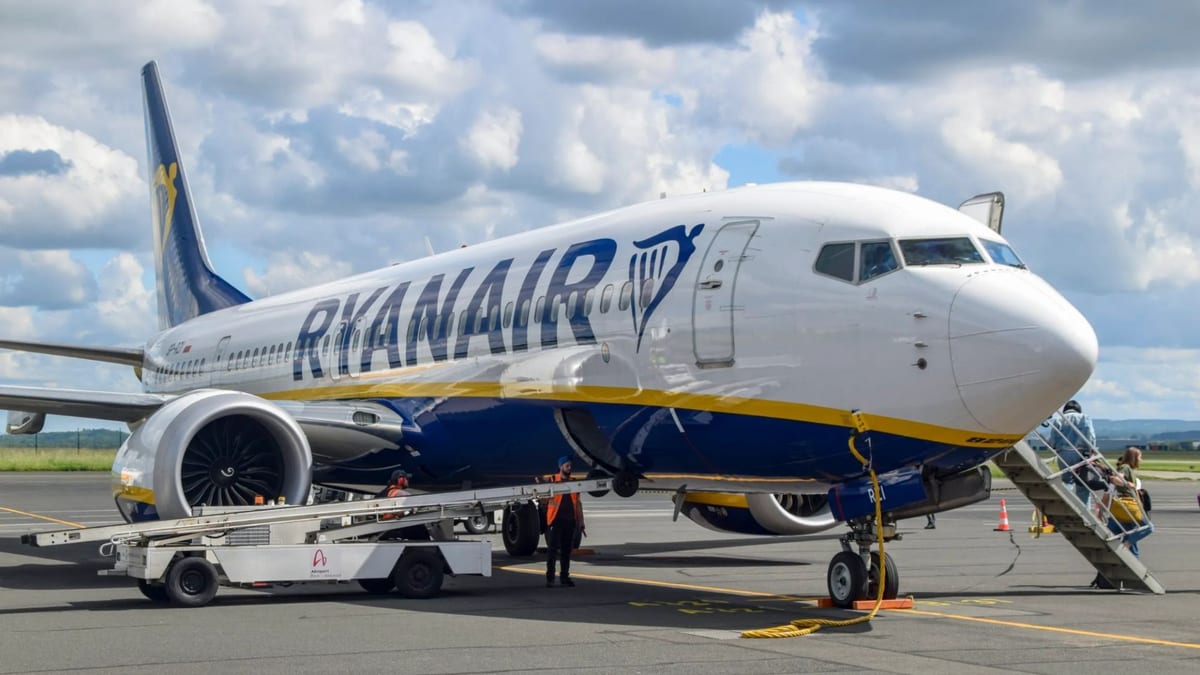
Fuel Supply At Risk as Strait of Hormuz Stays Shut
Publicly available interviews and industry coverage indicate that Ryanair, Europe’s largest low cost carrier by passenger numbers, is increasingly concerned about jet fuel availability heading into the peak holiday period. Michael O’Leary has warned that if the Iran war continues and the key Strait of Hormuz remains closed, between 10 and 25 percent of the airline’s fuel supply for late spring and early summer could be affected.
The Strait of Hormuz is a vital chokepoint for global oil shipments, and the current conflict has already pushed crude and refined product prices sharply higher. Reports indicate that tankers have diverted away from the Gulf and that refiners are scrambling to secure alternative supplies, particularly for jet fuel. Europe is especially exposed, with a significant share of its aviation fuel imported from the Gulf region.
O’Leary has stated in recent media appearances that Ryanair does not expect operational disruption before early May, thanks in part to existing fuel hedges and reserves. However, he has stressed that if the conflict is not contained and sea lanes do not reopen by mid or late April, more severe shortages are likely to emerge across Europe’s aviation sector rather than at any single carrier.
Industry analyses suggest that the risk is not solely about absolute scarcity of fuel, but also about the speed and cost at which it can be moved to major airports. Even relatively small percentage shortfalls at key hubs could force airlines to trim schedules, concentrate fuel at core bases and cut marginal routes.
Hundreds of Flights and 100,000s of Seats in the Firing Line
Coverage across European and UK outlets indicates that Ryanair is modeling scenarios in which up to one in ten flights during parts of the summer schedule could be vulnerable if jet fuel supplies tighten sharply. With the airline carrying well over 180 million passengers a year, a 10 percent cut in capacity, even over a limited period, would equate to hundreds of flights and hundreds of thousands of seats being withdrawn from sale or cancelled.
In some reports, O’Leary has highlighted that all carriers operating in Europe face similar constraints because they depend on the same regional fuel infrastructure. While Ryanair currently expects to operate normally through April, it has acknowledged that prolonged disruption in May and June could trigger targeted cancellations and frequency reductions on certain routes.
Analysts note that short haul leisure routes, secondary airports and off peak frequencies are most at risk if airlines are forced to ration fuel. That could mean fewer early morning or late night departures, reduced weekend-only services and the suspension of thinner seasonal connections. Routes serving Spain, Portugal, Greece and other Mediterranean holiday markets are being closely watched because of their heavy reliance on summer traffic.
Budget carriers with dense schedules and high aircraft utilization, such as Ryanair, are particularly exposed to any squeeze that limits the ability to refuel quickly across their network. If fuel uplift becomes constrained at multiple bases, the operational knock on effects could include rolling delays, aircraft repositioning and last minute cancellations.
War Driven Fuel Shock Pushes Fares Higher
Alongside the risk of cancellations, travelers are already feeling the impact of the Iran war at the ticket counter. Aviation and business media report that jet fuel prices have more than doubled since late February, when the conflict erupted and shipping through the Gulf was first disrupted. Fuel typically accounts for around a quarter of an airline’s operating costs, so such a sharp swing puts immediate pressure on fares.
Ryanair and other carriers entered 2026 with a significant portion of their fuel consumption hedged, which cushions the initial shock. However, O’Leary has made clear that the remaining unhedged volumes for the summer will be purchased at much higher spot prices if markets remain elevated. That extra cost, he has argued, will ultimately have to be passed on to passengers through higher base fares and reduced promotional discounts.
Reports from airline executives across Europe and the United States point to a common message: if the war continues into the main travel months, airfares are likely to rise further and faster than previously forecast. Some full service airlines are already talking about trimming less profitable frequencies in the shoulder season to conserve fuel and capacity for peak weeks, a strategy low cost rivals may also adopt if the crunch intensifies.
For Ryanair, which has built its brand around low prices and high frequencies, the fuel shock presents a particular challenge. The carrier may need to balance keeping fares attractive enough to stimulate demand with protecting margins in an environment of volatile energy costs and constrained supply.
Travelers Face New Layer of Uncertainty This Summer
For holidaymakers in the United Kingdom and across Europe, the latest warnings add a new layer of uncertainty to summer planning. Recent consumer coverage highlights that some passengers are already worried about being stranded abroad if fuel shortages trigger rolling cancellations in July and August. O’Leary has acknowledged in interviews that some travelers could get stuck temporarily if schedules are cut, while insisting that airlines will retain a responsibility to bring passengers home when seats become available.
Under European passenger rights rules, travelers whose flights are cancelled at short notice are generally entitled to rebooking or a refund, and in many cases to care such as meals and accommodation. However, legal experts quoted in media reports caution that extreme fuel shortages caused by war are likely to be treated as extraordinary circumstances, limiting eligibility for cash compensation even if disruption is severe.
Travel industry commentators are advising passengers to build extra flexibility into their plans, avoid tight same day connections on separate tickets and keep a close eye on airline communications in the days before departure. Those planning trips in late spring and early summer are being encouraged to monitor developments in the Gulf, particularly any signs that the Strait of Hormuz could reopen or that alternative fuel supply routes are being scaled up.
At present, Ryanair insists that all flights are operating as scheduled and that fuel supplies are secure through at least the end of April. The airline’s warnings are framed as contingency planning for a worst case scenario rather than confirmation of imminent cuts. Nonetheless, with geopolitical tensions high and energy markets volatile, the prospect that hundreds of flights could ultimately be sacrificed to keep the rest of the network flying is no longer a remote risk but a real possibility.