

More news on this day
Budget carrier Ryanair is warning that summer holiday travel could be disrupted if the Iran war continues to squeeze global jet fuel supplies, raising the risk of flight cancellations and higher fares across Europe.
Get the latest news straight to your inbox!
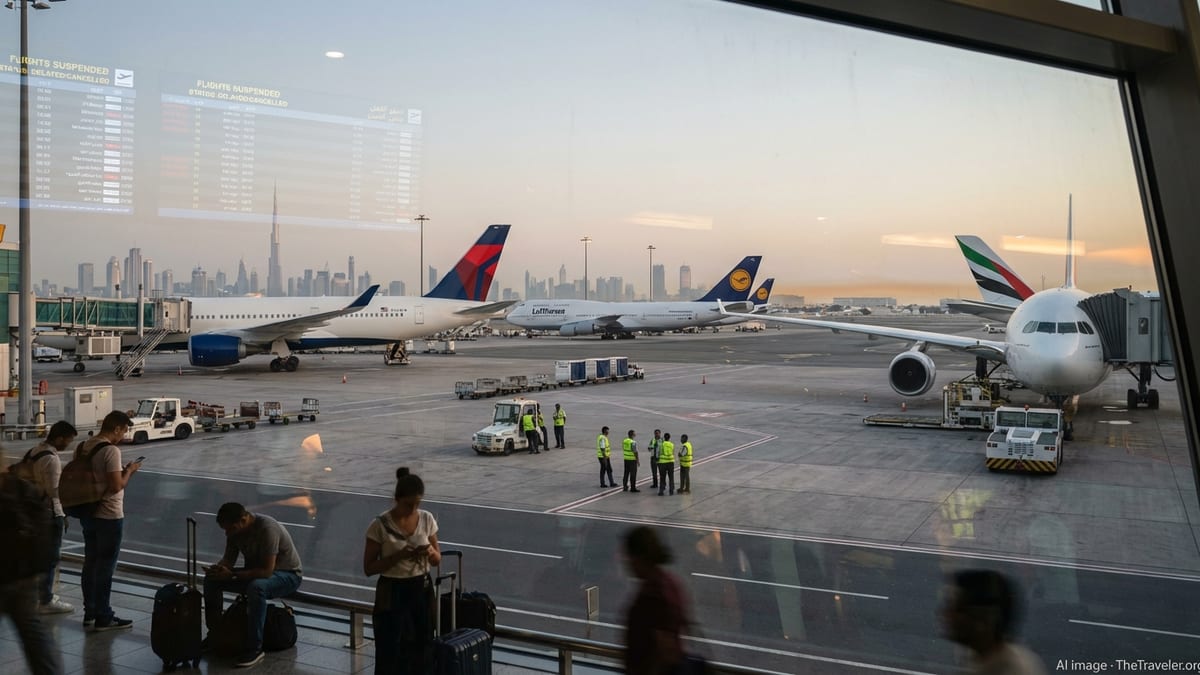
Jet fuel supply fears put peak season schedules at risk
Ryanair has indicated that up to 10 percent of its summer schedule could be vulnerable if jet fuel supplies in Europe are disrupted from May and June as a result of the Iran war and related closures in key energy shipping lanes. Publicly available information from recent interviews with chief executive Michael O’Leary suggests that fuel suppliers currently expect stability through April, but see a growing risk that between 10 and 20 percent of aviation fuel supply could be affected if the conflict drags on into early summer.
The warning comes as oil prices have climbed since late February, following US and Israeli strikes on Iran and subsequent military actions that have heightened concern over the security of tanker routes in and around the Strait of Hormuz. Analysts cited in recent media coverage note that even partial disruption to shipping through the region can ripple quickly through global refining and aviation fuel markets, leaving airlines exposed as hedging contracts roll off.
Ryanair has not yet announced concrete cuts to its summer timetable, and the airline continues to signal growth in traffic and modest fare increases for the April to June period. However, the carrier is now openly flagging that persistent supply constraints could force capacity reductions at short notice, particularly on routes where it operates multiple daily frequencies and can consolidate passengers onto fewer flights.
Industry observers point out that low cost carriers such as Ryanair typically operate tight schedules with high aircraft utilisation, which can magnify the impact of any fuel rationing. Even a small percentage reduction in available fuel at individual airports could require airlines to trim rotations, reposition aircraft or adjust turnaround times, with knock-on effects for punctuality and connectivity.
European holiday hotspots face uncertainty
The latest warnings are particularly sensitive for popular leisure destinations that rely on dense summer schedules. Coverage in European travel media highlights that Ryanair has identified Spain and other Mediterranean markets as areas where localized fuel constraints could emerge if the conflict continues and supply routes remain strained. Airports with heavy holiday traffic and limited local refining capacity are seen as more vulnerable to any reduction in deliveries.
Reports focused on Spain, Portugal, Italy and Greece suggest that airlines might first target the busiest routes for potential consolidation, because multiple daily departures offer the most flexibility to cancel individual frequencies while still moving most passengers. For travellers, that would likely translate into fewer flight time options rather than wholesale withdrawal from specific destinations, at least in the early stages of any disruption.
Elsewhere in Europe, regional links and island services are also under scrutiny. Recent coverage in the Channel Islands, for example, notes that flights between smaller airports and major hubs have already seen selective cancellations this spring related to fuel concerns and route economics. Analysts say similar thin routes could again be at higher risk if fuel supplies tighten further into the peak season.
Tourism officials in several southern European countries are monitoring the situation closely, as any reduction in air capacity could weigh on visitor numbers and local economies during the most important months of the year. For now, however, the overall outlook remains for continued growth in European short haul travel, with Ryanair and other carriers still planning to operate record summer schedules unless fuel constraints make this impossible.
Industry-wide pressure from the Iran war
Ryanair’s warnings are emerging against a wider backdrop of global aviation disruption linked to the Iran war. Travel industry reporting shows that multiple Middle Eastern and international airlines have already rerouted or suspended services as airspace closures and security restrictions spread across the region. Some Gulf and regional hubs have reported significant numbers of cancellations since hostilities escalated, affecting both point-to-point and connecting traffic.
At the same time, major network airlines in Europe, North America and Asia are facing longer flight times and higher fuel burn as they avoid affected airspace. Published estimates from aviation analysts indicate that extended routings can add significant costs on long haul corridors, from Europe to Asia and from North America to the Gulf and beyond, further intensifying demand for jet fuel at alternative refuelling points.
Financial data cited in recent business coverage shows that airfares for the coming summer season are already up year on year, with some analyses putting average ticket prices on key routes more than 10 percent higher than in the previous summer. While strong leisure demand is one factor, analysts increasingly attribute part of the increase to fuel price spikes and uncertainty over future supply.
For Ryanair and other low cost carriers built on ultra-thin margins, sustained fuel price pressure can quickly translate into higher fares, ancillary fees or trimmed capacity. The carrier has historically used aggressive fuel hedging strategies to insulate itself from short term volatility, but commentary around the Iran conflict suggests that hedges can only partially offset sustained disruption to supply.
What summer travellers should expect right now
For passengers who have already booked summer holidays, publicly available guidance from travel experts is broadly measured. Most reports emphasise that, as of early April, Ryanair has not imposed mass cancellations tied directly to jet fuel shortages and continues to sell seats across its network. The airline has indicated that any adjustments would most likely fall on high frequency routes, enabling it to rebook affected customers on remaining services where possible.
Consumer advocates quoted in European media advise travellers to keep monitoring their booking details and airline apps closely as departure dates approach, especially for trips in late May and June when fuel supply risks are expected to be most acute. They also note that existing European regulations provide protection in the event of last minute cancellations, including rerouting or refunds, although compensation rules can be complex when disruptions arise from geopolitical events and supply shocks.
Travel agents and online booking platforms are reporting robust demand despite the headlines, with many consumers focusing more on price levels than on the possibility of disruption. Some coverage suggests that flexible fares, comprehensive travel insurance and the use of credit cards that offer additional protections can provide extra reassurance for those concerned about potential schedule changes.
For now, Ryanair’s message to the market is that its summer programme remains intact but exposed to a new external risk that sits largely beyond the airline’s control. The scale of any disruption will depend heavily on how the Iran war evolves in the coming weeks, the resilience of alternative fuel supply chains into Europe, and the ability of refineries and airports to manage inventories during the peak travel rush.
Broader implications for Europe’s low cost model
The possibility of fuel driven capacity cuts also raises longer term questions for Europe’s low cost aviation model. Analysts note that carriers such as Ryanair have thrived on abundant, relatively predictable fuel supplies and open skies that allow them to fine tune schedules across a vast network. Prolonged geopolitical instability affecting energy routes could compel airlines to rethink how they plan growth, hedge fuel and allocate capacity between core hubs and peripheral markets.
Some industry commentary suggests that airlines may start to build more explicit fuel risk scenarios into their seasonal scheduling, potentially leaving greater buffers in peak programmes or prioritising airports with more secure supply chains. That could, over time, shift capacity away from some smaller or more remote airports that are heavily reliant on single supply lines.
For travellers, that might mean fewer ultra low promotional fares and less redundancy in flight options on certain leisure routes, especially if fuel prices remain elevated. On the other hand, sustained demand for affordable travel within Europe is likely to keep low cost carriers central to the continent’s aviation landscape, even if they are forced to navigate a more volatile fuel environment.
In the immediate term, the focus remains on whether the Iran war can be contained before the start of the core summer season. If tensions ease and energy flows normalise, many of the potential flight cancellations Ryanair is warning about may never materialise. If not, European holidaymakers could face one of the most unpredictable summers in years for short haul air travel.